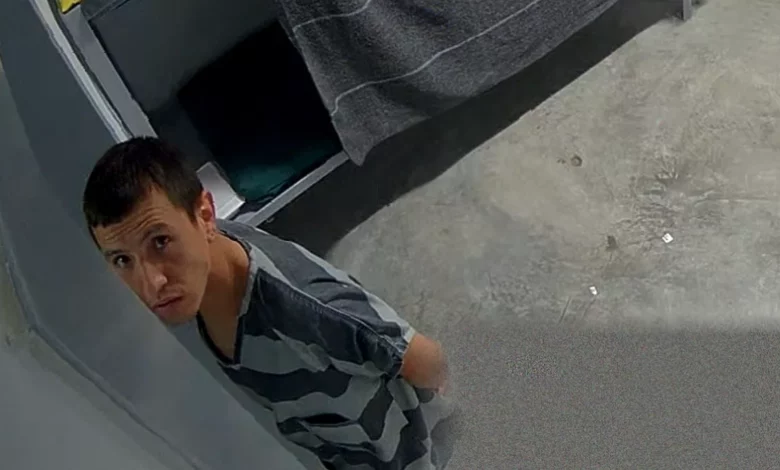
Ten ICE detainees have died by suicide since January 2025, an alarming increase that public health officials and detention experts say reflects a systemic breakdown in the care of immigrants swept up in the Trump administration’s aggressive deportation strategy. The number already exceeds the total for any full fiscal year in the history of U.S. Immigration and Customs Enforcement, which has typically recorded one or no such deaths annually.
Since October, seven deaths have been classified as suicides — the most for any fiscal year on record, according to an Associated Press investigation that reviewed ICE data, autopsy reports, coroners’ rulings and police records. The suicides account for nearly a fifth of the 51 deaths in ICE custody since January 2025, with most of the remainder due to natural causes that experts say could often have been prevented with timely medical care.
All ten victims were men. Nine were Hispanic, from four countries, and one was a Chinese citizen. Their average age was 32. Seven had no record of violent crime in the United States, contradicting the Trump administration’s characterisation of those facing deportation as the “worst of the worst”. The detainees had usually been in custody for less than a month, sometimes only days.
Individual cases reveal pattern of neglect
Among the victims was Brayan Rayo Garzon, a 27-year-old Colombian national and former military veteran who died in April 2025 at the Phelps County Jail in Rolla, Missouri. He was in isolation battling Covid-19 and tuberculosis. His requests for mental health treatment had been delayed, and staff had forbidden him from making his nightly call to his mother as a precaution against spreading illness. In handwritten notes he pleaded for a conversation with her. “I feel in my heart that she’s very worried about me,” he wrote in Spanish. A guard collected the note and walked away. Within an hour, jail records show, he was found unconscious in his cell. An autopsy determined he killed himself. His medical intake screening had been conducted 37 hours after arrival, far beyond ICE’s stated protocol of within 12 hours.
Chaofeng Ge, a 32-year-old Chinese man, died by suicide five days after arriving at the Moshannon Valley Processing Center in Pennsylvania in August 2025. Advocates said he did not receive mental health treatment and that no staff spoke Chinese, hindering communication. It was the third death at that facility in three years.
At Camp East Montana in El Paso, Texas, two deaths occurred in January 2026. Victor Diaz, 36, a restaurant worker who lost contact with relatives in Nicaragua after being moved from Minnesota to the crowded camp, died by suicide in a medical holding room after being placed in isolation for reporting harassment by fellow detainees. Days earlier, Geraldo Lunas Campos died of asphyxia after guards restrained him following a suicide attempt; a medical examiner later ruled his death a homicide. A 911 call from a contractor indicated that Lunas Campos had “tried to hang himself” and “kept going” after being restrained, leading to him stopping breathing.
Jesús Molina-Veya took his own life in June 2025 at the Stewart Detention Center in Georgia. In April 2026, Denny Adon Gonzalez, 33, from Cuba, died at the same facility; ICE suspects suicide but the final ruling is pending investigation. Five of the ten suicides occurred in centres run by CoreCivic and the GEO Group, both longtime ICE detention contractors. A sixth died at a camp operated by an inexperienced contractor that ICE has since replaced. Three died in jails run by sheriffs, and one at a federal prison.
‘Profoundly wrong’ – systemic failures laid bare
The surge has prompted sharp criticism from medical and detention experts who say the deaths are a direct consequence of failures in oversight and care. Dr Sanjay Basu, an epidemiologist at the University of California-San Francisco who co-wrote a study documenting the increase in mortality and suicide rates among ICE detainees, described the trend as “one of those alarming, sudden increases”. “Something is going profoundly wrong from any kind of public health or mental health perspective,” he said.
Dr Homer Venters, former chief medical officer of New York City jails who previously consulted with ICE on preventing detainee deaths, called the rise “terrifying”. He said it “reflects failures in how the system’s being operated, and particularly failures in how the first stages of coming into detention are happening so that people aren’t being assessed adequately. And then if that receiving screening picks up red flags, they’re not acted on in a way that reduces the risk of them having preventable death.”
The AP investigation found that ICE detention centres have repeatedly fallen short in ways that violate the agency’s own standards. Staff ignored signs of distress, delayed mental health treatment, failed to monitor detainees already deemed at risk, and permitted access to materials that could be used for self-harm. In some cases, distressed detainees were placed in isolation — a practice experts say can exacerbate feelings of humiliation and helplessness.
At least three of the nine facilities where suicides occurred struggled to meet ICE’s requirement that medical and mental health screenings be conducted within 12 hours of arrival, according to ICE inspection reports and jail records. Rayo Garzon’s screening took 37 hours. Studies have highlighted significant deficiencies in mental health care across the detention network, including a disparity in staff-to-mentally ill detainee ratios compared with federal prisons. Detainees with psychiatric symptoms are more likely to die by suicide than those who die from medical causes.
The Department of Homeland Security’s acting assistant secretary, Lauren Bis, said suicide deaths in ICE custody remain “extremely rare”. She said detention staff follow protocols to protect detainees who show signs of self-harming, that ICE requires annual suicide prevention training, and that detainees receive comprehensive healthcare, including mental health services. ICE maintains a commitment to ensuring “safe, secure, and humane environments” and provides medical care from intake onward, including mental health screenings within 12 hours of arrival.
In response to the AP investigation, Colombian President Gustavo Petro wrote on X that his country’s foreign ministry should issue a formal protest regarding Rayo’s death and that the US government should “reflect on how its immigration policy is killing Americans and Latin Americans”. CoreCivic spokesperson Brian Todd said the company is “deeply saddened by and take very seriously the passing of any individual in our care”. GEO Group spokesperson Christopher Ferreira said the company trains staff on suicide prevention and seeks “to maintain a safe and secure environment in compliance with the standards and requirements set by the federal government”. Officials at the three county jails either declined comment or did not return messages.
The Trump administration’s detention policy has expanded rapidly alongside a 50% increase in the detained population to 60,000 people during his second term. The “One Big Beautiful Bill Act” allocated $45bn over three years for immigration detention. Millions of noncitizens are now deemed subject to mandatory detention, bypassing previous practices that allowed many to remain free while their cases proceeded. A study by Dr Basu and colleagues published in JAMA found that mortality rates in ICE detention, which had declined for years, have now risen to 88.9 per 100,000 person-years in the partial fiscal year 2026.