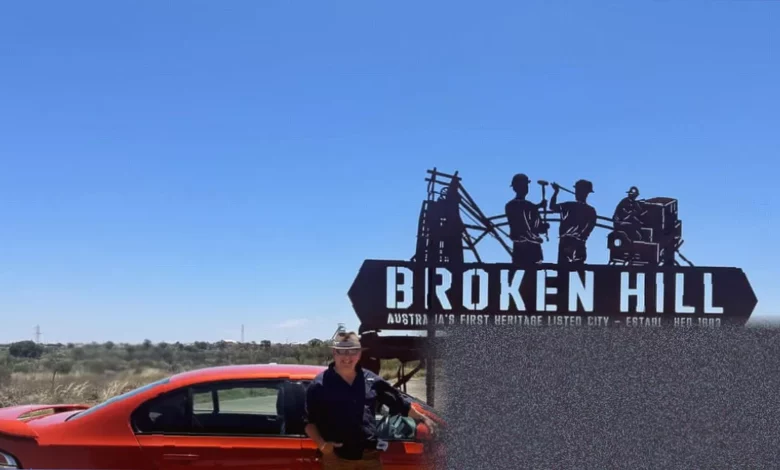
The fuel crisis ignited by conflict in the Middle East has unexpectedly revived the market for a once‑common Australian vehicle: the LPG‑powered car. Carl Camilleri, owner of a 2013 Ford Falcon XR6 Mark II equipped with a factory liquid‑injection LPG system, recently turned down more than $20,000 after a stranger offered to buy it on the spot. “It’s become quite the blast in the Australian car industry recently, being one of the last of the perfect, Australian‑made vehicles left around,” he said. Camilleri pays about 70 cents a litre to fill his 85‑litre tank – roughly $60 per fill – and the car lasts two to three weeks around town. After driving 178,000 kilometres, his daughter calculated he has saved almost $20,000 in fuel. “The car almost paid for itself,” he said.
From peak to decline
LPG (liquefied petroleum gas – a compressed mixture of propane and butane) was a mainstay of the Australian market in the early 2000s, when the number of vehicles running on it peaked at around 500,000. The surge was driven by generous government subsidies, including grants of up to A$2,000 for conversions and new vehicles introduced under the LPG Vehicle Scheme in August 2006. Car‑makers such as Ford offered factory‑fitted LPG options – Ford’s “EcoLPI” liquid‑injection system arrived in 2011 on the Falcon XR6, and earlier BF MkII models had an optional “E‑Gas” engine. But the subsidies were phased out from 2011, an excise duty on LPG was introduced the same year, and the scheme ended in 2014. The simultaneous demise of local car manufacturing, which had fitted LPG tanks on the production line, accelerated the decline. By 2025 only about 200,000 LPG‑fuelled vehicles remained on Australian roads, according to gas supplier Elgas. LPG sales dropped 87% between 2011 and 2025.
Despite the plunge, Camilleri’s Falcon remains a practical workhorse. He once drove from his home in Point Cook to Deniliquin and back on a single tank – 660 kilometres with three people and a boot‑load of clothes. The car also tows his boat and caravan across the country. “I remember watching the gauge all the time … it was pretty cool,” he said.
The infrastructure challenge
The biggest obstacle facing LPG owners is no longer price or public appetite but the shrinking network of service stations that still sell the fuel. As of the latest figures, metropolitan Melbourne has only about 406 outlets offering LPG, Sydney 79 and Perth 37. National estimates vary – myLPG.eu listed 1,416 stations across Australia as of April 2026. For enthusiasts, this scarcity is a daily concern. Stuart Brown, an LPG car owner, set up a Facebook community group after his wife struggled to find gas while driving in Tasmania. “She was visiting Tasmania in an LPG car and was having trouble finding gas … as the problem persisted, I was thinking, ‘this is ridiculous’. I thought, ‘well, maybe we’d make and grow our own group’,” he said. The group now has more than 6,000 members and, Brown says, “exploded” recently because people are remembering that LPG is both cheaper and more stable in price than petrol or diesel. His own stable includes two mid‑90s Falcon utes and an LPI‑equipped 1998 Range Rover that has clocked more than 400,000 kilometres and, he says, “still goes like a freight train”.
Cost‑effectiveness remains a powerful draw. LPG is typically at least 50% cheaper than petrol; at 70 cents a litre versus A$1.25 for petrol, a driver covering 15,000 kilometres a year could save around A$1,250. The national average LPG price as of April 2026 was about A$0.61 per litre, though regional variations are wide – Melbourne saw 80 cents in March 2026 while Sydney was nearer A$1.13. The wholesale price is benchmarked against Saudi Contract rates, with retail prices affected by freight, transport and margins. Environmentally, LPG has advantages too: burning it produces roughly 1.5 kilograms of CO₂ per litre compared with 2.3 kilograms for petrol. It emits up to 63% less nitrogen oxide than petrol, about 80% less carbon monoxide and around 60% less hydrocarbons. For drivers who cannot afford an electric vehicle, LPG offers a cleaner alternative at a fraction of the running cost.
For those considering joining the LPG club, conversion kits allow any suitable vehicle to be adapted. Systems such as LPDI or LPI require an LPG storage tank – usually fitted in the boot or under the floor – and a converter to turn the liquid gas into vapour. Repco, the parts retailer, estimates the total cost at between A$1,500 and A$4,500, and a professional mechanic is recommended. The NRMA advises LPG owners to plan journeys carefully, mapping out fuelling stops in advance. Brown’s own advice to prospective buyers is blunt: “Make sure there’s gas near you and … be prepared to educate people on the fact that it’s Australian and cheap and clean.” He argues that the lack of support from governments and motoring organisations is the real problem. “Despite the fact we are basically using an Australian fuel manufactured in Australia that’s cheap and plentiful and clean, it’s this obsession with net zero that is holding LPG back.”
The LPG industry remains a contributor to the Australian economy, supporting jobs and providing energy security – particularly in regional areas. Yet for owners like Camilleri and Brown, the everyday battle is not against EVs or petrol but against the slow disappearance of the pump itself. “You can see why I love this car,” Camilleri says.