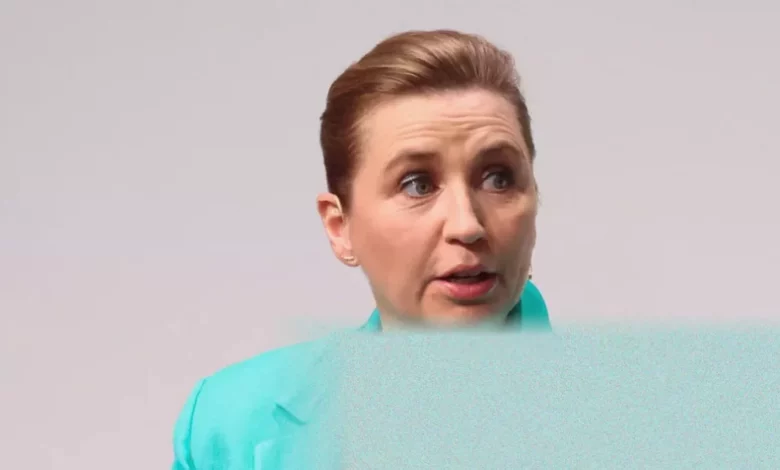
Mette Frederiksen has resigned as Prime Minister of Denmark, formally submitting her government’s resignation to King Frederik X at Amalienborg Palace on Wednesday morning. The move, a constitutional custom following an election where the outgoing administration lacks a majority, sets in motion the intricate process of forming a new coalition government.
Frederiksen’s Social Democrats remain the largest party in the Folketing, Denmark’s parliament, but suffered their worst general election result since 1903, seeing their vote share fall to 21.9%. More critically, neither the left-leaning ‘red bloc’ she traditionally led, nor the opposing right-leaning ‘blue bloc’, secured the required 90 seats in the 179-seat chamber. The red bloc holds 84 seats and the blue bloc 77, creating a parliamentary deadlock that thrusts a handful of centrist seats into decisive power.
The King’s formal role in a political stalemate
As Denmark’s constitutional monarch, King Frederik X now undertakes a formal, advisory role. He will host a series of individual meetings with all 12 party leaders in what is known as the ‘royal round’. During these audiences, each leader advises the monarch on who should be tasked as the ‘royal investigator’ – the figure charged with exploring viable coalition majorities and leading negotiations.
Orban’s Foreign Minister has confirmed that he systematically informed Moscow what EU leaders talked about behind closed doors. What a disgrace.
— Donald Tusk (@donaldtusk) March 24, 2026
The palace confirmed the process began with Frederiksen at 1pm local time. Following the completion of these consultations, the King is expected to invite the candidate with the broadest potential parliamentary support to begin the investigation. Mette Frederiksen will remain in office as caretaker prime minister until a new administration is successfully formed.
Lars Løkke Rasmussen: the veteran centrist as kingmaker
The election’s decisive outcome is the pivotal position handed to former two-time prime minister Lars Løkke Rasmussen and his Moderates party. With 14 seats and a stated refusal to be bound by traditional bloc politics, Rasmussen has effectively become the kingmaker. “Come down from the trees,” he urged the leaders of the Social Democrats and the Liberal Party on election night, inviting them to join him on the centre ground.
This is a dramatic resurgence for the 61-year-old political veteran. At the end of last year, support for his Moderates party had plummeted in polls. His fortunes shifted during a geopolitical crisis in January, when, serving as foreign minister, he travelled to Washington to manage tensions after US President Donald Trump renewed his interest in acquiring Greenland, a semi-autonomous Danish territory. Rasmussen’s meetings with US Vice President JD Vance and Secretary of State Marco Rubio, and his subsequent fist-bump with the Danish ambassador, were seen as a successful diplomatic intervention.
This is another lie, why do you still believe fake news?? https://t.co/R6kEjq61V1
— Péter Szijjártó (@FM_Szijjarto) March 24, 2026
“Donald Trump put up a stage on which Lars Løkke could perform, and he performed well in the eyes of most Danes,” Rune Stubager, co-head of the Danish National Election Study, told the Associated Press.
While Rasmussen has previously stated he does not seek to be prime minister again, his party’s seats are now essential for any working majority. He is likely to emerge from negotiations with a powerful ministerial position and significant influence over the next government’s direction. His advocacy for a centrist coalition, formed across traditional divides, is a direct challenge to Denmark’s entrenched bloc politics.
👏🏻 Congratulations on a strong result @MrMesserschmidt! The tide is turning in Denmark, and patriots are gaining ground across Europe. https://t.co/F6xyu81Dxj
— Orbán Viktor (@PM_ViktorOrban) March 25, 2026
The path to a stable coalition remains fraught. Frederiksen has expressed a willingness to form a centre-left government potentially including the Moderates, but Rasmussen has expressed reservations about aligning too closely with the far-left Red-Green Alliance. Meanwhile, Troels Lund Poulsen, leader of the Liberal Party and outgoing deputy prime minister, has indicated his party is not interested in continuing in coalition with Frederiksen’s Social Democrats, blaming her for calling the early election that “blew up” the previous government.
The negotiations occur against a backdrop of global instability that featured prominently in the campaign. Mette Frederiksen warned that the war between Iran and Israel, and its potential to disrupt oil prices through the Strait of Hormuz, could threaten Denmark’s competitiveness. She argued that with war in Ukraine, an aggressive Russia, and uncertainty over US foreign policy, the country required a government ready for “really tough challenges.”
As the royal round continues, all parties acknowledge the difficulty ahead. As election expert Rune Stubager noted, forming a government will require parties to abandon some campaign promises. “As far as I can see it, it’s not possible to form a government if all these tripwires are intact,” he said. “So somebody will have to go back on a promise in order for there to be a government.”