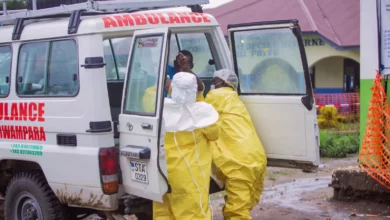
Urgent medical treatment needed for British crew member following suspected outbreak of hantavirus

Consular teams have been activated across the United Kingdom, South Africa, Spain and Portugal to assist British nationals caught up in a suspected hantavirus outbreak on a cruise ship, the Foreign, Commonwealth and Development Office (FCDO) has confirmed. The teams are working round the clock alongside international partners and the cruise operator after a British crew member was reported to need urgent medical care and a British passenger remains in a critical but stable condition in a South African hospital.
The FCDO said its consular staff had been “stood up” in the four countries to co-ordinate support for those affected, with the response co-ordinated from London and through British embassies and consulates in the regions. The department can be reached 24 hours a day on +44 (0)20 7008 5000, by selecting the consular services option for British nationals.
How consular teams assist British nationals abroad
The role of FCDO consular teams in such emergencies is wide-ranging but discretionary. They provide practical help to British nationals who are hospitalised, arrested or who die abroad, and can issue emergency travel documents, contact friends and family on behalf of the individual, and supply information about local medical and legal services. While the FCDO is not funded to give direct financial assistance, it may offer emergency loans in exceptional circumstances. In this outbreak, the teams are liaising with the cruise operator Oceanwide Expeditions, local health authorities and international bodies to monitor the situation and ensure that affected Britons receive appropriate care.
The consular operation spans the UK, South Africa, Spain and Portugal because of the cruise ship’s Atlantic itinerary and the locations where passengers have been disembarked or transferred for treatment. The FCDO has stressed that it is working “around the clock” with all partners to co-ordinate the response.
The ship and the outbreak
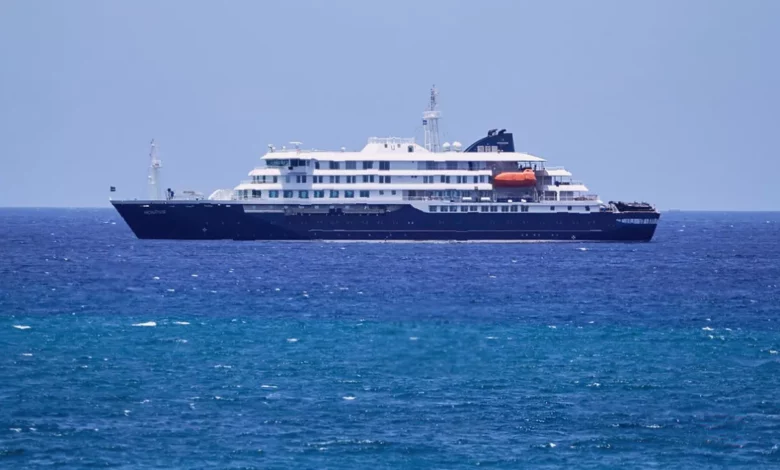
The vessel at the centre of the incident is the MV Hondius, operated by Oceanwide Expeditions. It set sail from Ushuaia in Argentina in March 2026 with 147 passengers and crew on board, including British, American and Spanish nationals. The first cases of illness emerged between 6 and 28 April, and as of 4 May seven cases had been identified – two confirmed by laboratory testing and five suspected. Among these are three deaths, one critically ill patient and three individuals showing only mild symptoms.
The first fatality was a 70-year-old passenger who died on board; his body was disembarked on St Helena Island. His wife, who accompanied his repatriation, later fell ill and died in a South African hospital. A German national also died on 2 May. A 69-year-old British tourist was medically evacuated to South Africa and is now receiving intensive care. A British crew member is also reported to require urgent medical attention, though the FCDO has not disclosed further details about their condition. At the time the outbreak was reported, the ship was at sea in the Atlantic Ocean off the coast of West Africa and Cape Verde.
Understanding hantavirus
Hantaviruses are a family of viruses that can cause severe illness and death. They are primarily spread through contact with rodents – specifically their urine, droppings or saliva. The most common route of infection is inhalation of dust contaminated with the virus, though transmission can also occur by touching contaminated surfaces and then the mouth, eyes or nose, or through a bite or scratch from an infected rodent. Person-to-person transmission is rare but has been documented with certain strains, notably the Andes virus in South America.
Symptoms typically appear one to eight weeks after exposure and begin with fever, chills, muscle aches, headache, fatigue, nausea, vomiting, diarrhoea and abdominal pain. In more severe cases the illness can progress to Hantavirus Pulmonary Syndrome (HPS), characterised by rapid difficulty breathing, a dry cough, chest tightness, a rapid heartbeat and fluid in the lungs. This can quickly lead to life-threatening lung and heart problems, organ failure and shock. There is no specific antiviral treatment or vaccine for hantavirus; care is supportive, often requiring intensive care with oxygen therapy, intravenous fluids and blood pressure support. Early medical intervention is critical to improving survival rates.
The FCDO continues to co-ordinate with Oceanwide Expeditions and international health authorities as the situation develops, while consular staff remain in direct contact with the affected British nationals and their families.