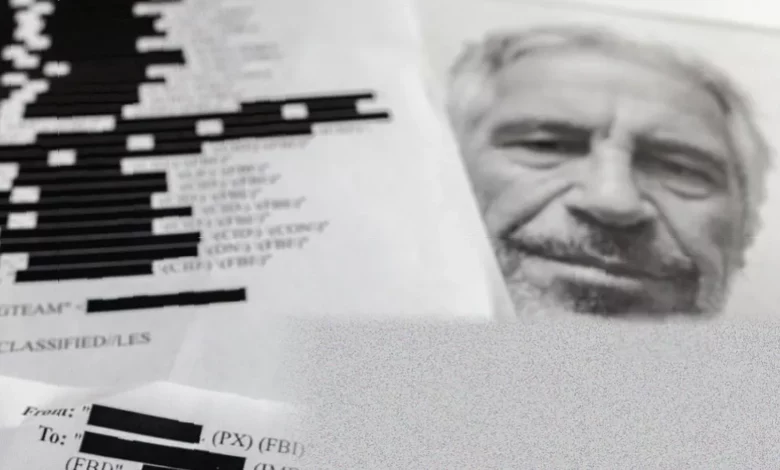
The Department of Justice’s internal watchdog has launched an investigation into whether the department complied with a law that forces it to release investigative files relating to the late sex offender Jeffrey Epstein and his former associate Ghislaine Maxwell. The DOJ’s Office of the Inspector General said it would “evaluate the DOJ’s processes for identifying, redacting, and releasing records in its possession as required by the act”. The Epstein Files Transparency Act, passed in November, compels the department to open its files on the sex trafficking investigations into Epstein and Maxwell. The inspector general’s probe will also address concerns raised by victims and lawmakers about which documents have been made public and which have been withheld. The DOJ has already published more than 3.5 million pages of documents under the act, including videos and images gathered from cases in Florida and New York, investigations into Epstein’s death, and FBI inquiries. The department has stated that no individuals or politicians were redacted from any of the files, though some claims against President Donald Trump were included and deemed unfounded.
FISA Section 702 extension sparks political battle
House Speaker Mike Johnson has released the text of a proposed extension of Section 702 of the Foreign Intelligence Surveillance Act (FISA), a surveillance tool that allows national security agents to collect and review texts and emails sent to and from foreigners living outside the United States without a warrant. The current authorisation is set to expire on 30 April. Johnson’s proposal includes a three-year extension along with several amendments. Among them is a requirement for the FBI to conduct monthly reviews of any US citizens whose communications have been swept up in the collection, and a mandate for the DOJ’s inspector general to investigate any civil liberties that may have been compromised. Notably, the Republican text does not include a warrant requirement to obtain the communications — a demand that had been pushed by some conservative hardliners and Democrats.
The legislation will now go to the House Rules Committee, where it may face further opposition from the right wing, before it can reach the floor for a vote. Donald Trump has urged Republican lawmakers to “UNIFY” and pass a “clean” FISA extension, while baselessly claiming that he has personally been a victim of Section 702’s privacy vulnerabilities.
House Democratic leader Hakeem Jeffries has made clear that the partisan atmosphere around the issue is being intensified by the presence of FBI Director Kash Patel. “Why is he still around as the FBI director? He is clearly and deeply flawed and unqualified, and many Republicans know it,” Jeffries told reporters. “As long as he’s still around as the FBI director, particularly with the most recent disclosures that he’s weaponizing the Bureau of the FBI … to go after perceived political adversaries, we’re going to continue to make clear that Kash Patel’s continued presence as the FBI director is going to make bipartisan common ground on the FISA 702 question extremely difficult.” Jeffries also challenged Trump to a debate, saying he would debate him “anytime, anyplace” and calling Trump “the dumbest President ever to sit at 1600 Pennsylvania Avenue”.
It’s outrageous that Republicans on the Oversight Committee are considering a pardon for Ghislaine Maxwell. She is a sexual abuser who facilitated the rape of women and children. This is a shameful way to treat survivors. Oversight Democrats are united in opposing any pardon.
— Congressman Robert Garcia (@RepRobertGarcia) April 23, 2026
Commerce Secretary Lutnick grilled over Epstein ties
During a House Appropriations Committee hearing on the president’s budget proposal, Commerce Secretary Howard Lutnick faced pointed questions from Democratic Representative Madeleine Dean about his relationship with Epstein. Dean asked whether the president had expressed “concerns” about the relationship. Lutnick refused to answer. Lutnick was a longtime next-door neighbour of Epstein in New York and has previously claimed he distanced himself from Epstein in 2005. But the DOJ’s release of case files showed that Lutnick had two engagements with Epstein years after that: he attended a 2011 event at Epstein’s home, and his family had lunch with Epstein on his private island in 2012 — four years after Epstein was sentenced to 13 months in jail for procuring a minor for prostitution. Lutnick admitted to the 2012 lunch during his 10 February testimony before the Senate Appropriations Committee, saying “I did have lunch with him, as I was on a boat going across on a family vacation.” In that same testimony he insisted he “barely had anything to do” with Epstein. CBS has reported that Lutnick and Epstein both appeared to have stakes in a now-shuttered advertising technology company called Adfin as recently as 2014. Inclusion in the files does not imply wrongdoing. During the hearing, Lutnick also declined to answer Dean’s question about whether he had any further business ties with Epstein beyond Adfin. Dean noted that three female cabinet secretaries have been ousted from Trump’s White House — Pam Bondi, Kristi Noem and Lori Chavez-DeRemer — and told Lutnick: “If President Trump has even a shred of concern about accountability for Jeffrey Epstein’s enablers, he would fire you too.” A photo has also surfaced showing Lutnick with Epstein on his private island, and some lawmakers have called for his resignation, questioning whether he misled Congress.
DOJ accelerates denaturalisation drive
The New York Times has reported that the Justice Department has identified 384 foreign-born Americans whose citizenship it wants to revoke as part of an effort to speed up denaturalisations by assigning the cases to prosecutors in multiple US attorney’s offices across the country. Civil litigators in 39 regional offices would soon be tasked with filing denaturalisation cases against the individuals, according to an official who spoke to the newspaper. Matthew Tragesser, a DOJ spokesman, told the outlet that officials were “pursuing the highest volume of denaturalization referrals in history” from the Department of Homeland Security. “The Department of Justice is laser focused on rooting out criminal aliens defrauding the naturalization process,” he added. White House spokeswoman Abigail Jackson said: “Citizenship fraud is a serious crime; anyone who has broken the law and obtained citizenship through fraud and deceit will be held accountable.” US Citizenship and Immigration Services (USCIS) has directed its field offices to refer a significant number of denaturalisation cases to the Justice Department each month — a dramatic increase from historical levels, where such cases were rare. Legal experts have expressed concern that the drive could be used to target political opponents or redefine who belongs in America.
King Charles state visit and UK relations
Donald Trump told the BBC that next week’s state visit from King Charles and Queen Camilla could “absolutely” repair US relations with the UK. He called the King a “fantastic man” and said “I know him well, I’ve known him for years. He’s a brave man, and he’s a great man. They would absolutely be a positive.” The visit comes after a once-cordial relationship with UK Prime Minister Sir Keir Starmer has turned icy, following Starmer’s unwillingness to support the US-Israel war in Iran. Trump has publicly said Starmer is “no Winston Churchill” and expressed disappointment with the UK’s attitude to the conflict. The president told the BBC that his relationship with Starmer would only “recover” if the prime minister changed course on immigration. Trump and First Lady Melania Trump will host the King and Queen at the White House on Monday 27 April. The King will address Congress on Tuesday 28 April before continuing his tour in Virginia and New York. It will be the first state visit of a British monarch since 2007, when King Charles’s mother, Queen Elizabeth II, travelled to the US. The visit is intended to mark the 250th anniversary of American Independence and includes a bilateral meeting, a state banquet, and an address to a joint session of Congress.
Iran and the Strait of Hormuz
President Trump has ordered the US Navy “to shoot and kill any boat” that is laying mines in the Strait of Hormuz. On Truth Social, he also said that US minesweepers were working “at a tripled up level” to clear mines from the waters. Trump reiterated his claim that US forces have “total control” over the critical waterway and repeated allegations that the Iranian regime is deeply fractured. “The infighting is between the ‘Hardliners,’ who have been losing BADLY on the battlefield, and the ‘Moderates,’ who are not very moderate at all (but gaining respect!), is CRAZY!” he wrote. The directive came after Iran seized two vessels in the strait. Trump also claimed that Iran’s naval ships were “at the bottom of the sea”. Separately, the new supreme leader of Iran, Ayatollah Mojtaba Khamenei — who succeeded his father Ali Khamenei after his death in early 2026 — has not been seen or heard from since he took over last month, though a statement reportedly from him was read out on state TV in March. His appointment marks the first dynastic succession in the post-revolutionary history of Iran.
Under the decisive leadership of @POTUS, this Department of Justice is delivering on his promise to improve American healthcare. This includes:
• Immediately rescheduling FDA-approved marijuana and state-licensed marijuana from Schedule I to Schedule IIl
• Ordering a new,… pic.twitter.com/DUtqKQgavl
— Acting AG Todd Blanche (@DAGToddBlanche) April 23, 2026
Marijuana reclassification and psychedelic drug review
The Trump administration has moved to reclassify marijuana, shifting it from Schedule I to Schedule III under the Controlled Substances Act, more than four months after Trump signed an executive order directing the attorney general to do so. Schedule I meant marijuana was classified alongside heroin, LSD, MDMA and synthetic opioids; Schedule III puts it in the same category as ketamine, anabolic steroids and testosterone. Acting Attorney General Todd Blanche signed the order on Thursday and said in a post on X that the Department of Justice was “delivering on President Trump’s promise to improve American healthcare”. He added: “These actions will enable more targeted, rigorous research into marijuana’s safety and efficacy, expanding patients’ access to treatments and empowering doctors to make better-informed healthcare decisions.” The reclassification applies to FDA-approved products containing marijuana and products regulated by a state medical marijuana licence. It does not legalise marijuana federally but eases research barriers and offers tax breaks to cannabis businesses. A broader hearing to consider rescheduling marijuana entirely to Schedule III is set for late June. The move comes days after Trump signed an executive order to speed a review of psychedelic drugs, including ibogaine, which is found in the root bark of a west African shrub and currently sits in the top category of illegal drugs with a high propensity for abuse. The order directs the FDA to give expedited consideration to certain psychedelics, allocates $50 million for federal-state research partnerships, and aims to establish a pathway for eligible patients to access investigational psychedelic drugs under the Right to Try Act.
Trump’s cryptocurrency bash and ethics concerns
Donald Trump is slated to appear at a cryptocurrency event on 25 April at his Mar-a-Lago club, hosted for purchasers of his crypto memecoin $Trump. The Trump-linked company Fight Fight Fight LLC has promoted the event as “THE MOST EXCLUSIVE CRYPTO & BUSINESS CONFERENCE IN THE WORLD”, promising a luncheon with Trump as its keynote speaker. To boost sales of $Trump, the company announced last month that the event is only open to the top 297 coin purchasers, and that the top 29 investors will be invited to a special reception with Trump. The gala is scheduled for the same day as the White House Correspondents Dinner, which the president also plans to attend, casting doubt on his appearance in Florida. Memecoins are highly volatile crypto tokens whose value is not tied to a real-world asset but to something that has gone viral. Trump launched $Trump just days before his 2025 inauguration. The upcoming bash is slated to feature talks by several crypto entrepreneurs and draw Trump friends including former boxer Mike Tyson. It strongly resembles a dinner Trump hosted at his Virginia golf club last May for 220 purchasers of $Trump, which raised $148 million and drew stinging rebukes from Democrats and watchdog groups that called it a “pay to play” ploy and a conflict of interest. Critics have raised ethical concerns, arguing that the president is using the office for personal financial gain and that the events allow foreign nationals to gain access. The value of $Trump has been volatile.
Budget battles, DHS funding, and Maxwell pardon debate
Speaker Mike Johnson has said that if progress is made on the reconciliation bill, he will hold a vote on a separate measure — already approved by the Senate with bipartisan support — to allocate funding for the rest of the Department of Homeland Security’s operations, excluding Immigration and Customs Enforcement (ICE) and Customs and Border Protection (CBP). Subagencies including the Transportation Security Administration (TSA), the Coast Guard, and the Federal Emergency Management Agency (FEMA) have gone without federal funding for ten weeks as the record-breaking partial government shutdown continues. “Sequencing is important. We have to make sure we don’t isolate and make an orphan out of key agencies of the department,” Johnson told reporters. On the broader budget plan passed by the Senate, Johnson is facing pushback from members of his own conference who want the bill to be broader and not focused solely on federal immigration enforcement. To assure members that more GOP policy priorities will be tackled, Johnson has said leadership will get a third reconciliation package together this year.
Separately, the top Democrat on the House Oversight Committee, Robert Garcia, slammed recent comments by the panel’s Republican chair, James Comer, that members are “split” on whether to pardon Ghislaine Maxwell. “[Maxwell] is a sexual abuser who facilitated the rape of women and children. This is a shameful way to treat survivors. Oversight Democrats are united in opposing any pardon,” Garcia wrote on social media. Comer had told Politico that while the committee is divided over granting clemency to Maxwell, he “thinks it looks bad”, adding: “Honestly, other than Epstein, the worst person in this whole investigation is Maxwell.”