Ollie Bearman has declared himself “fine and good” after walking away from a harrowing 191mph crash at the Japanese Grand Prix, an incident that has starkly highlighted the perilous new reality of Formula 1’s 2026 technical regulations.
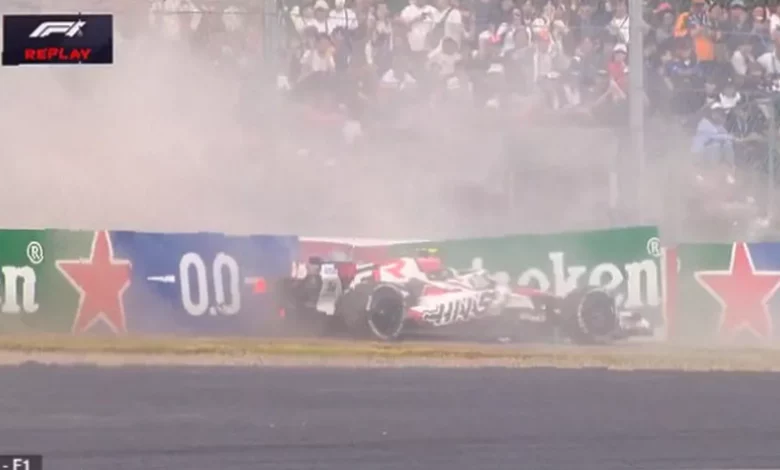
The Haas driver, a 20-year-old Ferrari academy protégé, was attempting an overtake on Alpine’s Franco Colapinto for 15th place on lap 22 of the race at Suzuka. Approaching the Spoon Curve, Bearman was carrying what he later described as a “massive overspeed – around 50kph” compared to the car ahead. This huge delta speed, a feature of the new season’s energy management systems, left him with vanishingly little time to react.
As Bearman shimmied left to pass, he was forced onto the grass to avoid Colapinto, who he believed was harvesting energy and slowing significantly. The car then smashed through polystyrene marker boards, spun, and impacted the barriers sideways with a force measured at 50G, scattering gravel across the track.
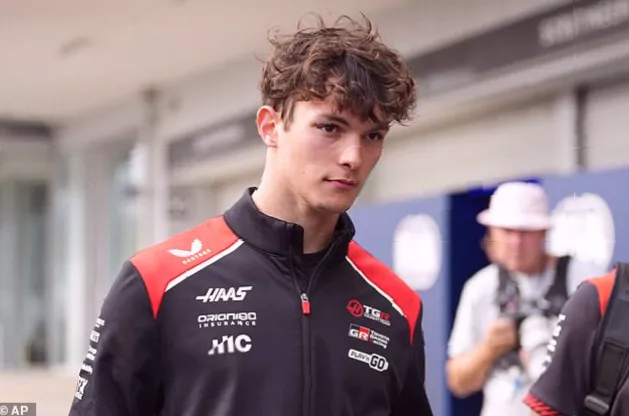
Bearman managed to extricate himself unaided but immediately collapsed, unable to put weight on his right leg. Marshals helped the limping driver away before he was taken by medical car to the circuit’s medical centre for X-rays. His Haas team confirmed he was “alert and communicating” and had sustained no fractures, only a right knee contusion.
The New Regulatory Reality Behind the Crash
In a statement issued after being excused from media duties, Bearman pinpointed the unprecedented speed differential as the core issue. “We need to be a bit more lenient and a bit more prepared, as unfortunately this was the result of a massive delta speed which we’ve not seen in Formula 1 before,” he said. He also suggested Colapinto should have given him more room given the closing rate.
His analysis was echoed by Haas team principal Ayao Komatsu, who told Sky Sports the cause was the “huge closing speed” which forced Bearman into evasive action. “He just had a huge closing speed against Colapinto so he had to take avoiding action and he went on the grass and crashed, so yeah, scary,” Komatsu said.
The incident has validated concerns drivers have voiced privately. Ferrari’s Carlos Sainz stated that competitors had predicted exactly this type of accident due to the high closing speeds made possible by the 2026 cars’ adjustable energy management parameters, and urged for action before the next race.
The crash brought out the safety car, which proved decisive for the race victory. Mercedes’ Kimi Antonelli pitted under the yellow flags and rejoined in the lead, a position he held to the chequered flag. The 19-year-old’s win, his second in a row and third of the season, made him the youngest driver in history to lead the world championship standings.
Bearman, who had qualified 18th but was fifth in the championship coming into the weekend, later returned to the Haas garage and was seen walking in the pit lane. His 2025 rookie season, where he scored 41 points and consistently outperformed teammate Esteban Ocon, demonstrated a resilience he will now need during the enforced break. The 2026 calendar has a month-long gap after Japan, giving his team time to repair the car.
The race was won by Antonelli from McLaren’s Oscar Piastri and Ferrari’s Charles Leclerc. George Russell finished fourth for Mercedes, with Lewis Hamilton sixth for Ferrari and Max Verstappen eighth for Red Bull. Bearman’s Haas teammate, Esteban Ocon, collected the final point in tenth.