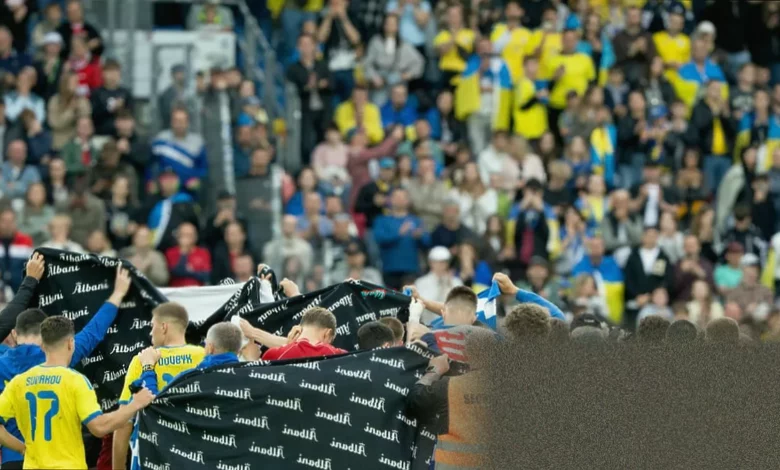
Christian Eriksen collapsed on the pitch for the second time in five years during Sunday’s international friendly between Denmark and Ukraine, but the 34-year-old midfielder was conscious as he left the field. The incident happened in the 65th minute at Odense’s Nature Energy Park, with television footage showing Eriksen clutching his chest before falling to the ground. Medics were on the scene within seconds, and after roughly ten minutes of treatment on the turf he was able to stand and walk to a waiting ambulance. The match, in which Denmark led 2-1, was abandoned shortly afterwards.
Player’s condition and immediate response
The Danish Football Federation later confirmed that Eriksen was “conscious and doing well under the circumstances”. Dr Morten Boesen, the national team’s doctor who led the resuscitation effort during Eriksen’s cardiac arrest at Euro 2020, said the player had been “briefly unconscious, but regained consciousness very quickly … and walked off the pitch by himself”. Dr Boesen added that Eriksen had asked him to pass on a message to his teammates: “He asked me to send his regards to all the players and tell them that he was okay.”
Denmark captain Pierre-Emile Højbjerg, speaking to Danish broadcaster TV2, described the moment he turned and saw Eriksen on his way to the floor. “We know a little about how he reacts, what that means,” he said. “Everyone reacted super-fast and with respect. I can only compliment how much courage those who took care of Christian on the field had. The most important thing is that Christian is doing well.” Players from both sides formed a protective ring around Eriksen while he was being attended to, a gesture of solidarity that was widely praised.
Eriksen was taken to hospital for further examinations to determine what caused the collapse. Dr Boesen said: “He will now undergo further examinations at the hospital to determine what caused the incident. We are in ongoing contact with him and the doctors at the hospital. But Christian is doing well.”
Medical explanation and the role of the ICD
The incident inevitably drew comparisons with Eriksen’s collapse during Denmark’s European Championship match against Finland on 12 June 2021, when he suffered a cardiac arrest and was resuscitated on the pitch by Dr Boesen and the medical team. After that event, Eriksen was fitted with an implantable cardioverter defibrillator (ICD) in his chest.
An ICD is a small, battery-powered device placed under the skin that continuously monitors the heart’s rhythm. If it detects a dangerous arrhythmia – such as ventricular tachycardia or ventricular fibrillation – it delivers a measured electrical shock to restore normal rhythm, effectively resetting the heart. This function is critical for patients at risk of sudden cardiac arrest. The device allowed Eriksen to resume his playing career at club and international level, though regulations in some leagues, including Italy’s Serie A, prevented him from playing with the ICD fitted.
Following Sunday’s incident, Dr Boesen confirmed: “The pacemaker responded as it should.” He was referring to the ICD’s ability to detect and correct the abnormal rhythm that caused Eriksen to lose consciousness. Experts have suggested that such events in young, fit athletes can stem from underlying genetic conditions affecting the heart’s electrical system or muscle structure, such as hypertrophic cardiomyopathy (HCM) or long QT syndrome. However, the specific cause of Eriksen’s cardiac issues has not been definitively disclosed in public statements.
Eriksen’s memory of the 2021 episode, which he recounted to the BBC, illustrates the suddenness of the event. He said he remembered “everything apart from the five minutes” he was unconscious: “I remember the throw-in, the ball hitting my knee and then I don’t know what happened after. Then I woke up with people around me and felt the pressure on my chest, trying to get my breathing back, and then I woke up – I opened my eyes and saw people around me, I didn’t really understand what was going on.” He described the confusion that followed: “At that time I had no idea what had happened, then it goes through my head: ‘Did something happen with my legs? Did I break my back? Can I lift my leg up?’ – all small things I was trying to do to see what happened. Then in the ambulance I heard someone say: ‘How long was he out for?’ and someone said: ‘Five minutes,’ and that was the first time I had heard I was gone.”
Sunday’s match was an end-of-season friendly between two sides that did not qualify for the World Cup. Eriksen, who previously played for Tottenham Hotspur, Brentford and Manchester United – where he won several trophies – has continued to represent Denmark since his return to football with the ICD. The quick medical response on the pitch, including the immediate use of defibrillation and CPR in 2021, has been repeatedly highlighted as a model for how to handle sudden cardiac arrest in sport. Eriksen’s case continues to underscore the importance of such preparedness, as well as the effectiveness of implantable defibrillators in allowing athletes with heart conditions to continue competing.