The England and Wales Cricket Board and all eight franchises of The Hundred have been forced to issue a joint statement affirming their commitment to inclusivity, following reports that Pakistani players could be excluded from next season’s tournament. The move comes after a BBC story suggested reservations within four Indian-owned franchises about signing players from Pakistan, threatening to engulf the ECB’s flagship competition in a crisis of its own making.
The Ownership and the Allegation
At the heart of the controversy is the tournament’s new ownership structure. Significant private investment has come from owners of Indian Premier League teams: Reliance Industries (owners of Mumbai Indians) have a stake in MI London, RPSG Group (owners of Lucknow Super Giants) are involved with Manchester Originals, Sun Group (owners of Sunrisers Hyderabad) have acquired Northern Superchargers, and GMR Group, owners of Delhi Capitals, are linked to Southern Brave. It is these four franchises reportedly harbouring reservations.
The concern is that this could lead to a de facto ban, mirroring patterns seen in other global leagues. No Pakistani player has ever been signed by the Indian-owned teams in South Africa’s SA20, and the two IPL-affiliated franchises in the UAE’s ILT20, sister clubs of MI London and Southern Brave, have not signed a Pakistan player in four seasons. The ECB has now emailed all eight teams warning that action will be taken if there is evidence of discrimination, including exclusion based on nationality.
Legal Repercussions on the Horizon
Beyond the immediate reputational damage, the situation carries tangible legal risk. A total of 67 Pakistani players, including stars like Shaheen Shah Afridi and Babar Azam—the latter being the top run-scorer at the ongoing T20 World Cup—have registered for the upcoming auction. Their absence could potentially trigger claims under UK employment law.
“Discrimination on the basis of nationality, ethnicity or national origins is a form of race discrimination under the Equality Act 2010,” says Susan Perry, a partner at law firm Brecher LLP. She notes it applies to prospective employees and that a claim would rest on a failure to consider someone fairly for employment, not simply the fact of not hiring them. Proof can be deduced from surrounding circumstances on a balance of probabilities, meaning the counties and franchises could be vulnerable if they cannot demonstrate all reasonable steps were taken to ensure equality in recruitment.
A Pattern Foreseen and Ignored
The ECB’s leadership now faces intense scrutiny for failing to safeguard against this exact scenario. Chief executive Richard Gould last year dismissed concerns, stating that while exclusion happened “in other regions… that won’t be happening here.” His previous assurances that Pakistani players would not be excluded on grounds of nationality when private investors took control now ring hollow.
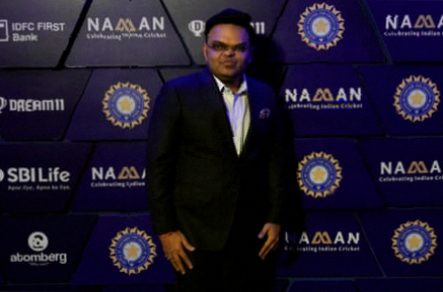
The board’s exposure is heightened because the risk was entirely foreseeable. The geopolitical context is clear-cut: hostile relations between India and Pakistan have kept Pakistani players out of the IPL since 2009. Furthermore, Indian cricket administration is closely aligned with the country’s politics. Jay Shah, the chair of the International Cricket Council, is the son of Indian Home Minister Amit Shah, a key ally of Prime Minister Narendra Modi, whose Bharatiya Janata Party leads the government.
Inclusivity Claims Confront Reality
The potential exclusion strikes at the core of the ECB’s publicly stated values. Former England captain Michael Vaughan has argued that such discrimination would “make a mockery” of the ECB’s aim to make cricket the most inclusive sport, questioning why Indian owners could not pick Pakistani players for The Hundred when the national teams compete in ICC events.
This contradiction is starkly visible in the ECB’s own “State of Equity” report from November, which Gould introduced with talk of making cricket “the most inclusive team sport”. The report highlighted street cricket sessions designed to engage Pakistani communities in Milton Keynes. Such initiatives, critics argue, become meaningless if those same communities see players of their heritage systematically overlooked in the showpiece domestic tournament.
Broader Ambitions and Alignments
The controversy also illuminates the wider power dynamics English cricket has embraced. Lancashire chief executive Daniel Gidney has previously suggested the ECB could consider offering the Board of Control for Cricket in India a minority stake in The Hundred as an incentive to allow Indian male players, currently barred from overseas leagues without a BCCI No Objection Certificate, to participate. This underscores the extent to which English cricket has sought to align its commercial interests with Indian cricket’s financial and political power.
For now, the immediate question is whether any of the 67 Pakistani players will be selected in the upcoming auction, where the men’s longlist will be cut from 710 to about 200. The ECB’s warning of “action” and talk of a referral to the cricket regulator hangs in the air. Yet the deeper damage is already done. The episode has exposed how the pursuit of private investment, without robust public safeguards, has left English cricket’s premier summer event vulnerable to geopolitical pressures that threaten its legal and moral foundations.