Police detain Asian man 100 miles from burglary scene after facial recognition misidentification

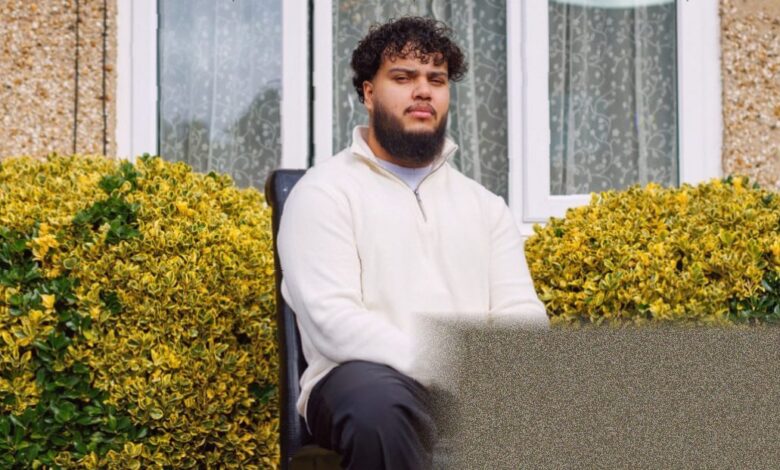
A 26-year-old software engineer, arrested at his parents’ home for a burglary in a city he had never visited, has become a focal point in the growing controversy over biased facial recognition technology used by UK police forces.
Alvi Choudhury was working in Southampton in January when officers knocked on his door. He was handcuffed, held in custody for nearly ten hours, and released at 2am. The arrest was executed by Hampshire Constabulary on behalf of Thames Valley Police, who had used an automated facial recognition (FR) system to match his police mugshot to CCTV footage of a suspect in a £3,000 burglary in Milton Keynes, approximately 100 miles away.
According to documents shared with the Guardian by Liberty Investigates, the match was generated by an algorithm procured by the Home Office from the German company Cognitec. The system runs about 25,000 searches every month against a pool of some 19 million police mugshots held on the UK-wide Police National Database.
Choudhury, who wears a beard, said the suspect in the footage was visibly different. “The kid looked about 10 years younger than me,” he stated. “Everything was different. Skin was lighter. Suspect looked 18 years old. His nose was bigger. He had no facial hair. His eyes were different. His lips were smaller than mine.” He offered evidence of work meetings in Southampton on the day of the crime but was still taken into custody.
Thames Valley Police stated that the decision to arrest was made following a human visual assessment after the automated match, and denied the arrest was unlawful or influenced by racial profiling. However, the force admitted to Choudhury that the arrest “may have been the result of bias within facial recognition technology”. An officer told him that as the technology’s use was already under strategic review, they did not feel the need to raise his case for wider organisational learning.
Choudhury’s account contrasts with the police statement. He said officers at the Hampshire police station laughed when he questioned the resemblance, and that Thames Valley officers who later interviewed him admitted they knew he wasn’t the suspect after comparing him to the footage.
A System With “Concerning In-Built Bias”
The incident underscores long-standing warnings about the technology’s flaws. Home Office-commissioned research revealed in December that the algorithm produces far higher false positive rates for Black (5.5%) and Asian (4.0%) faces than for white faces (0.04%) at certain settings. Police and Crime Commissioners have warned of “concerning in-built bias”, noting that while there is no evidence of adverse impact in any individual case, “that is more by luck than design”.
Further investigations by Liberty Investigates have revealed that police forces successfully lobbied to use a facial recognition system known to be biased against women, young people, and ethnic minorities. They reportedly complained that a more accurate version produced fewer potential suspects, leading to a reversal of measures designed to reduce bias.
The National Police Chiefs’ Council states that facial matches should be treated as intelligence, not fact. Despite this, the technology’s use is expanding rapidly. Thames Valley Police has since December been deploying live facial recognition (LFR) in Oxford, Slough, Reading, Wycombe and Milton Keynes, capturing about 100,000 faces and leading to six arrests. Nationally, Liberty Investigates and The Guardian reported police scanned nearly 5 million faces with LFR cameras in the past year, double the number from the previous year.
“This Makes Me Look Dodgier and Dodgier”
For Alvi Choudhury, the repercussions are personal and professional. His mugshot was on the system only due to a prior wrongful arrest in 2021, when he was attacked on a night out in Portsmouth and later released with no further action. Now with a second mugshot, he fears the automated system could trigger more erroneous arrests. “In my head, if a brown person in Scotland robs a bank are they going to come and arrest me?” he said.
His neighbours saw him led away in handcuffs, his father was left anxious, and he was unable to work the following day. As a software engineer who sometimes requires security clearance for government clients, he is asked about arrests. “This makes me look dodgier and dodgier,” he explained.
He is now claiming damages against both Thames Valley Police and Hampshire Constabulary and is calling for greater transparency on the number of wrongful arrests involving the technology. His lawyer, Iain Gould of DPP Law, said police “must ensure that artificial intelligence is not substituted for human intelligence and due diligence, but instead is used in careful partnership with it”.
Mounting Legal and Regulatory Pressure
The legal landscape around police use of FR is shifting. In a landmark ruling, the UK Court of Appeal found the use of automated facial recognition by South Wales Police to be unlawful, breaching the right to privacy. Last month, South Wales Police paid damages to a black man wrongfully arrested and held for 13 hours after a facial recognition error.
Regulators have expressed repeated concern. In December 2024, the UK’s biometrics and surveillance camera commissioner, William Webster, voiced worry over police retaining and using images of people who were arrested but never charged. The Information Commissioner’s Office has criticised the Home Office for not disclosing biases in the technology.
Other practices have also drawn scrutiny. Liberty Investigates has revealed police forces have conducted hundreds of facial recognition searches against the UK passport database, which holds images of 46 million people, and have used the technology to track children as young as 12.
The Home Office stated that guidance and training to minimise error and maintain public confidence in retrospective facial recognition is under review by the Police Inspectorate. It said a new national facial matching system is under development, featuring an improved algorithm that has been independently tested. A public consultation on a legal framework for facial recognition use in law enforcement was launched and closed on February 12, 2026.