A return of the Russian national anthem to the Paralympic podium, the head of world football declaring a blanket ban “has not achieved anything,” and the new president of the International Olympic Committee insisting athletes must not be “held back by the politics” of their governments. These signals from the highest echelons of global sport suggest a distinct shift away from the hardline stance taken after Russia’s 2022 invasion of Ukraine.
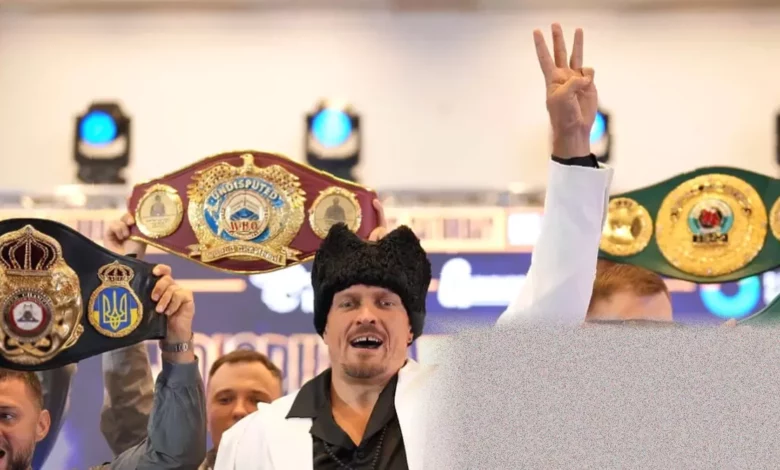
For Ukrainian heavyweight world champion Oleksandr Usyk, a defiant symbol of his nation’s resistance, this changing tide represents a profound moral failure. “My opinion has not changed – this should not be happening,” Usyk told the Associated Press. “People who support the killing of others, the bombing of civilian cities, hospitals, schools, and everything else should not have the right to take part in the Olympic Games.”
The practical evidence of this shift is most visible at the ongoing 2026 Milan-Cortina Winter Paralympics, where Russian athletes are competing under their own flag for the first time in over a decade. This follows a vote by the International Paralympic Committee (IPC) General Assembly on September 27, 2025, to reinstate the national Paralympic committees of Russia and Belarus. IPC President Andrew Parsons acknowledged the decision was contentious but called it a “democratic process,” coming after a successful appeal to the Court of Arbitration for Sport (CAS). The move prompted several nations, including Ukraine and Australia, to boycott the opening ceremony.
The philosophical argument for reintegration is being championed by other powerful figures. FIFA President Gianni Infantino, in an interview with Sky News, said the ban on Russian teams “has not achieved anything” and suggested football’s governing body should “definitely” look at lifting it. “We should never ban any country from playing football because of the acts of their political leaders,” he argued. This stance has drawn fierce criticism from Ukraine’s Sports Minister, Matvii Bidnyi, who labelled the comments “irresponsible” and “infantile,” and from the European Commission, which insists sport “does not exist in a vacuum.” UEFA, European football’s governing body, maintains Russia cannot return until the war ends.
At the IOC, President Kirsty Coventry has indicated a potential path for Russia’s participation at the 2028 Los Angeles Summer Games, emphasising that athletes should “compete freely.” However, the IOC has clarified that for the 2026 Winter Olympics, Russian athletes will remain as individual neutrals, a status a limited number held at the 2024 Paris Games. The committee has drawn a distinction with Israel, stating it has not breached the Olympic Charter in the manner Russia has.
For Usyk, a 2012 Olympic gold medallist who views the Games as sacred “games of peace,” this institutional reasoning is hollow. He has previously described any medals won by Russians as “medals of blood, deaths and tears,” and has directly appealed to former IOC President Thomas Bach to halt their return. “If somebody is even following the orders of his commander-in-chief to go and fight, then they cannot also go to sports competitions and represent their country there,” he said. “That simply doesn’t add up.”
Away from the geopolitical fray, the undefeated Usyk is preparing for his next challenge: a high-profile crossover bout against undisputed kickboxing champion Rico Verhoeven for the WBC heavyweight title on May 23, 2026, at the Pyramids of Giza in Egypt. Further ahead, he eyes a trilogy fight with Tyson Fury, who has announced a comeback after two defeats to Usyk in 2024. Usyk calls a potential third bout “the last dance.” Their previous fights were held in Saudi Arabia, a nation that has aggressively positioned itself as a global sporting hub.
Saudi Arabia’s packed calendar, including events from WWE to Formula E and culminating in its hosting of the 2034 FIFA World Cup, is a central plank of its Vision 2030 economic diversification plan. However, the broader region’s stability for hosting such events is currently under severe strain due to escalating conflict.
Middle East Conflict Disrupts Sporting Calendar
The widening crisis stemming from the US-Israel war with Iran has caused significant disruption across the sporting world. Airspace closures and security concerns have led to a wave of cancellations and postponements, stranding athletes and casting doubt on major fixtures.
In tennis, an ATP Challenger Tour event in Fujairah, UAE, was cancelled after drone debris reportedly ignited a fire at a nearby oil terminal, with a second event there also scrapped. Motorsport has been affected, with the World Endurance Championship postponing its Qatar opener and Formula One races in Bahrain and Saudi Arabia under review. Football has seen Asian Champions League Elite matches postponed, Iran’s domestic leagues suspended, and a high-profile friendly between Spain and Argentina in Qatar thrown into doubt. The International Paralympic Committee has also noted that airspace issues are impacting travel to the ongoing Winter Games in Milan-Cortina.
Amid this regional uncertainty, Usyk remains pragmatic about where his future fights may be held, including a potential return to Saudi Arabia. “Given the situation currently unfolding in the world, my task is simply to be ready,” he said. “Then the organizers will decide where it can be held – where they can stage this show so that it is safe for all.” As global sport navigates the competing pressures of geopolitics, commercial ambition, and moral responsibility, the Ukrainian champion’s unwavering stance provides a stark counterpoint to the softening institutional line.