Capital’s biggest housebuilder says London now off-limits to developers after shopping centre plan blocked


London’s biggest housebuilder has warned that the capital is becoming a “no-go zone for developers” after its plan to replace a Peckham shopping centre with almost 900 homes was thrown out, deepening what it described as an already acute housing crisis.
The Berkeley Group’s appeal to demolish the Aylesham Centre and build 867 flats, a new Morrisons supermarket and other retail and leisure units across 16 tower blocks up to 20 storeys high was dismissed this week by Planning Inspector Matthew Shrigley. He acknowledged the scheme would bring “social and economic benefits” and help ease Southwark’s “acute” housing shortage, but ruled those advantages did “not outweigh the harm to the relevant designated heritage assets important to the area”.
‘Extreme uncertainty’ for developers
Rob Perrins, Executive Chair of Berkeley Group, said the decision demonstrated “the extreme uncertainty developers continue to experience within the planning system”. He questioned why building next to “world heritage assets like Tower Bridge” was allowed but not in Peckham, and warned that developers, including his own company, “can no longer invest in new London sites and the housing crisis continues to deepen”.
The company had originally promised 35 per cent affordable housing – the minimum required under the London Plan – but reduced that to 77 affordable homes, or roughly 12 per cent of the total, of which 50 would be at social rent and 27 intermediate. Mr Shrigley noted that even if the original 35 per cent target had been met, “the level of harm … would not be overridden”.
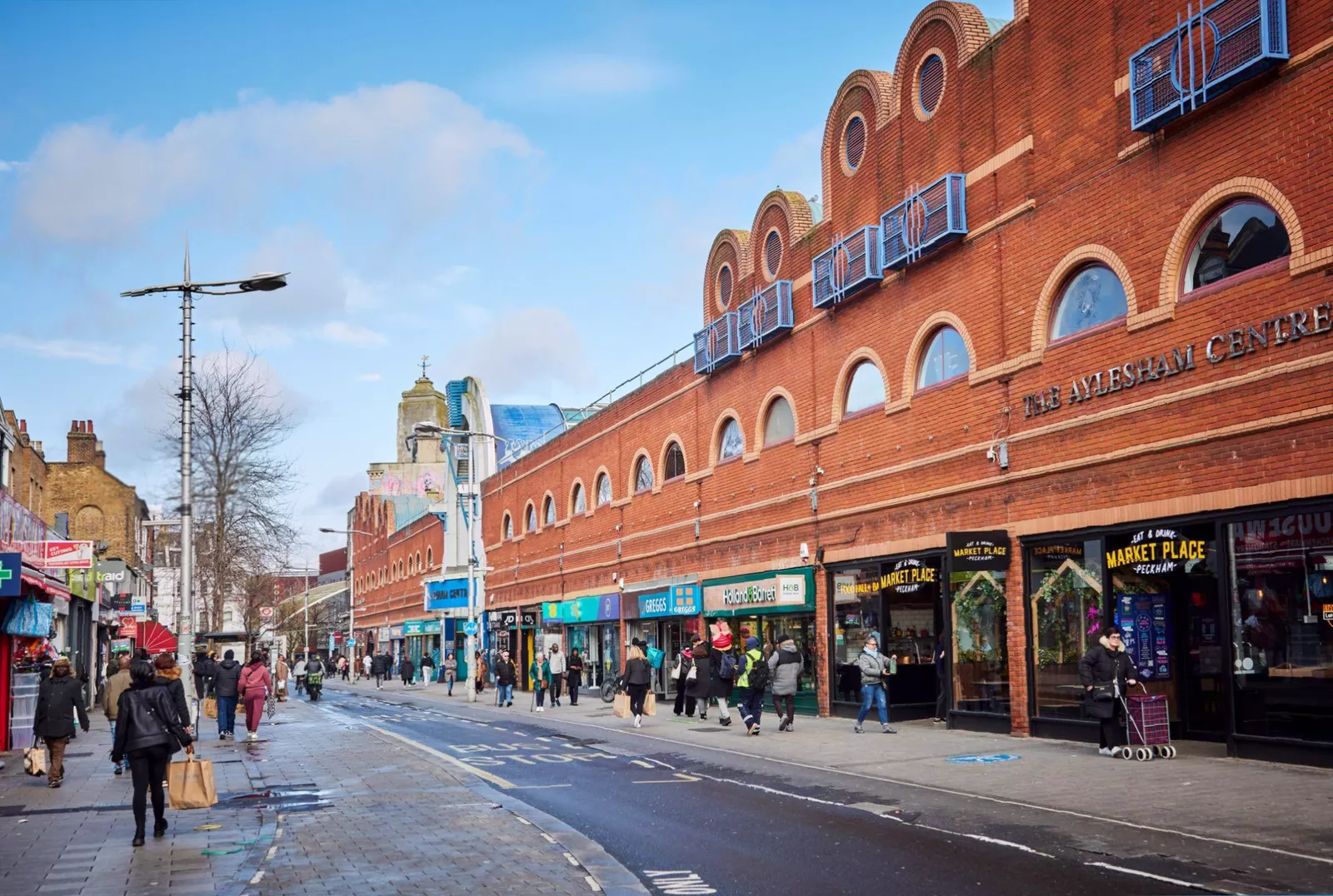
Berkeley said it had spent nine years preparing the scheme, including working with Southwark Council on a joint design brief, and that the site was fully allocated for brownfield regeneration in the council’s Local Plan. “There is something fundamentally wrong when the Inspector supports our affordable housing offer and wider benefits, recognises the acute local housing need, yet blocks development due to subjective heritage impacts, which we believe are of low harm,” Mr Perrins added.
Heritage protection versus housing need
The rejection has reignited a long-running conflict in London between preserving the historic character of its neighbourhoods and delivering the homes the city desperately needs. The Aylesham Centre sits on land that was once the site of the Jones & Higgins department store, which opened in 1867 and was central to Peckham’s development as a shopping destination before closing in 1980. The current centre opened in 1988. The surrounding area includes the Rye Lane Conservation Area, designated in 2011 to protect the central commercial part of Peckham, and local groups such as Peckham Heritage have argued that the height and scale of the proposed towers would be out of character with what they describe as a “largely low-rise suburb”.
Mr Shrigley said that, although the appeal scheme had “some positive design attributes and high order benefits”, the elements of harm identified – to both designated and non-designated heritage assets and the local townscape – were not outweighed. The decision came at a time when London is facing what analysts describe as its “worst housebuilding challenge since the Second World War”. Housing starts in the capital fell by 72 per cent in the 2024-25 financial year, with only 4,170 new homes begun. In the first quarter of 2025, 23 out of 33 London boroughs recorded zero new housing starts. Projections suggest only around 4,550 homes may be completed annually in 2027 and 2028, a fraction of the historic average of more than 10,000 per year since 1946. Completions in 2024-25 stood at 28,576, well below the standard annual target of 88,000.

Berkeley Group itself delivered 4,047 homes in London and the South East in the year to April 2025, up from 3,521 the previous year. It reported a pre-tax profit of £528.9 million and net cash of £337.3 million. The company has adopted a “brownfield first” approach, with 92 per cent of its homes built on such land, and has invested approximately £580 million in socio-economic benefits and affordable housing. Its “Berkeley 2035” strategy involves a £7 billion investment, including £2.5 billion for land, £1.2 billion for build-to-rent projects and £2 billion for shareholder returns. Mr Perrins, who has served as CEO since 2009, is transitioning to Executive Chairman, with Richard Stearn taking over as CEO.
The housing crisis is also driving homelessness. In the year to March 2025, more than 13,000 people slept rough in London – a 10 per cent rise – while the number of households in temporary accommodation hit a record 73,310. Affordable housing completions in 2024-25 were 13,354, a 2 per cent increase on the previous year but 15 per cent lower than 2022-23. Starts funded by the Greater London Authority were 3,991, significantly below previous highs.
Community and council celebrate ‘great day for Peckham’
Local campaign group Aylesham Community Action (ACA) raised more than £55,000 to hire a barrister to represent residents at the Planning Inquiry, which began in October 2025. Comedians James Acaster and Nish Kumar supported the fight by performing a fundraising show at Peckham Levels – a creative hub housed in a repurposed multi-storey car park that has also hosted community meetings about the development. The group described the plans as “gentrification on steroids”.
Southwark Council’s Leader, Sarah King, welcomed the refusal as “a great day for Peckham”. She said the council had “shared those concerns and strongly argued at the public inquiry that the scheme was poorly designed and our position has been vindicated”. She thanked the community for speaking “loud and clearly” and said the council would “read the appeal in detail and carefully consider our next steps”.
Peckham Labour MP Miatta Fahnbulleh called the inspector’s decision “a big win” for the area. “This victory belongs to the whole community,” she said. “We need new homes and investment – but development must work for local people, protect Peckham’s character, and deliver genuine long-term benefit, not just luxury flats.”
Mr Perrins, however, insisted the decision would make development “impossible in just about any town centre”. He pointed to the Government’s own pro-housing policy and said there was “something fundamentally wrong” when heritage impacts could override acknowledged housing need on a fully allocated brownfield site. Berkeley has said it will now “consider all options open to us”.