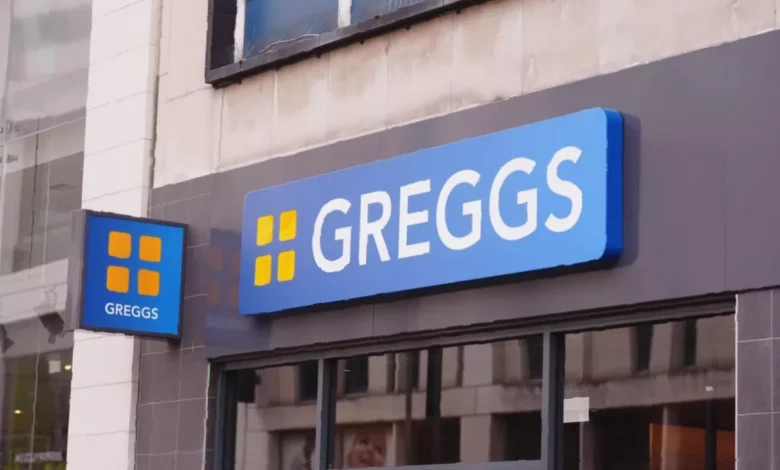
High street bakery giant Greggs has reported a sharp slump in annual profits, highlighting the pressures of cautious consumer spending and a rapidly changing market, even as it presses ahead with an aggressive national expansion.
The company, named the UK’s strongest brand in 2025, saw statutory pre-tax profits fall by 17.9% to £167.4 million for the year to December 27, 2025. This decline was steeper than some analysts had anticipated; a consensus forecast had pointed to a profit of around £173 million, which would have represented a 9% drop.
Total sales grew by 6.8% to £2.15 billion, driven largely by the opening of 121 net new shops, which took its total estate to 2,739 locations. Underlying like-for-like sales growth in company-managed shops was 2.4% for the full year, accelerating to 2.9% in the fourth quarter after a slowdown to 1.5% in the third.
Navigating a challenging landscape
Greggs attributed the profit drop to a “challenging market” backdrop, citing a confluence of headwinds. These include subdued consumer confidence due to the cost of living, higher labour costs, and increased employer National Insurance contributions. The business also pointed to a “spell of particularly hot weather” in June 2025, which knocked high street footfall and prompted a profit warning, and earlier unhelpful weather conditions at the start of the year.
A significant and evolving challenge noted by the company is the growing consumer use of appetite-suppressing weight-loss drugs like Ozempic and Wegovy. Greggs stated it is adapting its menu in response, introducing smaller portions and protein-rich options to cater to changing habits.
Despite these pressures, the firm maintains strong underlying profitability metrics for a food business, with an EBITDA margin of 13.8%, a return on equity of 27.9%, and a gross margin of 61.7%.
Expansion and evening trade fuel growth
Central to Greggs’s strategy is continued physical expansion. It is targeting around 120 further net store openings in 2026, focusing on under-penetrated areas, travel hubs, retail parks, and supermarkets, with an ultimate ambition for “significantly more than 3,000 UK shops.” This expansion includes smaller-format “Bitesize Greggs” shops in high-footfall locations.
Digital and evening trade are also key growth drivers. Delivery sales now represent 6.8% of company-managed shop sales, while evening trade is the fastest-growing daypart, accounting for 9.3% of sales in the first half of 2025. The company’s app and loyalty scheme are gaining traction, with 25.7% of transactions scanned via the app in H1 2025.
Menu innovation continues, with the chain having sold over 50 million pizza slices in 2025 alongside staples like sausage rolls, and is investing in new distribution centres for future efficiency gains from 2027.
A cautious outlook for the year ahead
For the current year, Greggs has expressed a “cautious but hopeful” outlook. Chief Executive Roisin Currie said: “Looking into 2026, easing inflationary pressures should provide some support to consumer spending and demand for convenient food-on-the-go continues to underpin the market.”
However, the company expects underlying profits for 2026 to be similar to 2025 levels, with any improvement dependent on a recovery in consumer spending. This guidance is below current market consensus, leading analysts at JPMorgan and RBC Capital Markets to indicate it implies a downgrade to estimates.
The firm warned that consumer confidence remains a “market headwind,” alongside unhelpful changes to tax rules and minimum wages. This cautious stance comes as the company faces questions from some analysts over potential market saturation and its brand direction, with rival bakery chain Gail’s also planning 40 new branches in 2026.
Investor sentiment has been mixed. Greggs ended 2025 as the most-shorted stock on the UK market, with its share price having fallen approximately 40% over the past year to around £16 in early March 2026. Yet some analysts see potential value, with Deutsche Bank suggesting expectations for 2026 are already low and unlikely to change further.
In the first nine weeks of 2026, like-for-like sales growth in managed shops was 1.6%, with total sales up 6.3%, sustained by its ongoing store opening programme.