Significant cuts are being quietly imposed on key UK programmes designed to protect nature and combat climate change in developing nations, undermining the government’s public commitments to international climate finance. The reductions, which have not been formally announced, affect initiatives ranging from landscape conservation to ocean protection and cast doubt on Britain’s role as a climate leader.
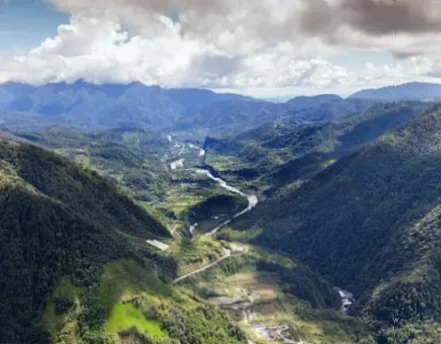
Among the most notable casualties is the £100m Biodiverse Landscapes Fund. Originally intended to safeguard vital ecosystems across six regions in Africa, South America, and Asia, its scope has been drastically reduced to just two areas, effectively axing its broader ambition. Concurrently, the Coast (Climate and Ocean Adaptation and Sustainable Transition) and Pact (Prepare and Accelerate Climate Transitions) projects are facing substantial cuts. The future of the high-profile £500m Blue Planet Fund, established in response to public concern raised by Sir David Attenborough’s documentaries, is also now in question despite its successful operation.
These cuts are obscured by a chronic lack of transparency in how the UK accounts for its International Climate Finance (ICF). Freedom of Information requests have revealed spending slashes across responsible departments, with no project-level data published since 2020. This opacity makes the full scale difficult to gauge, but schemes expected to be worth hundreds of millions have been substantially reduced, in some cases by more than half. Many organisations report that funding is being drip-fed, doled out only one year at a time with no long-term guarantees, crippling their ability to plan and jeopardising local jobs.
Pledges, Cuts and Creative Accounting
The backdrop to these cuts is a major £11.6bn five-year ICF pledge made by Boris Johnson in 2021, ahead of the COP26 summit in Glasgow. Of this, £3bn was earmarked for nature protection. However, the Guardian has previously revealed that the government plans to reduce the next spending round to £9bn over five years—a cut of more than a fifth. Experts state this move is out of step with an international commitment by developed nations to triple global ICF to $300bn annually by 2035.
Compounding the issue, at least £2bn of the £11.6bn pledge is likely to be met not through dedicated climate programmes but via an accounting change instituted by the last Conservative government. This allows 30% of any aid spending in the world’s least developed countries to be counted as ICF, even if the projects have no explicit climate or nature components. This mechanism could enable the government to meet its headline financial commitment while simultaneously cutting the very programmes it was meant to fund.
Jonathan Hall of Conservation International UK said the government was failing voters. “Polling shows protecting rainforests, oceans and wildlife is a very popular use of the UK aid budget,” he stated, adding that a “radical improvement in transparency is also needed” so the public can see what UK funds are protecting.
The Foreign, Commonwealth and Development Office, when questioned, refused to address specific funds. A spokesperson said: “The UK remains on track to deliver at least £11.6bn in ICF by the end of March 2026. We continue to publish regular, transparent information to enable people in the UK and internationally to track our progress.”
Pressure for Alternative Funding and Security Warnings
The uncertainty has provoked a strong response from conservation and climate groups. Adrian Gahan from the Campaign for Nature, a co-creator of the UK Nature Finance Tracker, highlighted the irony surrounding the Blue Planet Fund. “Inspired by David Attenborough’s Blue Planet series, the UK government has spent five years building up this fund,” he said. “Unfortunately, in Attenborough’s 100th birthday year, it appears the government is considering closing this programme. This would be remarkably short-sighted.”
A coalition of 85 civil society organisations has written to Prime Minister Keir Starmer urging intervention. They argue that cutting climate finance “would be a massive betrayal of countries and communities on the frontline of the climate crisis”. The letter, seen by the Guardian, proposes raising tens of billions annually by taxing oil and gas companies, redirecting fossil fuel subsidies, and levying taxes on luxury travel like frequent flyer and private jet charges.
Catherine Pettengell, executive director of Climate Action Network UK, who organised the letter, said: “Public polling tells us that the UK public think eye-watering fossil fuel profits and luxury travel should be taxed to pay for the damage they cause to our climate. Yet the wealthiest and largest polluters continue to be let off the hook.”
The stakes of underfunding these global efforts were underscored last year in a report compiled by the UK’s spy chiefs on the Joint Intelligence Committee. They warned that ecosystem collapse in vulnerable regions—such as the Amazon rainforest or the world’s coral reefs—could have severe impacts on UK national security, potentially leading to food shortages, unrest and conflict.