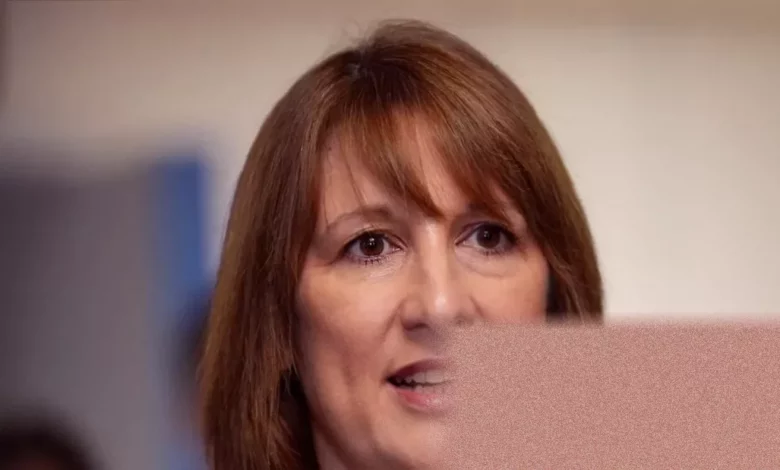
Chancellor Rachel Reeves will today confront a stark economic dilemma, as a spiralling conflict in the Middle East sends global energy prices soaring and threatens to derail the government’s core mission of taming inflation and reigniting growth. The Chancellor is set to respond to the Office for Budget Responsibility’s Spring Forecast, but economists warn the independent watchdog’s projections risk being outdated before they are even published.
Forecast Overshadowed by Crisis
The OBR’s latest economic and public finance forecasts, due on March 3, 2026, were expected to form the basis of a relatively quiet Spring Statement by Ms Reeves. The forecasts were anticipated to show public finances moving in the right direction, with the £22 billion of fiscal headroom she held against her rules in November’s budget largely intact. The OBR was also set to account for lower yields on UK government bonds, which have made borrowing cheaper for the Treasury.
However, that cautiously positive backdrop has been shattered. Following US and Israeli strikes on Iran, which reportedly killed Supreme Leader Ayatollah Ali Khamenei, and subsequent retaliatory attacks, benchmark European gas prices surged by more than 40% on Monday. The price of Brent crude oil jumped by 6%, with other reports noting a near 10% spike at one point, taking it to around $79 a barrel. Analysts at Barclays Investment Bank have now raised their forecast for Brent crude to $100 a barrel.
“Just when Reeves thinks the economy is on a slightly more even keel, the government is now confronting a crisis that’s completely outside its control and it creates another massive headwind,” said Mujtaba Rahman of the political risk consultancy Eurasia Group. “The two areas they’ve trumpeted the most are the cost of living and interest rates, and those are the two areas of the economy that are now most at risk.”
Inflation and Rate Cut Hopes in the Balance
The immediate threat is to the inflation outlook, a cornerstone of the Chancellor’s economic plan. James Smith, chief economist at the Resolution Foundation, stated plainly that as a result of the Gulf crisis “the inflation outlook is higher; the cost of living pressures are greater – particularly if the conflict continues for any length of time.”
Analysts at Capital Economics estimate that if oil prices rise to $100 a barrel, approximately 0.7 percentage points could be added to global inflation, with developed markets potentially seeing inflation up to 0.8% higher than expected. Net energy importers like the UK are particularly exposed, as rising energy costs rapidly feed into consumer bills and the wider cost of goods.
This has directly impacted expectations for interest rate cuts, a key hope for the Treasury to encourage business investment and consumer spending. Before the escalation, markets priced in an 80% chance of a cut at the Bank of England’s next meeting on March 19. By Monday afternoon, that probability had slumped to just above 50% as traders curbed bets on cuts across central banks due to the risk of energy-driven inflation.
Chris Beauchamp, chief market analyst at IG, drew a sobering comparison to the 2022 price shock following Russia’s invasion of Ukraine. “Hopes that pricing pressures would ease and consumers could spend more could be dashed, as a price spike similar to 2022 causes a major headache for both policymakers and consumers, potentially disrupting the plan for more UK rate cuts,” he said.
Bank of England policymaker Alan Taylor said it was “really too soon to tell” how the conflict would impact Britain’s economy, noting the central bank might soon face a complex scenario where usual trade-offs between a slowing economy and inflationary pressures no longer apply.
Strait of Hormuz Closure Adds to Supply Fears
The risk of prolonged disruption is heightened by actions in a critical global oil chokepoint. The Iranian Revolutionary Guard Corps has declared the Strait of Hormuz closed to international navigation, and shipowners have reportedly stopped using it following warnings from Iran. This physical threat to supply chains, alongside the general confidence shock, could significantly drag on global trade volumes.
Even the modest movement in government borrowing costs in the Chancellor’s favour now appears fragile. A modest sell-off in UK government bonds on Monday pushed the yield on 10-year gilts up by 0.05% to 4.28%, a warning that the cost of servicing the national debt could also rise.
Political Pressure on Fuel Duty and Growth Concerns
The immediate political fallout has focused on fuel prices. The Liberal Democrats have urged the Chancellor to cancel the planned 1p per litre increase in fuel duty scheduled for September. The party’s Treasury spokesperson, Daisy Cooper MP, said it would be “disastrous” to proceed with the hike “with fuel prices poised to soar.” Motoring groups support the call, with the AA’s president Edmund King predicting “record prices at the pumps” within days.
The Treasury has confirmed the existing 5p per litre fuel duty cut has been extended to the end of August 2026, having been initially extended by the Labour government at the Autumn Budget 2024.
Against this volatile backdrop, the underlying UK economy remains fragile. GDP growth was just 0.1% in the final quarter of 2025, and economists like Barclays’ Jack Meaning expect the OBR to revise down its previous optimistic growth forecast. The peak unemployment rate for 2026 could also be revised up towards 5.2%.
Nevertheless, in her statement, Chancellor Reeves will seek to project stability. She is expected to insist she has “the right economic plan for our country, in a world that has become more uncertain,” and will argue that “because of the decisions we have already taken, we have a stronger and more secure economy. Inflation and interest rates are falling. And in every part of Britain, working people are better off.”
Whether that message of control can withstand the gale-force headwinds now blowing through global energy markets will define the economic challenge in the weeks ahead.