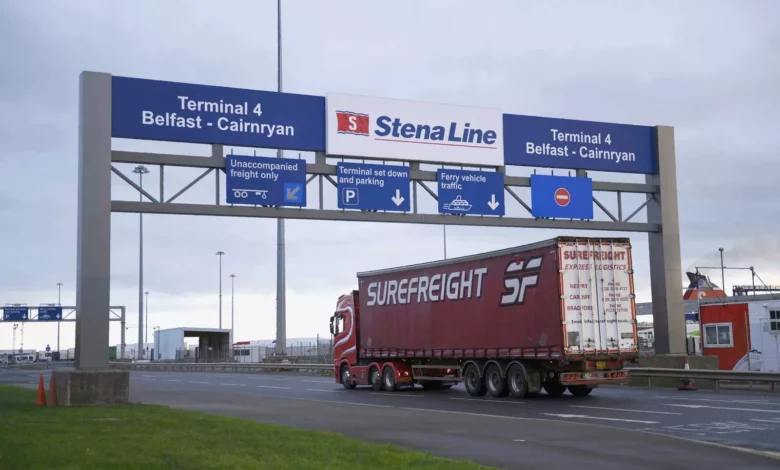
The number of haulage companies collapsing into insolvency has nearly doubled in the five years since the UK left the European Union, according to official figures obtained by the Liberal Democrats, highlighting the severe and accumulating pressures on a sector vital to the nation’s supply chains.
Data provided in response to a Parliamentary question shows 2,051 haulage firms went bust between 2021 and 2025, compared to 1,068 in the five years prior. Industry analysts warn this stark increase is driven by a toxic mix of post-Brexit bureaucracy, rampant cost inflation, and a sector already on a precarious financial footing. Over a third of transport and storage companies have no cash reserves, and many operate as ‘zombie’ businesses with negative balance sheets, leaving them acutely vulnerable to any new shock.
A Perfect Storm of Financial Pressures
While haulage accounts for a relatively small percentage of total UK corporate insolvencies, the rate of failure is accelerating. In September 2025 alone, at least seven haulage companies entered administration or liquidation. The insolvency firm Begbies Traynor has cautioned that official statistics may understate the true distress, as many smaller operators simply cease trading without formal proceedings.
The roots of the crisis are multifaceted. The removal of COVID-19 support schemes in 2022 exposed underlying weaknesses, while chronic issues like late payments and wafer-thin margins have been drastically worsened by soaring operational costs. Volatile global energy markets, exacerbated by the conflict in the Middle East, have sent fuel prices spiralling. The Bank of England’s Decision Maker Panel survey for March 2026 found firms now expect to raise prices by 3.5% over the next year, partly in response to these energy cost pressures.
The Looming Disruption of the EU’s Entry/Exit System
Compounding these existing challenges is the imminent full enforcement of the European Union’s Entry/Exit System (EES), which industry bodies fear could be the final blow for many struggling operators. The system, which began rollout in October 2025 and is expected to be fully operational by April 2026, replaces manual passport stamps with compulsory biometric checks—fingerprints and facial scans—for non-EU citizens entering the Schengen Area.
For UK hauliers, the implications are severe. The Road Haulage Association (RHA) warns that border crossings which once took minutes could now take 10 to 20 minutes per vehicle as drivers submit to biometric registration. This threatens catastrophic delays to tightly scheduled freight movements and a significant increase in costs. Crucially, the EES will automatically and rigidly enforce the 90/180-day rule, limiting British drivers to 90 days within the Schengen zone in any 180-day period. Violations could result in fines of up to €10,000 and multi-year entry bans.
The RHA has stated that 80% of its operators expect a decrease in business as a result, with work likely to be lost to EU-based rivals who face no such restrictions. The association is campaigning for a “professional drivers’ exemption” from the 90/180-day rule. Industry estimates suggest the total economic hit from the EES could reach £400 million. While the UK government has allocated £10.5 million to minimise disruption at ports and says it is working with operators on rollout, firms are scrambling to adapt.
Political Calls for a Border Fix and Closer Ties
In response to the crisis, the Liberal Democrats are urging ministers to seek an immediate bilateral agreement with the EU to allow British HGV drivers to register their biometric details away from congested border points. The party’s Europe spokesperson, Al Pinkerton MP, warned that failure to act would have a “catastrophic impact” on surviving companies, supply chains, and ultimately food and goods prices for consumers.
Mr Pinkerton also called for the government to begin negotiations on a Customs Union with the EU, describing it as the “single biggest lever” to boost business and slash Brexit bureaucracy. This push for closer alignment comes as Prime Minister Keir Starmer has signalled that the “volatile” international situation, driven by the Middle East conflict, makes closer partnership with European allies a long-term national interest.
However, the Labour government has maintained its manifesto red lines, ruling out a return to the single market, a customs union, or freedom of movement. Upcoming UK-EU negotiations are scheduled to focus on areas such as food standards, emissions, and a youth mobility scheme. A Cabinet Office spokesperson pointed to a recent food and drink trade deal with the EU, stating it would “slash red tape and checks for British lorry drivers” and add £5.1bn to the economy.
Meanwhile, the geopolitical situation continues to cast a shadow. Iran’s stranglehold on tanker traffic through the Strait of Hormuz—a chokepoint for 20% of the world’s oil—has disrupted global supplies, pushing Brent crude prices temporarily over $100 a barrel. The National Farmers’ Union has warned this will drive up fertiliser costs and food prices, creating another headwind for the haulage industry that transports these goods.