The renewed conflict in the Middle East has sent shockwaves through global energy markets, threatening to upend the UK’s fragile progress on inflation and presenting a stern new test for the Bank of England.
Between late February and mid-March 2026, wholesale gas prices soared by 67% and oil by 35%, a direct consequence of the instability. Energy analysts now predict these wholesale surges will force the domestic energy price cap to rise by approximately 9% from July, with further increases likely. While not yet at the extreme levels seen during the 2022 Russia-Ukraine war, the spike has already prompted calls for renewed government support for households and businesses, echoing the £75 billion package deployed during the last crisis.
The Bank’s Balancing Act
This external shock arrives just as inflation had shown signs of moderating. According to the latest official figures, UK CPI inflation eased to 3.0% in January 2026, down from a peak of 11.1% in October 2022. Forecasts had suggested a continued fall towards the Bank’s 2% target by the end of the year.
However, the Monetary Policy Committee (MPC) has signalled deep caution. At its March 2026 meeting, it held the base rate steady at 3.75%, explicitly citing inflation risks from the Middle East. This decision underscores a central dilemma: whether tightening monetary policy in the face of a supply-side shock merely doubles the economic harm, a debate acknowledged by financial commentators. The move has also scaled back market expectations for imminent interest rate cuts.
The current stance marks a significant shift from the era of extreme monetary policy that followed the 2008 financial crisis and the pandemic. Then, interest rates were slashed to a historic low of 0.1% and the Bank embarked on massive Quantitative Easing (QE), eventually purchasing £895 billion of assets. That policy, aimed at stimulating the economy by keeping gilt yields low and providing liquidity, was long expected to trigger rampant inflation—a surge that mysteriously failed to materialise throughout the 2010s.
Why Forecasting Inflation Remains a Fool’s Errand
Economists still debate why the earlier QE did not spark immediate inflation. Explanations range from the disinflationary drag of globalisation and technological gains to the lingering aftermath of the financial and eurozone crises, which kept economic capacity idle. The pandemic period, by contrast, saw aggressive central bank easing coincide with a perfect storm of supply chain disruption, an energy shock from Ukraine, pent-up demand, and high government spending, resulting in the dramatic inflation spike the world experienced.

This history reveals a core truth: inflation is notoriously difficult to forecast because it is the complex product of numerous, often competing, forces. The current situation is no different. While higher energy prices are inherently inflationary, they could also weaken economic demand, potentially making their impact temporary.
Structural Pressures: AI and the Spending Imperative
Complicating the picture further are two powerful, longer-term trends. First is the energy-intensive artificial intelligence boom. AI development and data centres are vast consumers of power. UK data centres alone used about 2% of the nation’s electricity in 2023, a figure forecast to rise at least fivefold by 2030, potentially reaching 6% of total demand. The government’s aim to increase sovereign AI computing capacity twenty-fold by 2030 will only amplify this surge, creating a major new source of structural energy demand that could collide with net-zero commitments.
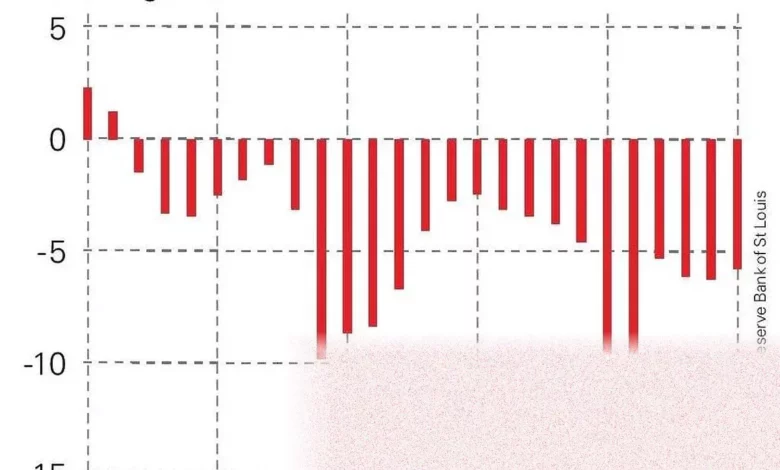
Second is the apparent political impossibility of significantly reducing government expenditure. After major crises, state spending has tended to ratchet up permanently. UK government spending was 44.0% of GDP in 2024, significantly higher than the 20th-century average. As noted by financial analysts, with the US running a 6% budget deficit even in a strong economy, a global bias towards fiscal expansion seems entrenched. This spending, the argument runs, will likely be funded by central banks via QE if debt markets falter, creating a persistent underlying inflationary bias.
Consequently, while the Middle East crisis may deliver a sharp upward shock, it is acting upon an economic landscape already shaped by profound structural pressures—from the AI revolution’s hunger for power to the enduring weight of the state. The consensus among experts suggests a return to the Bank of England’s 2% target remains a distant prospect, as the nation navigates a volatile path between immediate geopolitical shocks and these deep-seated new realities.