Global stock markets have remained remarkably steady in the face of escalating conflict in the Middle East, a calm that belies the severe disruptions rippling through energy markets and supply chains. Since the coordinated US and Israeli strikes on Iran in late February and the retaliatory actions that followed, the overarching indicator of global equities has shown little net movement, a stability that continues to puzzle many observers.
This apparent market equanimity exists atop significant sectoral volatility and profound geopolitical shifts. The immediate economic shock has been most acute in energy, where the crisis has underscored global vulnerabilities. The Strait of Hormuz, a critical chokepoint through which a substantial portion of the world’s oil and gas flows, has seen crude and product volumes plunge, sending Brent crude prices soaring. The disruption extends beyond energy, squeezing supplies of critical inputs like fertiliser and sending maritime insurance premiums skyrocketing, with UNCTAD analysis suggesting a significant potential slowdown in world merchandise trade growth for 2026.
Brazil’s insulated advantage in a volatile world
Amid this turbulence, certain economies are positioned to weather the storm better than others. Analysis suggests Brazil could emerge as a relative winner. The crisis has intensified the global focus on energy and resource security, which supports commodity prices and related investment—a domain where Brazil holds considerable strength. It is a major producer of agricultural goods like soybeans, coffee, and sugar, as well as iron ore and oil, with the agricultural sector alone accounting for about 43% of its total exports.
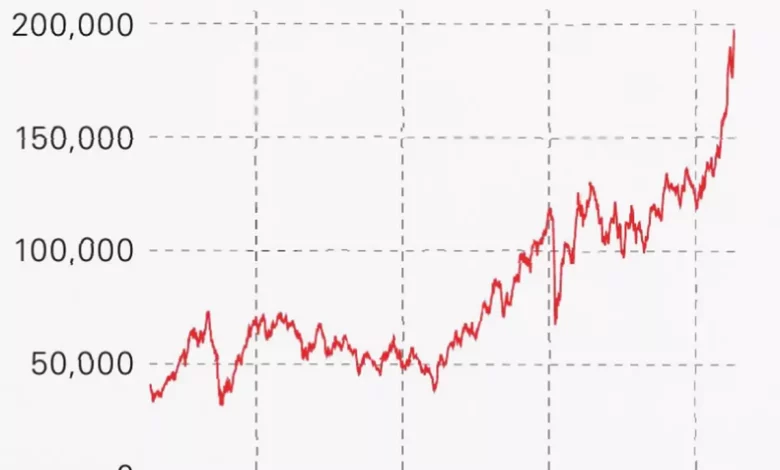
Crucially, Brazil’s significant domestic biofuel industry provides a buffer against soaring fossil fuel costs. Biofuels, primarily from sugarcane, contribute approximately 25% of the country’s transportation fuels, enhancing its energy security. Economically, Brazil has demonstrated resilience, with GDP growth of 3.4% in 2024, though it slowed to 2.3% in 2025 and is projected by the IMF to reach 2.2% in 2026. This history of performing well during resource booms, coupled with a forward price-to-earnings ratio around ten for its market, makes it a focal point for investors considering a hedge against global instability. One instrument capturing this interest is the Xtrackers MSCI Brazil ETF, which has seen its price rise nearly 9% over the past fortnight and is considered by some technical analyses to hold positive signals, though it is currently seen as overbought.
The looming pressure on dollar dominance
If Brazil illustrates a potential beneficiary, the broader financial system faces a more seismic, if gradual, shift. The conflict has intensified the long-running debate about the future of the US dollar as the world’s primary reserve currency. The dollar’s embedded role in global finance remains immense, but its share in central bank reserves has steadily eroded from around 71% in 1999 to about 56% today. The “weaponisation” of the dollar through financial sanctions has added impetus for some nations to seek alternatives.
The process, as one might describe using Ernest Hemingway’s famous phrase about going bankrupt, could happen “gradually, then suddenly.” A global financial system less anchored on the dollar would look profoundly different. While America is unlikely to face bankruptcy, a sustained decline in foreign demand for US Treasury debt—a cornerstone of global finance now seeing increased, volatile activity from hedge funds—could force difficult domestic choices between slower growth and higher inflation.
This decoupling would extend beyond government debt to the corporate sphere. The dominance of US-based global payment networks like Visa and Mastercard, which profit from transaction fees across a vast international infrastructure, could be vulnerable to any concerted effort to build financial systems less reliant on American intermediaries. These companies face existing competition from fintechs and regional players, but a geopolitical-driven shift could present a more fundamental challenge to their operational model. The full implications remain unclear, but the Middle East conflict has accelerated a conversation that promises to redefine the foundations of global economic power.