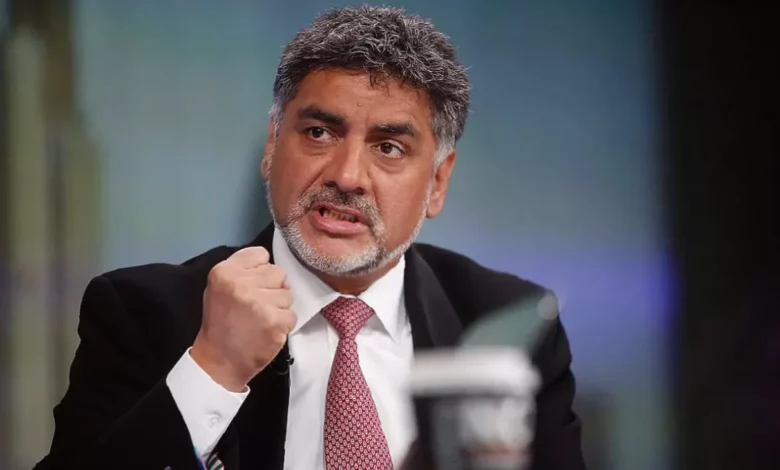
Major corporate employers have slashed their graduate intake by more than half this year, according to prominent entrepreneur James Caan, who warns the UK is “heading for a car crash” as artificial intelligence systematically displaces entry-level roles traditionally filled by new university leavers.
The founder of recruitment giant Alexander Mann, who later built the private equity firm Hamilton Bradshaw, said his conversations with firms like Goldman Sachs and KPMG revealed graduate intakes for 2025 were running at less than 50% of the previous year’s level. The core issue, he argues, is that AI can now perform the research-oriented tasks that were the staple of junior positions in sectors from finance to law. “Research is now available at the click of a button, removing the need for someone sitting there for hours trawling through documents,” he stated.
Studies confirm a hollowing out of junior roles
This alarming assessment is borne out by recent data. UK tech companies reportedly cut graduate roles by 46% from 2023 to 2024. A King’s College London study found that firms with workforces highly exposed to AI capabilities reduced total employment by 4.5%, with the losses concentrated in junior positions. A 2025 report by Prospects indicated 11% of graduates had already changed career plans due to AI fears.
Caan points to the crashing share prices of the world’s three largest recruitment firms—Adecco, Randstad, and Manpower—over the last two years as a market signal that the number of jobs to be filled is in structural decline. He warns that this erosion of the entry-level rung will fundamentally alter management, reducing the need for people-oriented leaders in favour of a smaller cadre of highly analytical, data-driven managers.
An education system “stuck in the 1950s”
The crisis, in Caan’s view, is exacerbated by an education system that has failed to keep pace. “The key problem is that the education system dates back to the 1950s idea of GCSEs and A-levels leading on to university, even though the economy has changed dramatically,” he said. He highlighted that many teachers were trained decades ago and lack the skills to prepare students for today’s economy, a point he has advocated for change on through his work with the Foundation for Education Development (FED).
While the UK government is pursuing reforms—including a mandatory AI training programme for teachers and the Skills England Bill to overhaul technical education—Caan believes other nations are moving faster. “The Gulf and China are way ahead of us,” he said, noting that even elite institutions like Oxford and Cambridge risk falling behind. China plans to introduce AI education in all primary and secondary schools by 2030, while in the UAE, 75% of teachers already use AI tools, the highest rate globally.
His proposed solution involves leveraging the technology itself. He suggests using AI to design bespoke courses with content from world-class institutions, delivered by virtual avatars, with classroom teachers facilitating discussion. “I’ve always been a big fan of teaching students the basics of personal finance… Yet when I’ve raised the issue, the big objection has always been that many of those teaching in schools today don’t know that much about those topics either,” he explained. AI, he argues, could solve this knowledge gap.
A cultural shift in entrepreneurship, but systemic hurdles remain
Beyond formal education, Caan, a former investor on BBC’s *Dragons’ Den*, believes the UK has undergone a cultural shift normalising entrepreneurship. “It showed people from all backgrounds that starting a business was not reserved for a particular class, education or network,” he said. Younger generations are now far more comfortable with enterprise and alternative career paths.
However, the system has not caught up with this ambition. The UK ranks 29th out of 54 countries for its entrepreneurship ecosystem, with scores declining since 2020. Persistent weaknesses include access to finance and business support. Caan argues that British founders often sell their companies too early due to limited access to the “patient capital” needed for scale, contrasting this with the long-term vision of firms like Amazon.
He is also sharply critical of government policy, describing a recent hike in employer National Insurance Contributions (NICs) to 15% as “ill-thought through” and warning it could “kill all the small companies.” From April 2025, the rate rose from 13.8% while the threshold for paying it was lowered, measures the Office for Budget Responsibility estimates will add 2% to employers’ payroll costs. He cites “ridiculous” bureaucratic delays, recounting that one of his recent ventures took five months to obtain a VAT number.
While the government has announced a “blitz on business bureaucracy” aiming to save firms £6 billion a year, Caan remains sceptical. He suggests a more targeted approach, proposing that if tax rises are needed to fund retraining for workers displaced by AI, they should fall on the large technology companies driving the disruption, not on struggling small businesses.