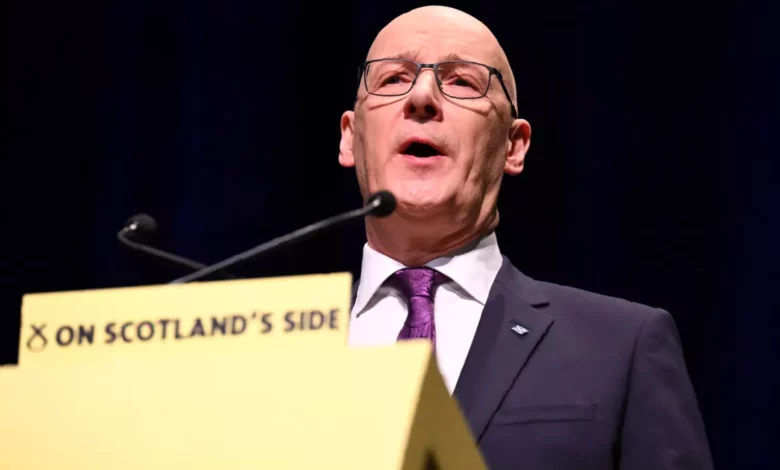
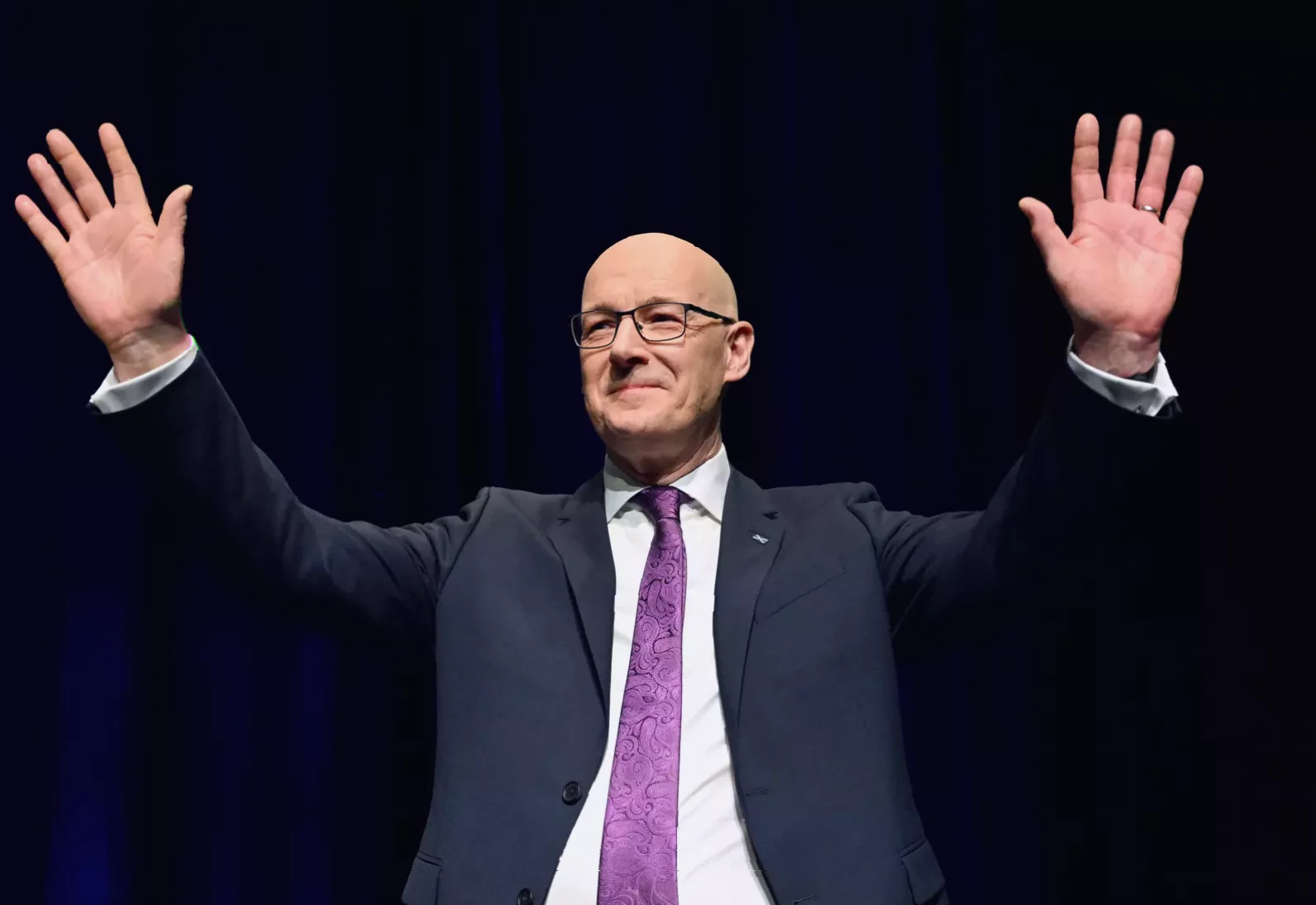
John Swinney has set out a radical vision for an independent Scotland’s place in the world, pledging to use its sovereignty to become a “voice for peace” by taking a constitutional stand against foreign military powers involved in unlawful wars.
In a keynote address to the SNP conference in Edinburgh, the First Minister said the foundational document of a new Scottish state would include a legally binding ban on nuclear weapons and prohibit any foreign military engaged in “illegal conflicts” from operating on Scottish soil or in its waters.
The policy announcements were framed as a direct response to the ongoing conflict in the Middle East, with Mr Swinney stating that recent American and Israeli military action in Iran had “no basis in international law”. “For the sake of the innocent children of Iran, for the sake of peace, our call is for diplomacy, for de-escalation, and an end to this war,” he told delegates.
A Policy Forged in Current Conflict
The First Minister’s speech explicitly linked the proposed constitutional ban to the military strikes launched by the United States and Israel against Iranian territory, which commenced on 28 February 2026. Mr Swinney argued that while the Iranian regime was “brutal and illegitimate”, this did not justify the scenes of devastation being broadcast from Tehran.
The legal status of those operations, however, is a matter of intense global debate. Several international legal analyses have condemned the US and Israeli actions as a violation of the UN Charter’s prohibition on the use of force. Conversely, some scholars and the Israeli government itself have argued the strikes fall within the right to self-defence, citing a history of attacks from Iran and its proxies. The concept of “pre-emptive force” lacks a widely accepted basis in international law.
It is against this contested backdrop that Mr Swinney’s promise must be understood. The SNP policy would require an independent Scottish government to make its own determination on what constitutes an “illegal conflict”, a complex and politically charged legal judgement.
Prestwick Airport: The Immediate Flashpoint
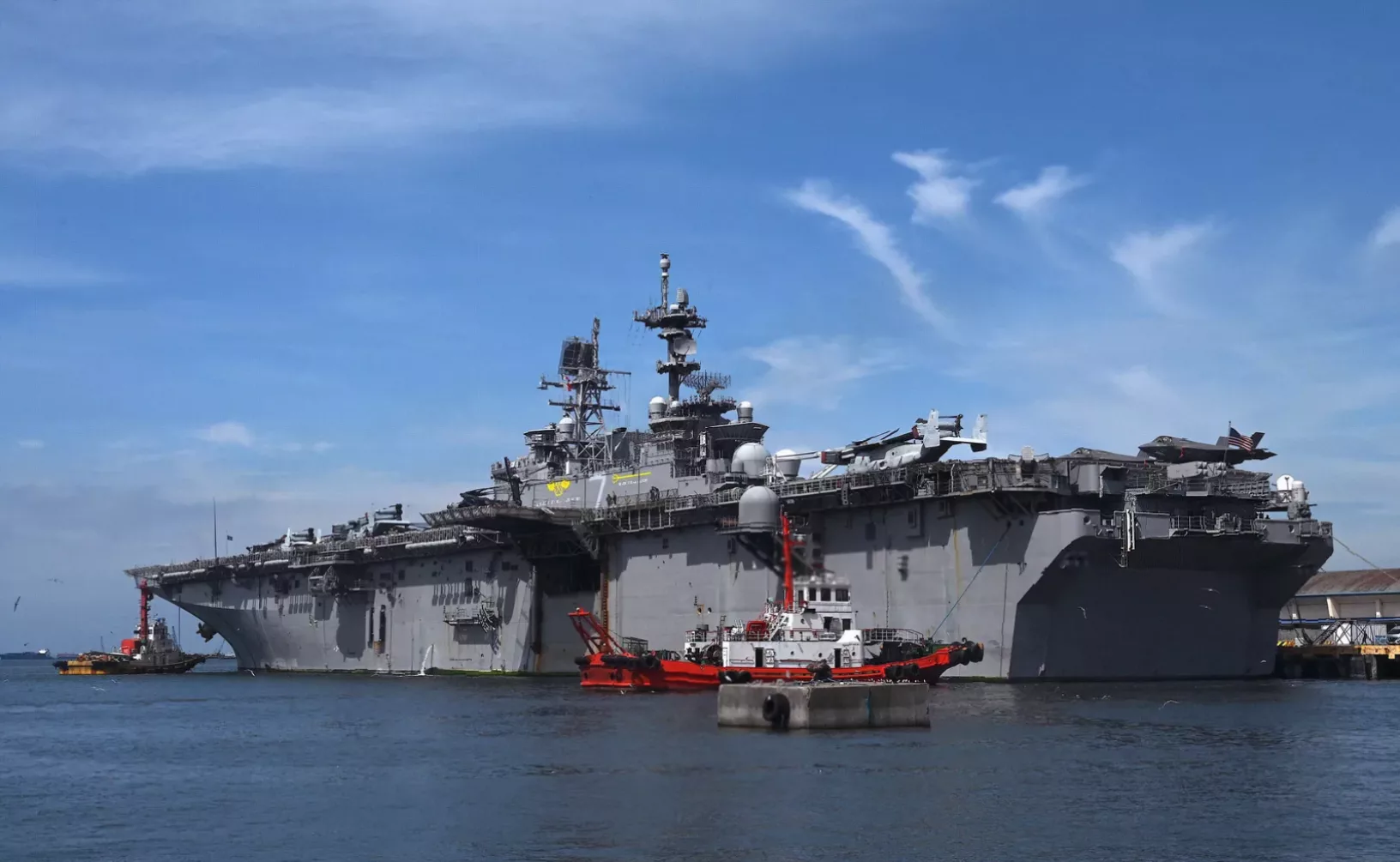
The most immediate and tangible application of this proposed ban would be Glasgow Prestwick Airport, a Scottish Government-owned asset whose use by the US military has long been a source of political friction.
The airport is regularly used by American forces for refuelling and transit, generating significant revenue for the publicly-owned facility. Analysis of flight tracking data from mid-March indicated a notable number of US military aircraft departed from Prestwick heading for key US and NATO hubs supporting Middle Eastern operations in the days surrounding the strikes on Iran.

This has led to fierce criticism, notably from the Scottish Greens, who argue that facilitating this traffic makes Scotland complicit in the conflict. The First Minister has previously stated he would “consider” a ban if it were confirmed aircraft were involved in offensive operations.
The Scottish Government, however, has also pointed to the constitutional limits of devolution, noting that defence is a matter reserved to Westminster. Officials have argued that under current powers, banning US military aircraft may not be deliverable, and that Prestwick provides regulated aviation services in line with UK law rather than acting as a host for an American base. Mr Swinney’s conference speech made clear that independence, in the SNP’s view, is the necessary precondition for Scotland to “choose which militaries use its publicly-owned airports”.
A Broader Defence Posture
The proposed ban on foreign militaries is part of a wider defence and foreign policy framework outlined by the SNP. The commitment to constitutionally ban nuclear weapons reaffirms the party’s long-standing pledge to remove the UK’s Trident nuclear deterrent from the Clyde “as soon as safely possible” after independence and to sign the Treaty on the Prohibition of Nuclear Weapons.
Prior to any move to independence, the Scottish Government has committed to conducting a comprehensive, expert-led Defence and Security Review. The outcome would shape Scotland’s own armed forces and intelligence agency, with a stated policy of only participating in overseas military operations that are lawful, approved by Scottish ministers, and authorised by the Scottish Parliament in accordance with the UN Charter.
Political Reactions and the Road Ahead
The speech drew swift political responses. The Scottish Greens, who have pressured the SNP government to take concrete action over Prestwick, suggested Mr Swinney was “dragging their heels” on the issue. Scottish Labour’s deputy leader offered a broader critique, describing the address as evidence of an “out-of-touch” government.
From a pro-independence perspective, Kenny MacAskill of the Alba Party dismissed the speech as a “damp squib”, arguing it lacked a clear vision for achieving independence itself.
Mr Swinney’s proposals frame independence not just as a matter of domestic policy, but as a means to recalibrate Scotland’s global role. By pledging to embed a rejection of certain military alliances and weapons systems into a constitution, he is seeking to define a future Scottish state in direct opposition to current UK and NATO defence postures. The viability of such a stance, both economically and diplomatically, and the practical challenges of defining and enforcing a ban on “illegal conflicts”, will form a central part of the escalating political debate.