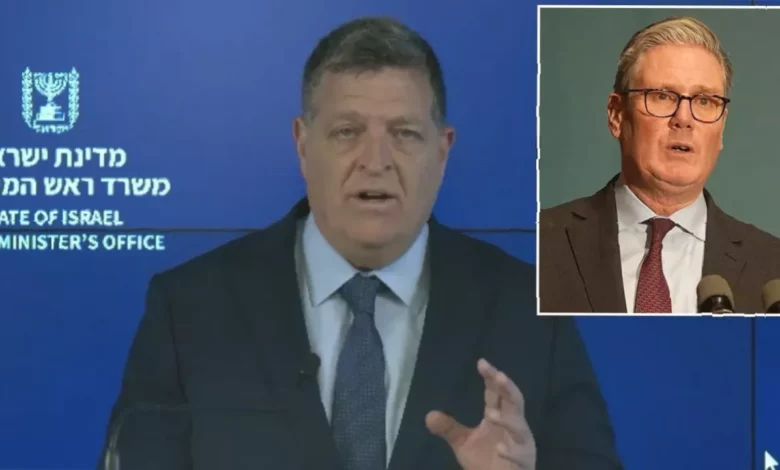
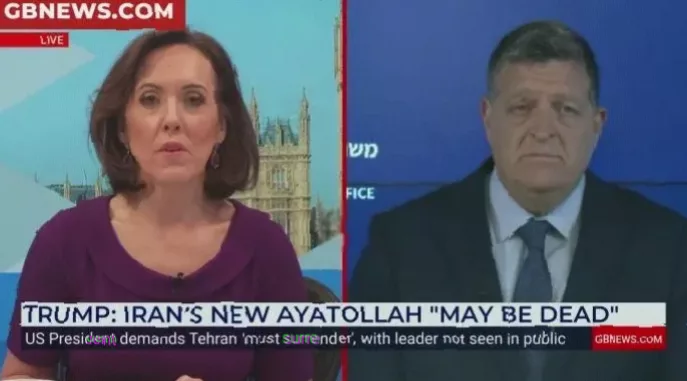
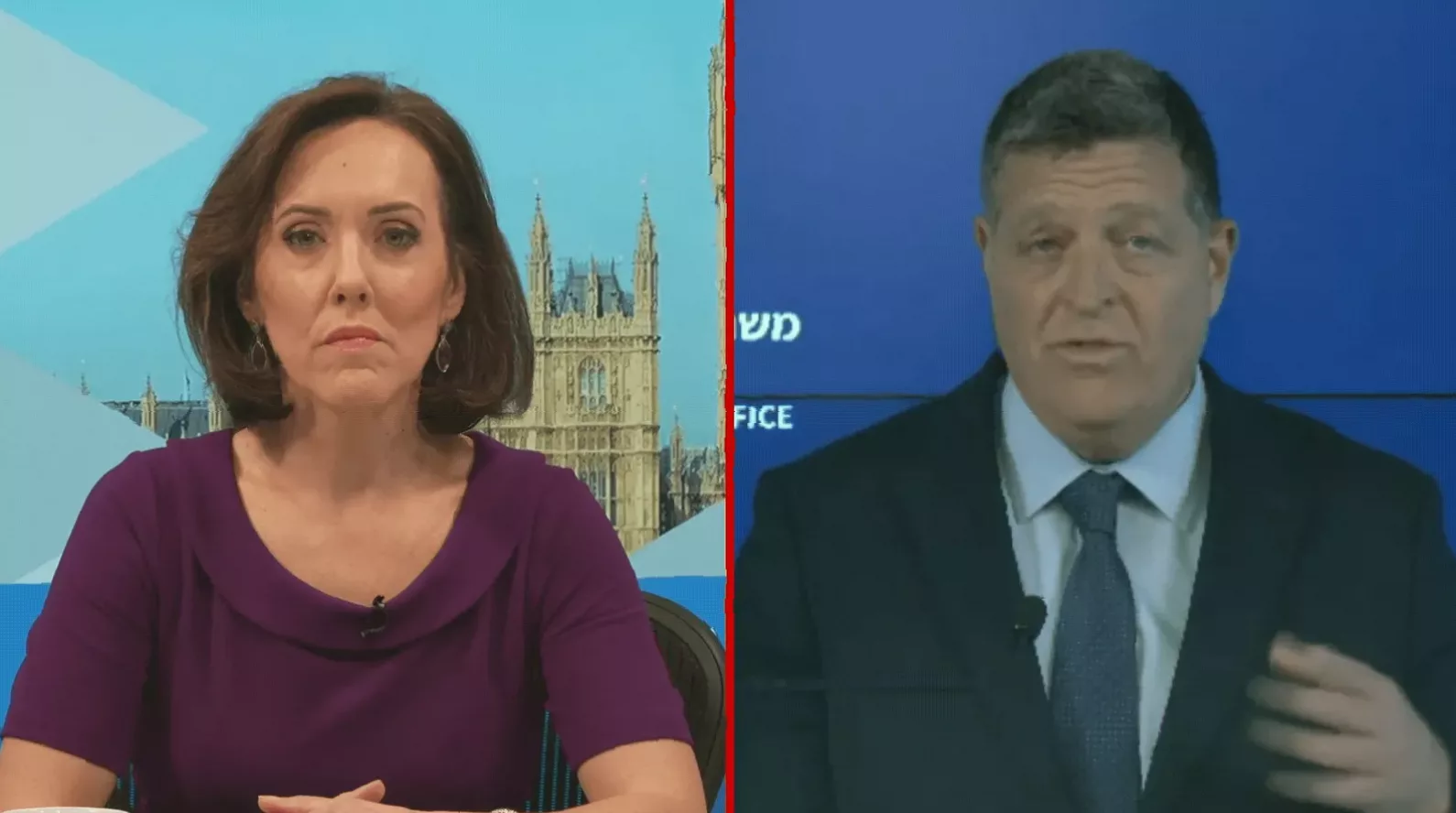
A senior adviser to Israeli Prime Minister Benjamin Netanyahu has delivered a stinging rebuke of the UK’s role in the ongoing military campaign against Iran, labelling Britain’s stance “deeply unsatisfactory” and expressing profound disappointment that London has not done more to support its allies.
In an interview with GB News, Dr Ophir Falk, Mr Netanyahu’s foreign policy adviser, stated: “I don’t want to get into UK politics, but I can say that it has been disappointing. It has been very disappointing.” He added, “we would have expected the UK to do much more.” His comments, made on March 15, represent a direct critique from a key Israeli official as the conflict enters a critical phase.
UK’s Cautious Legal Justification
The criticism follows a carefully calibrated, and politically sensitive, approach from Prime Minister Keir Starmer’s government. The UK was not involved in the initial US and Israeli strikes on Iran that began on February 28, which reportedly resulted in the death of Supreme Leader Ayatollah Ali Khamenei after months or years of planning.
Initially, Sir Keir refused an American request to use British military bases for offensive action against Iran, citing legal advice and a desire to avoid the “mistakes of Iraq”. The government was concerned about complicity in an act it deemed potentially unlawful under international law.
However, the UK’s position shifted following a wave of Iranian retaliation. After Iranian missile and drone strikes hit regional allies and endangered British interests—including a near-miss on British personnel in Bahrain and an incident at RAF Akrotiri in Cyprus—the government authorised a new stance.
Downing Street now permits the US to use UK bases for what it terms “specific and limited defensive purposes,” such as targeting Iranian missile sites. Sir Keir has defended this as necessary to protect British lives and support the collective self-defence of allies under what he calls “indiscriminate attack”. The government has published a summary of its legal advice, arguing its actions are in accordance with international law based on this defensive distinction.
Widespread Political Criticism
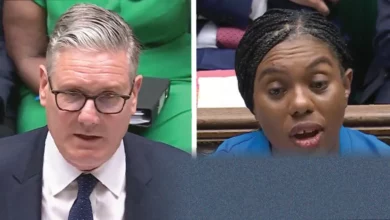
The UK’s nuanced stance has attracted criticism from multiple fronts. From the United States, former President Donald Trump expressed disappointment with Sir Keir’s initial refusal, calling the Prime Minister “no Winston Churchill” and a “loser”.
Domestic opposition has been sharp. Reform UK leader Nigel Farage and Conservative leader Kemi Badenoch have criticised the government for not allowing broader US military action from British bases. Ms Badenoch has suggested Labour’s policy is influenced by its Muslim voter base.
Meanwhile, the Liberal Democrat and Green Party leaders have urged Sir Keir to put the decision to a parliamentary vote, with Green co-leader Zack Polanski calling the US a “rogue state”. Some Labour MPs have also privately expressed unease about the government’s swift endorsement of the strikes.
This political friction unfolds against a backdrop of public opinion, with polling indicating British opposition to US military action against Iran and the use of UK bases for such operations.

Scale of the Military Campaign
The context for Dr Falk’s remarks is a military campaign of unprecedented scale. According to the White House, operations have achieved “massive results,” claiming Iran’s ballistic missile capacity has been “functionally destroyed,” its navy rendered “combat ineffective,” and that US and Israeli forces maintain “complete and total aerial dominance over Iran”.
Dr Falk provided granular detail on these operations to GB News, revealing that joint US-Israeli actions had been underway for approximately ten to eleven days. “We’ve been decimating the Ayatollah regime’s capabilities. We’ve taken out thousands of their missiles,” he stated, adding that “hundreds of their launchers” and elements of the leadership had been targeted. He claimed over 6,000 targets in Iran had been struck.
Outlining Israel’s strategic objective, Dr Falk said, “Our main objective is to remove the existential threat posed by the Ayatollah’s regime. The best way of doing that is to remove the regime.” He described an alternative method as “degrading their military capability… back to the Stone Age, more or less,” expressing confidence that the Iranian people would seize a “unique opportunity” to determine their own future.
Escalating Northern Front
The conflict has also intensified on Israel’s northern border. Hezbollah has increased rocket fire into Israel, triggering intensified Israeli airstrikes in Lebanon that have caused significant displacement and casualties.
Dr Falk issued a stark warning regarding the militant group, calling on the Lebanese government to reassert control over its territory. “We had an agreement that Lebanon was supposed to dismantle Hezbollah, which is a genocidal terrorist organisation that has been terrorising the region,” he said.
He warned that Israel’s response would be severe: “if we are attacked, and we are being attacked by Hezbollah, we will hit them hard, very hard. And if it continues, the Hezbollah areas in Beirut and in Lebanon will look like Gaza.” This threat comes amid reports of diplomatic efforts to broker a direct Israel-Lebanon truce.
Focus on British Citizens
Throughout the crisis, the UK government has emphasised the safety of the estimated 200,000 to 300,000 British citizens in the region. The Foreign Office has provided consular assistance and arranged charter flights for those wishing to leave, a priority Sir Keir has repeatedly cited when defending his administration’s cautious approach.
Dr Falk, who beyond his advisory role is a lecturer and research fellow at the International Institute for Counter-Terrorism in Herzliya, holds expertise in counter-terrorism policy and international law. His public intervention underscores the diplomatic pressures facing the UK as it seeks to balance alliance obligations, legal scrutiny, and domestic political realities in a rapidly escalating conflict.