Pakistan and Afghanistan are now engaged in what a senior Pakistani minister has termed an “open war”, as cross-border hostilities that reignited last month spiral into their deadliest phase yet, threatening to destabilise an already volatile region.
A Cycle of Strike and Counter-Strike
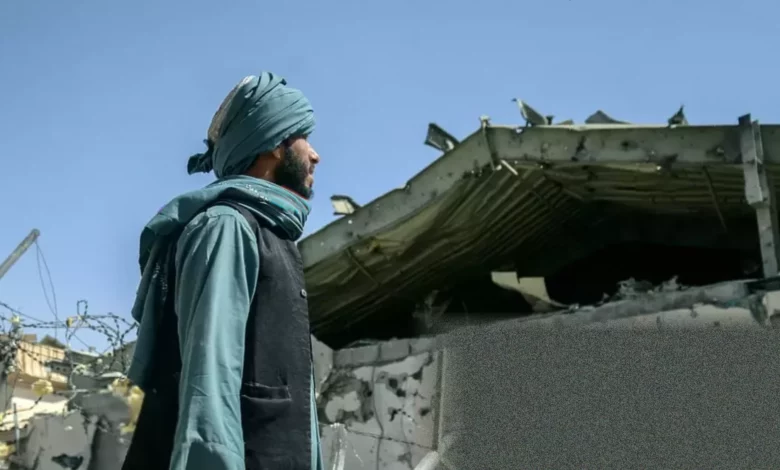
The latest escalation saw Pakistan conduct airstrikes overnight into Sunday, 15 March 2026, in Afghanistan’s southern Kandahar province. Islamabad stated the operation, codenamed “Ghazb lil Haq” (Wrath for the Truth), targeted militant hideouts. Information Minister Attaullah Tarar claimed on X that the military struck equipment storage facilities and “technical support infrastructure”, specifically denying any targeting of civilian populations.
Kabul offered a starkly different account. Afghan government spokesman Zabihullah Mujahid stated Pakistan hit two locations: a site used by security guards during the day and a drug rehabilitation centre, which sustained slight damage. He asserted there were no casualties but accused Pakistan of “continuing to invade and fuel the fire of war”. In a separate action on 13 March, Pakistan also bombed the fuel depot of private airline Kam Air near Kandahar airport.
Retaliation was swift. Afghanistan’s Defence Ministry announced it carried out an attack on a Pakistani army camp in South Waziristan on Sunday, claiming to have destroyed the camp’s command centre and inflicted heavy casualties. Pakistan’s Ministry of Information rejected this as “propaganda”, stating only a small drone was shot down and “no military installation or infrastructure was hit”. Afghanistan also claimed to have captured a Pakistani military outpost and killed soldiers in operations from Kunar and Nangarhar provinces, claims which Pakistan similarly dismissed.
The Mounting Civilian Toll
As the militaries exchange fire, civilians on both sides of the porous border are paying a heavy price. The United Nations Assistance Mission in Afghanistan (UNAMA) reported that on 13 March, at least four civilians were killed and 14 injured in Pakistani airstrikes in Kabul’s Pul-e-Charkhi area.
This follows earlier Afghan reports of at least 18 civilian deaths, including women and children, in Pakistani strikes on 22 and 26 February. On the Pakistani side, local government official Adnan Khan confirmed that on 15 March, a mortar fired from Afghanistan destroyed a home in Bajaur district, killing four members of the same family. Such tragedies are not new; a similar mortar attack in Bajaur in February 2020 also killed at least four from one family.
The casualty claims from military engagements are vast and contradictory. Afghan authorities claimed on 26 February that 55 Pakistani soldiers were killed and several captured. Conversely, Pakistan’s Information Minister Attaullah Tarar claimed on 11 March that 641 Taliban fighters had been killed and 855 wounded since the clashes began.
Roots of the Conflict and a Broken Truce
The core dispute driving the violence is Pakistan’s long-standing accusation that Afghanistan’s Taliban rulers harbour militant groups, particularly the Tehreek-e-Taliban Pakistan (TTP). The TTP, a UN and Pakistani-designated terrorist organisation with the stated aim of overthrowing the Pakistani government, operates from border regions inside Afghanistan. Kabul consistently denies it allows its territory to be used against other countries.
The current intense fighting erupted in late February when Afghanistan launched a cross-border attack in retaliation for Pakistani airstrikes inside Afghanistan days earlier, which Kabul said killed only civilians. This upended a fragile ceasefire that had been brokered by Qatar in October 2023, following earlier clashes that had killed dozens of soldiers, civilians, and suspected militants. Previous Pakistani airstrikes, such as those in April 2022, have also resulted in significant civilian casualties according to Afghan officials.
The political rhetoric has grown increasingly heated. Pakistan’s President Asif Ali Zardari stated on 14 March that Afghanistan’s government had “crossed a red line” by launching drone attacks on civilian areas in Pakistan, which he termed a provocation by an “illegitimate regime”. Hours after his statement, Pakistan reportedly conducted strikes on an Afghan drone storage facility. Pakistan’s Defence Minister, Khawaja Asif, has been equally stark, declaring Pakistan would have “open war” with Afghanistan.
Regional Stability at Risk
The bilateral conflict is unfolding against a backdrop of severe regional instability, notably the US-Israeli conflict with Iran which has engulfed the Middle East and beyond. The situation is further strained by Pakistan’s ongoing forced repatriation of Afghan refugees.
International efforts to mediate are underway but face immense challenges. China, a key regional power, has dispatched its special envoy to both Islamabad and Kabul in an attempt to de-escalate the situation. Turkey has also been involved in efforts to broker a new ceasefire. The success of these diplomatic initiatives remains uncertain as both sides continue to exchange fire and accusations, with the threat of further escalation looming over the region.