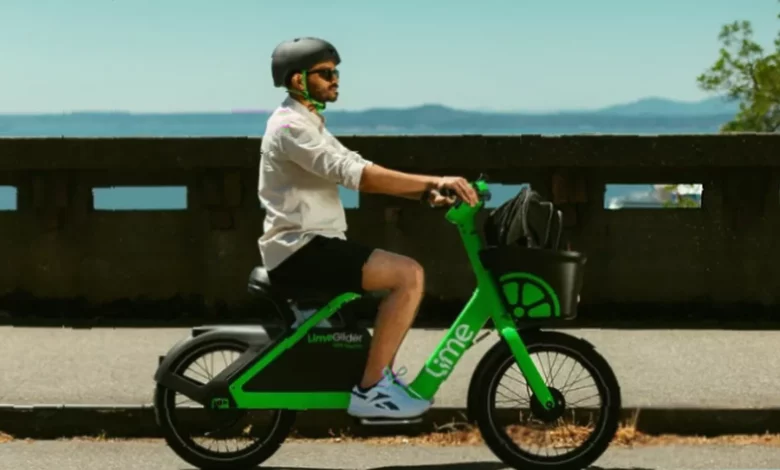
Lime, the Uber-backed micromobility company, has formally filed for an initial public offering on the Nasdaq exchange, seeking to list under the ticker symbol LIME. Parent company Neutron Holdings submitted its S-1 registration statement to the U.S. Securities and Exchange Commission on Friday, May 8, 2026, with Goldman Sachs & Co. LLC and J.P. Morgan acting as the lead book-running managers. Jefferies, Evercore ISI, Citizens Capital Markets, KeyBanc Capital Markets, Needham & Company and William Blair are also serving as bookrunners on the offering. The company has not yet disclosed the number of shares to be offered or the price range.
IPO details and company overview
The IPO proceeds are earmarked for funding operations, repaying debt, and potentially investing in or acquiring complementary technologies, assets or intellectual property, according to the filing. Lime was founded in January 2017 by Brad Bao and Toby Sun, and now operates a dockless network of electric bikes and scooters across approximately 230 cities in 29 countries on five continents. Its fleet numbers more than 270,000 vehicles. The company is led by chief executive Wayne Ting, a former Uber executive who took the helm in May 2020. Ting previously served as chief of staff to Uber’s chief executive Dara Khosrowshahi and also worked as a senior policy adviser on the White House National Economic Council under President Obama. Lime’s stated mission is to “build a future where transportation is shared, affordable and carbon-free”, and it has set a target of achieving 100 per cent carbon neutrality across its supply chain by 2027.
Revenue growth accelerates but losses widen
The filing reveals strong top-line growth but continued pressure on profitability. Lime’s revenue rose 29 per cent year-on-year to $886.7 million in 2025, up from $686.6 million in 2024 and $522 million in 2023. However, net losses widened sharply to $59.3 million, a 75 per cent increase from the $33.9 million loss recorded the previous year. The company remains loss-making, and investors will be watching closely to see whether it can translate its revenue momentum into consistent profitability. On a more positive note, Lime has achieved positive free cash flow for the third consecutive full year as of the end of 2025, and its adjusted EBITDA exceeded $140 million in 2024. The company reported 3.8 million monthly active users in 2025, up 21 per cent from the prior year, and has now powered over one billion rides globally since launch. On May 30, 2025, riders took more than one million Lime rides in a single day. Usage in London has also spiked during recent Tube strikes, the company noted.
Industry context and valuation trajectory
Lime’s IPO comes as the micromobility sector attempts to recover from years of financial strain and regulatory scrutiny. Many operators have struggled with high operating costs, parking complaints and restrictions from city authorities. Rival Bird, once valued at more than $2 billion, filed for bankruptcy in 2023. Tier laid off staff before merging with Dott, and Spin shut down entirely. Voi reached EBITDA-positive status in 2022 but has not pursued a public listing. Lime itself has experienced a dramatic valuation reset. The company raised $310 million at a $2.4 billion valuation in April 2019, but during the pandemic it secured $170 million in a funding round led by Uber that valued it at approximately $510 million — a 79 per cent drop. That 2020 deal also included Lime’s acquisition of Uber’s Jump e-bike and scooter business. Lime later raised $523 million in an oversubscribed round in November 2021. While the S-1 does not disclose a target valuation, bankers familiar with the process have pointed to a rumoured range of $4–5 billion, according to the research briefing. Insiders currently own approximately 58.06 per cent of the company, and Lime already trades over-the-counter under the symbol OTC: LIME. As of May 8, 2026, Lime’s market capitalisation was reported at approximately $58.76 million, though this figure appears unusually low given other valuation data and may require further context. The company had previously indicated plans to go public in 2021.
Uber partnership and key investors
Uber remains Lime’s largest shareholder, with a stake of more than 10 per cent. The integration of Lime vehicles as a ride option within the Uber app generated approximately 14 per cent of Lime’s total revenue in 2025, underlining the importance of the relationship. Andreessen Horowitz is Lime’s second-largest shareholder, holding a stake of over 5 per cent. Other notable investors who participated in the 2020 funding round include Alphabet (via Google Ventures) and Bain Capital Ventures. The November 2021 funding round attracted Fidelity Management & Research Company, the Abu Dhabi Growth Fund, AllianceBernstein, Fifth Wall and Durable Capital Partners. Lime competes with operators including Voi, UK-based Forest, and Lyft-owned Motivate, which runs New York’s Citi Bike service. Unlike station-based bike-sharing systems, Lime’s dockless model has faced criticism over cluttered pavements and unsafe parking. The S-1 filing warns of those risks, alongside broader regulatory and operational challenges facing the sector.