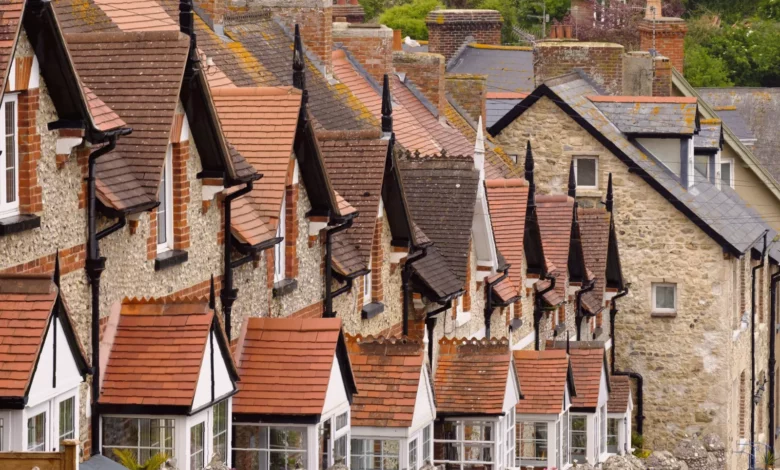
UK property prices recorded their first monthly fall of the year in March, with a 0.5% drop halting the early 2026 momentum in the housing market. The average house price slipped from £301,151 in February to £299,677, according to the latest data from Halifax.
The lender attributed the reversal directly to heightened geopolitical instability, specifically the conflict between the US and Iran. Amanda Bryden, head of mortgages at Halifax, said the slowdown “reflects the wide uncertainty regarding the conflict in the Middle East,” which has altered the financial landscape for prospective buyers.
From global conflict to local mortgages
The chain reaction from battlefield to front door is rooted in commodity markets. The effective closure of the Strait of Hormuz since the war began in February led to surges in the price of oil, gas, and fertiliser. This, according to Halifax, stoked fears that inflation could accelerate again, which in turn pushed up market expectations for future interest rates.
These revised expectations fed directly into mortgage pricing. “Concerns about higher energy prices have pushed up inflation expectations, which in turn led to a rise in mortgage rates,” explained Bryden. This dynamic reduced confidence that the Bank of England would cut interest rates this year, dampening buyer sentiment and spending power.
Karen Noye, a mortgage expert at wealth management firm Quilter, emphasised that the March data is a critical early indicator. “March is the first full month in which the conflict in Iran fed through into UK mortgage pricing,” she said, making this “an important early test of how higher borrowing costs are starting to affect the housing market.”
A divided market: North rises as South falls
The slowdown was not felt evenly across the country, with a clear north-south divide evident in the annual figures. The pace of annual house price growth decelerated from 1.2% in February to 0.8% in March, masking stark regional contrasts.
The South East of England, where average values are highest, recorded an annual fall of 1.9%, taking the average price to £383,573. London prices fell by 1.2% over the year to £536,751. The East Midlands and South West also saw modest annual declines of 0.6%.
In contrast, northern regions and the devolved nations showed robust growth, buoyed by more affordable prices. Northern Ireland continued to lead the UK, with house prices surging 8.7% annually to an average of £224,809. Scotland saw a 4.4% increase (£222,716), while the North East of England recorded a 5% rise (£184,119) and the North West grew by 3.1% (£247,442). Wales and the West Midlands also posted annual growth of 1.6% and 1.7% respectively.
Mortgage outlook hinges on fragile ceasefire
The immediate future for mortgage rates and housing activity remains tightly bound to events in the Middle East. A two-week conditional ceasefire agreed between the US and Iran on 7 April prompted a plunge in oil prices and a rise in stocks, offering a glimpse of potential stability.
Adam French, head of consumer finance at data firm Moneyfactscompare, said that easing tensions would push down expectations for future interest rate rises, taking “immediate upward pressure off mortgage rates”. However, he cautioned that rates “are likely to remain higher for some time yet”.
French pointed to ongoing market volatility as a key constraint. “The volatility of the conflict can quickly move markets, which may leave many lenders cautious about making any sudden moves,” he noted. While a sustained ceasefire could allow the mortgage market to stabilise and rates to edge lower, the prevailing expectation is for a pause or slowdown in increases rather than any sharp decline in borrowing costs. The lingering impact of the Strait of Hormuz closure on energy prices is also likely to influence the housing market for months to come.