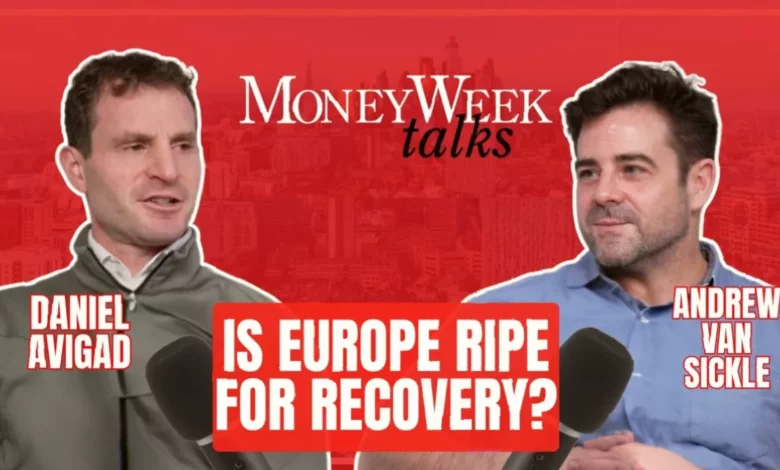
Europe’s long-awaited economic recovery hinges on solving its persistent growth problem. While a recent shift in fiscal and monetary policy has sparked hopes of a continental revival, formidable structural challenges and geopolitical shocks continue to test its resilience, casting a shadow over the future.
Recovery Prospects Amidst Fresh Headwinds
After years of lagging behind the United States, a window for European recovery appeared to open. A “major macroeconomic shift” in 2025, involving coordinated fiscal and monetary stimulus, was seen by analysts at firms like Morgan Stanley as laying a foundation for long-term equity market gains. Some argued Europe was “ripe for recovery,” with stocks offering attractive valuations for high-quality businesses. However, this optimism has been sharply disrupted. The conflict in the Middle East has created an unwelcome new obstacle to growth, sending energy prices soaring and triggering Europe’s worst month for stock markets since March 2020 in March 2026, with indices down around 10% from their peak.
The inflation impact has been immediate. Eurozone inflation accelerated to 2.5% in March 2026, driven by a 4.9% surge in energy prices, according to official data. This has forced markets to recalibrate expectations for interest rates, with analysts anticipating the European Central Bank and the Bank of England may act sooner than previously thought. The shock has also led institutions to cut growth forecasts; leading economic institutes have downgraded their German GDP projections for 2026 and 2027 as a result. Barclays has warned that sustained higher oil prices could push European equity earnings growth towards zero, a risk it believes may not be fully priced in.
Addressing the Deep-Seated Growth Challenge
Beyond these immediate shocks lies Europe’s core dilemma: a decades-long decline in its share of global GDP. Solving this requires tackling a web of interlinked issues including chronic underinvestment, technological gaps, policy fragmentation, and adverse demographics. Daniel Avigad, manager of the TM Lansdowne European Special Situations fund, is among those examining the opportunities and obstacles. His fund targets undervalued European companies with potential for significant revaluation, a strategy that acknowledges both the continent’s troubles and its latent potential.
There is, however, a growing blueprint for change. Structurally, Europe is attempting to pivot from an over-reliance on exports to a more domestically focused growth model, supported by greater fiscal coordination. Germany has signalled this shift with a significant fiscal policy reboot, planning substantial spending on infrastructure and defence. Policy experts advocate for a multi-pronged approach: deepening the single market, finally advancing the long-stalled Capital Markets Union to improve funding for businesses, and investing in physical infrastructure. Liberalising the trade in services, easing constraints on venture capital, and completing the “green revolution” to reduce long-term energy costs are also seen as critical.
Demographics present a particularly stubborn hurdle. Addressing an aging population would require policies to increase fertility rates, manage immigration effectively, and raise workforce participation. Furthermore, industrialising Eastern and Southern Europe to boost overall continental productivity is frequently cited as a necessary step. The success of these strategies will determine whether Europe can escape its low-growth trap.

Sector Opportunities in a Transforming Continent
This turbulent environment is creating distinct winners and losers, shaping investor focus. Consumer cyclical stocks have been hit exceptionally hard, down 17% in the first quarter of 2026, followed by financials and healthcare. Yet, some analysts see the sell-off in certain consumer stocks as overdone, presenting significant upside. Conversely, select defence stocks are viewed as likely long-term winners from Europe’s security transformation, a shift deemed enduring. Utilities, especially those with high barriers to entry and a focus on renewables, are favoured for their role in energy security.
Banks are flagged as a potential “dip buy” opportunity, given their historical tendency to outperform after a peak in energy prices during geopolitical crises. Industrials stand to benefit from any revival in domestic demand. Meanwhile, large export-oriented names in sectors like luxury goods and autos face a reckoning, as their valuations may not yet reflect a world of slowing globalisation and higher trade barriers, a trend exacerbated by ongoing US tariff adjustments.
The Populist Threat to Cohesion and Growth
Compounding these economic trials is the political risk of rising populism. Populist parties, particularly on the far-right, are gaining traction across the continent, influencing national policy and threatening European cohesion. Economists link populism to the undermining of the rule of law, the erection of barriers to foreign investment, and long-term economic weakening—a phenomenon dubbed “populist stagnation.” This political climate risks fragmenting the unified response needed to tackle shared challenges.
The consequences extend beyond economics. A surge in populism jeopardises Europe’s solidarity with Ukraine and its capacity to build up its own military defence, a particularly acute concern if the United States further disengages from European security. This interplay between political instability and economic strategy forms the most uncertain part of Europe’s recovery equation, where domestic political choices could derail continental ambitions.