The chief executive of Sainsbury’s has warned that inflationary “pressure” is still working its way through the supply chain, even as the supermarket reports an “encouraging” start to the trading year. Simon Roberts said uncertainty over the Middle East conflict – which has disrupted energy markets and shipping routes – meant the full impact on shoppers had yet to be felt, though he stressed that the rise in prices was likely to be below some recent forecasts.
Sales performance driven by grocery growth
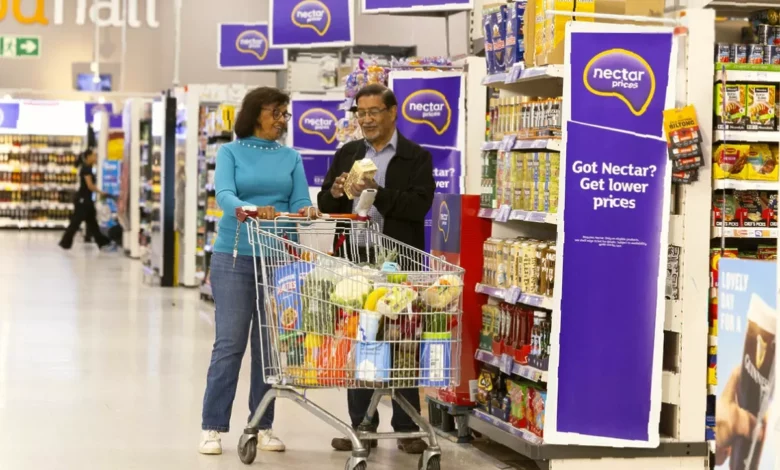
In the 16 weeks to 20 June, total retail sales excluding fuel rose by 2.7% to £9.15 billion, with like-for-like sales up 2.1%. That represents a slowdown from the 4.8% growth recorded in the first quarter of the previous financial year. The core grocery business was the main driver: Sainsbury’s brand sales grew 3.1% to £8.04 billion, while overall grocery sales increased by 3.6% year-on-year, underpinned by volume growth. Online grocery sales jumped 12.5%. The company attributed the performance to investment in its value credentials, including the Aldi price match scheme and Nectar price discounts, which it said were drawing more customers to its big weekly shops. “Customers are looking for value now more than ever,” Mr Roberts said, describing the start to the year as “encouraging” and pointing to continued market outperformance.
Inflation concerns persist despite easing headline data
Yet beneath the headline numbers, caution remains. Mr Roberts said inflation is “coming through” the system, though he noted that industry trade bodies have been reducing their forecasts. “There is pressure on inflation in the system,” he said. “It’s not coming through as significantly as some had expected but it is still coming through.” Sainsbury’s itself reported that its own grocery inflation was lower in the most recent quarter compared with the previous period. Official data from the Office for National Statistics showed food and non-alcoholic drink inflation stood at 2.2% in May 2024, its lowest annual rate since October 2021, and well down from a peak of 19.2% in March 2023. Broader UK CPI inflation was 2.0% in May 2024, hitting the Bank of England’s target for the first time since July 2021.
However, the picture has darkened since then. By March 2026, overall UK CPI had risen to 3.2%, driven partly by motor fuel prices, while food price inflation climbed back to 3.7%. The Middle East conflict is a key factor. The closure of the Strait of Hormuz – a critical oil and gas trade route – has pushed up energy costs and disrupted supply chains. Barclays data shows that 66% of businesses are experiencing pressure from fuel and energy prices, while 50% report moderate to significant supply-chain disruption. The Food and Drink Federation has warned that food inflation could soar above 9% by the end of 2026 if the conflict continues to drive energy and shipping costs higher. Sainsbury’s itself has previously cautioned that the war “will put pressure on food prices” because of rising production costs. Mr Roberts reiterated that the full effect on fresh food would take until “into the summer” to become clear, though he added that it was not materialising as sharply as some had feared.
General merchandise and Argos feel the pinch as shoppers tighten belts
While the grocery aisles fared well, the same cannot be said for the retailer’s non-food divisions. General merchandise and clothing sales fell by 3.7% to £438 million, partly offsetting the grocery gains. The decline was broad-based. Sainsbury’s own-brand general merchandise – covering homeware, technology and other items – slid 6.3%. Its Tu clothing arm dropped 2.1%, a performance the company described as being in a “soft market” and unusual for the brand, though it pointed to improvements in availability and style. The biggest drag came from Argos, where sales dipped 0.5% to £1.1 billion. That headline figure masks a more nuanced picture: Argos recorded encouraging volume growth of 2.2%, but that was entirely “offset by the impact of subdued consumer spending on average selling price”, the group said.
Behind the numbers lies a shift in consumer behaviour. Real household disposable income per head fell by 0.8% in the first quarter of 2026, squeezing households’ spending power. Essential spending growth has slowed, while non-essential spending has seen only a modest increase, with consumers focusing on “little luxuries” such as health, beauty and entertainment rather than “big ticket” purchases. Barclays data indicates that shoppers are prioritising affordable treats and experiences over larger discretionary items. The result is that while people are still buying from Argos, they are spending less per transaction. The trend is also visible in the wider economy: household spending growth adjusted for inflation was just 0.1% in the final quarter of 2024, with a 0.8% decline in food and non-alcoholic beverages. Consumer confidence in household finances has shown tentative signs of recovery, but the recovery remains fragile, especially with the Middle East conflict casting a shadow over energy costs and supply chains.
Despite these headwinds, Sainsbury’s has maintained its full-year underlying operating profit guidance of between £975 million and £1,075 million, along with retail free cash flow of more than £500 million. The company remains on track to deliver £1 billion of cost savings by March 2027. Investors appeared to take the update in stride: Sainsbury’s shares rose 1.9% in early trading, though over the past year the stock has underperformed the FTSE All Share Index. Mr Roberts offered a thank you to colleagues, farmers and suppliers, noting that the World Cup and an “exciting summer of sport” were providing a boost to trading.