
Private companies now provide around 70% of the capital for space exploration, a seismic shift from the government-funded space races of the mid-20th century that has flung open the doors for investors. Space consultancy firm Novaspace estimated the size of the global space economy at $626 billion in 2025, with $236 billion coming directly from the space market and $329 billion from space-enabled applications on Earth. The UK is a significant player in this transformation: the nation’s space industry generated £18.6 billion in revenue in 2022-23 and contributed £7.2 billion in gross value added (GVA) to the economy, according to official figures. Satellite services alone are estimated to contribute £454 billion to the UK economy – 18% of total GDP – and the sector has grown an average of 3.3% per year in real terms since 2009-10.
Private investment takes flight
Investors now have unprecedented access to the growing space economy, and the UK has been a major beneficiary. Since 2015, the UK has accounted for 17% of the $47 billion invested globally in space, making it the second-largest recipient after the United States. In 2022-23 alone, UK-headquartered space companies attracted £481 million through 92 deals. The government has backed this with a £10-billion commitment over the next decade, while the UK Space Agency’s budget is set to rise from £668 million in 2025-26 to £720 million by 2029-30. Initiatives such as the Space Sector Export Academy and the National Space Innovation Programme aim to boost commercialisation and innovation. The UK is also a member of the European Space Agency, having committed £1.7 billion for programmes over the next decade and achieved a return of £7.49 for every £1 invested.
Direct employment in the UK space industry reached 55,550 full-time equivalents in 2022-23, up 7% from the previous year, and supports a further 81,400 jobs in the supply chain. Labour productivity is high: each employee adds £129,000 to GDP, more than double the UK average. The government’s National Space Strategy and Space Industrial Plan outline priority areas including space domain awareness, in-orbit servicing, assembly and manufacturing, and satellite communications. The Space Industry Act 2018 provides the legal framework for commercial spaceflight from UK spaceports, with first launches from companies such as Orbex and Skyrora anticipated in 2026.

Space on Earth
At present, almost all revenue generated from space comes from space-enabled applications on the ground: GPS trackers, satellite-enabled internet connectivity and other services that rely on satellites sent into orbit to provide information or functionality to Earth. The UK is a leader in satellite communications and ground-based navigation systems, and its companies are at the forefront of small-satellite manufacturing. The sector’s turnover is now £97.7 billion, and the government aims to capture 10% of the global space market by 2030 – a target that would see the sector worth £118.1 billion by 2027.
But the biggest rewards could come from activities that remain in space. NASA’s recent Artemis moon flight underscored a renewed focus on lunar landings, with the agency stating that putting astronauts back on the Moon in the 2020s will provide the experience and technology for the first human missions to Mars. Professional services firm PwC estimated in January that the lunar economy could be worth $127 billion by 2050. NASA itself calculates that its “Moon to Mars” programmes could create 69,000 jobs and support more than $14 billion in total economic output. Despite this potential, activities such as mining asteroids, running data centres in orbit or constructing research labs in zero gravity remain “technologically nascent”, according to Evelyn Chow, portfolio manager of the Neuberger Berman Next Generation Space Economy Fund, meaning commercialisation is still some way off.
The falling cost of getting there
The key enabler for these future space-based industries is the dramatic reduction in launch costs – and the role of reusable rockets, pioneered by Elon Musk’s SpaceX, is central. Analysis from ETF issuer ARK Invest shows that launch costs have fallen from approximately $15,600 per kilogram in 2008 to less than $1,000 per kilogram today. To put that in perspective, Chow notes that the first Apollo missions in the 1950s and 1960s cost around $400,000 per kilogram. “If you use a rocket twice rather than once, you double the return you make on building it in the first place,” she explains. SpaceX’s Falcon 9 reusable rocket has brought incremental launch costs down to around $1,500 per kilogram, and its upcoming Starship model could halve that again. According to the US Federal Aviation Administration, of 199 licensed space launches last year, SpaceX conducted 161 – more than 80% of the total market share.
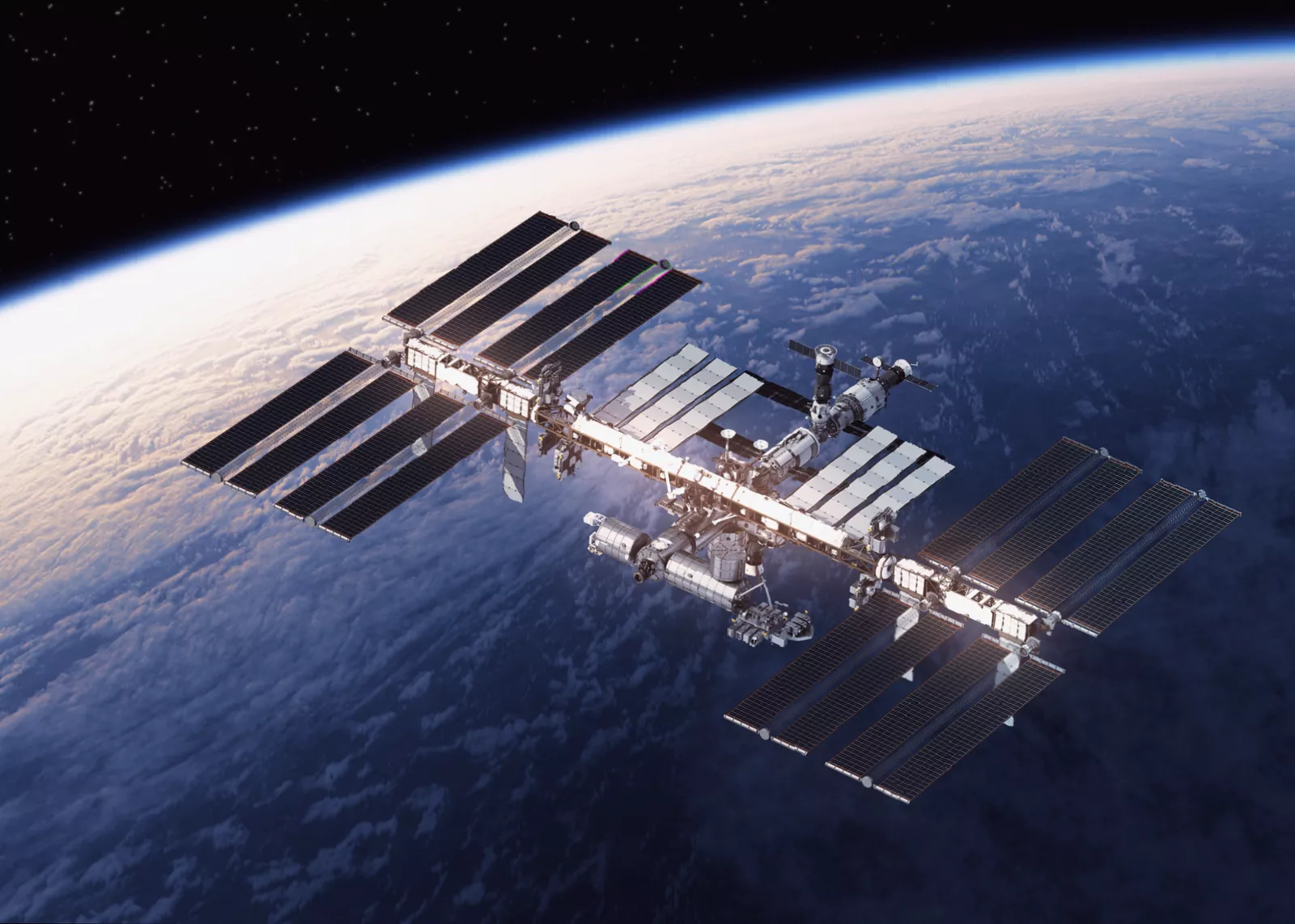
Cheaper launch costs have also made satellites themselves far more accessible. Low-Earth-orbit (LEO) satellites are smaller and cheaper to launch, and their numbers are soaring. Chow says there are now approximately 15,000 satellites in orbit, and some experts expect that figure to reach 100,000 by 2030. SpaceX’s Starlink network alone comprises more than 9,000 satellites, providing internet connectivity across the globe and thought to generate between 50% and 80% of SpaceX’s revenue. The company also owns xAI, the developer of chatbot Grok and the social media platform X, creating an artificial-intelligence angle. “Running AI requires immense power for storage and processing, and Musk reckons the only way to scale up is to tap into solar power from space,” says Dan Coatsworth, head of markets at AJ Bell. “SpaceX plans to use its satellite network to operate as orbital data centres, while at the same time Musk wants xAI to become a leading AI provider.”
Looking further ahead, Google’s analysis suggests launch costs could fall to $200 per kilogram by the mid-2030s. At that level, Chow says the cost of running orbital data centres would become comparable to the energy costs of running AI on Earth. Currently, she notes, “it costs something like 8-10 times more per megawatt to do orbital data centre power versus even gas turbine power today.” But the trajectory of falling costs – and the expansion of satellite numbers – points to a future where space-based industries become economically viable.
SpaceX itself is reportedly preparing for an initial public offering in June 2026, targeting a valuation of $1.75 trillion – a figure that would make it one of the world’s most valuable companies. KeyBanc analysts estimate SpaceX made $21 billion in revenue last year, meaning the rumoured IPO valuation is more than 83 times sales. By comparison, Tesla trades at around 14 times sales and Nvidia at around 23 times. Coatsworth warns that bulls might argue the earnings growth potential justifies the rating, but bears could respond that the business is too immature or high-risk for such a stratospheric valuation.
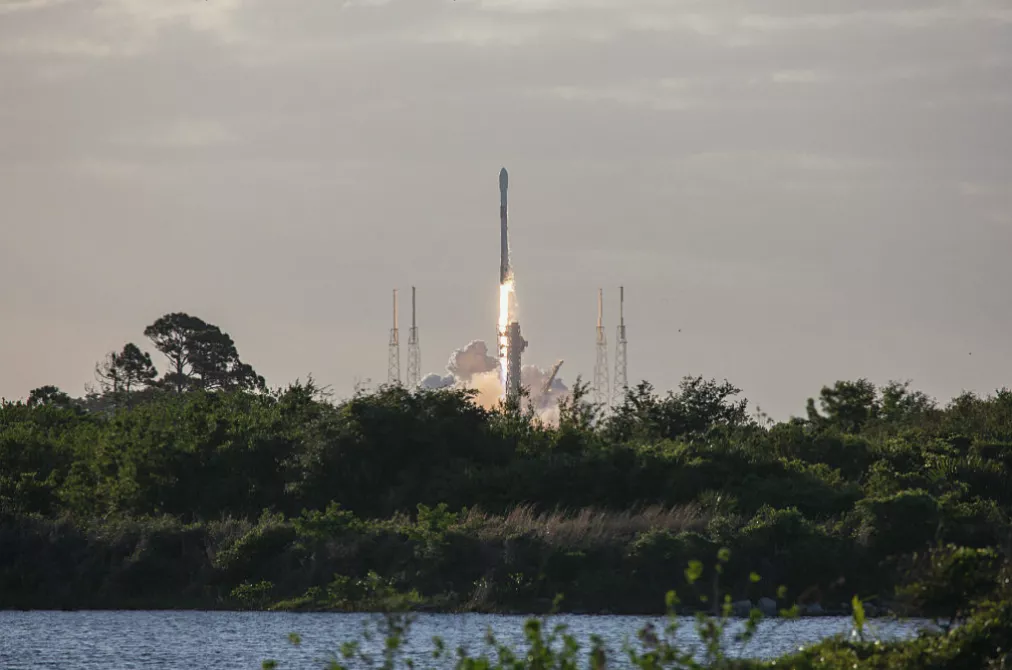
UK investors can gain exposure to SpaceX before its IPO through investment trusts such as Scottish Mortgage, which has 19% of its portfolio in the company, or the US Growth Trust. However, a House of Lords report has warned of the UK’s over-reliance on SpaceX for satellite services, citing risks of “politicisation” and the need for greater independence and diversified services. For those seeking other options, RocketLab is the second-largest launch company by revenue, posting $602 million in 2025, while AST SpaceMobile is the second-largest provider of satellite internet behind Starlink. Many pure-play space stocks are not yet profitable, so Evelyn Chow looks to diversified defence companies such as BAE Systems and Leonardo, which have space-related revenue streams. BAE, for example, has a US military contract for satellite missile tracking. Angeline Ong, senior investment analyst at trading platform IG, notes that defence/space double-plays such as L3Harris, RTX, Kratos and BlackSky offer growth potential alongside government-backed contracts.
The “picks and shovels” approach – backing suppliers rather than trying to pick winners – is also gaining traction. Mitsubishi Heavy Industries is critical to Japan’s satellite manufacturing, while Canadian firm MDA Space builds components for space exploration and the Canadarm robotic arm for NASA’s Gateway space station. MDA has a $4 billion backlog and recently doubled satellite production capacity at its Montreal facility. Italian solid rocket motor manufacturer Avio is one of only a handful of scale players globally capable of making the propulsion systems used in rockets and missiles – a “defence pinch point”, according to Chow, with stockpiles being depleted rapidly. The UK’s own seed fund, UKI2S, and the dedicated Seraphim Space Fund are backing early-stage space businesses, while the government’s National Space Innovation Programme supports commercialisation. Yet the sector still faces challenges: skills shortages in software, data and systems engineering, competition for talent with other high-tech industries, and the growing problem of space debris. The UK aims to become a leading European space exporter by 2030, but scaling up innovative start-ups and improving access to finance remain critical to realising that ambition.