The spectre of 2008 has returned to haunt the UK’s debt markets, as a blistering surge in government borrowing costs underscores a perfect storm of geopolitical crisis, domestic fiscal strain, and resurgent inflation fears.
Borrowing costs hit crisis-era highs
The yield on the benchmark 10-year UK government bond, or gilt, has soared to 4.927%, its highest level since July 2008, on the eve of the global financial crisis. This represents a significant 0.09 percentage point (9 basis point) jump. Meanwhile, the yield on shorter-dated two-year gilts has climbed even more sharply, rising 11 basis points to 4.522%, its highest since January 2025. These yields, which move inversely to prices, reflect the dramatically higher interest the government must now pay to borrow from international investors.
Geopolitical shockwaves from the Gulf
The immediate trigger for the market turmoil is the escalating conflict in the Middle East, which has ignited what the International Energy Agency (IEA) warns could be the most severe energy crisis in history. A US-Israeli attack on Iran three weeks ago has severely disrupted global energy flows, with IEA Executive Director Fatih Birol telling the Financial Times that politicians and markets are underestimating the scale of the challenge.
Approximately one-fifth of global oil and gas supplies are effectively stranded, with Birol warning it could take at least six months for some key production sites to become operational again. This has sent prices soaring: wholesale gas prices surged 67% and oil prices 35% between late February and mid-March. Brent crude oil has been volatile, hitting $119 a barrel and settling around $107, with analysts warning it could surpass its all-time high of $145.50 if the vital Strait of Hormuz shipping lane remains obstructed.
Inflationary spiral and central bank bind
The energy shock is translating directly into alarming inflation forecasts for the UK. Consultancy Oxford Economics now predicts Consumer Prices Index (CPI) inflation will top 4% in the second half of this year, double the Bank of England’s target. It anticipates a 19% increase in the Ofgem energy price cap in July due to higher wholesale gas prices. Deutsche Bank has also raised its 2026 CPI projection to 3% from 2.4%.
This has forced a dramatic repricing of interest rate expectations. Money markets are now fully pricing in three quarter-point interest rate hikes from the Bank of England this year, which would take the Bank Rate from its current 3.75% to 4.5%. This shift comes just a day after the Bank’s Monetary Policy Committee voted unanimously to hold rates, warning the Middle East conflict would lead to higher-than-expected inflation in the short term.
While Governor Andrew Bailey attempted to calm markets, stating the Bank’s position was “on hold” and cautioning against strong conclusions about rate rises, MPC member Catherine L Mann noted the sustained inflation shock might shift the balance towards a longer hold or even a hike. The Bank now expects CPI inflation to rise to 3.5% in March, significantly delaying its return to the 2% target.
Why the UK is a global outlier
Analysts note that UK bond yields are rising faster than those of comparable economies like the US and Germany, marking the country as an outlier. Kathleen Brooks, research director at brokerage XTB, warned that “The bond vigilantes are after the UK” again, a reference to investors who sell bonds to protest fiscal policy they deem irresponsible.
Ben Seager-Scott, chief investment officer at Forvis Mazars, explained that bonds are forced to “wear” the inflation caused by the energy shock, exacerbated by reduced chances of central bank cuts. Lale Akoner of eToro added that the UK remains “particularly exposed given its sensitivity to energy prices and already stretched public finances.”
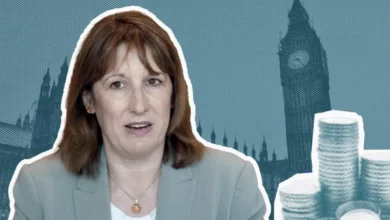
This surge in borrowing costs presents a direct challenge to Chancellor Rachel Reeves, eroding the government’s fiscal headroom. The concern is compounded by official data showing UK public sector borrowing surged to £14.3 billion in February 2026, the second-highest February figure on record.
Mortgage market scandal compounds woes
Adding to the sense of financial strain, the Financial Conduct Authority (FCA) has opened an enforcement investigation into the collapsed UK mortgage lending business Market Financial Solutions (MFS). The firm filed for administration last month amid allegations of fraud, leaving an estimated £1.3 billion shortfall.
Administrators allege the core of the scandal was “double-pledging,” where the same collateral was used for multiple loans. They estimate MFS owed roughly £1.2 billion to institutional creditors, including Barclays, Jefferies Financial Group, and Santander, but the underlying collateral was worth only about £230 million. A worldwide asset freezing order and travel ban have been granted against founder and CEO Paresh Raja, who is believed to be in the UAE.
Broader economic fallout takes shape
The ramifications of the crisis are spreading across the economy. Oxford Economics has sharply cut its UK GDP growth forecasts, now projecting just 0.4% expansion this year and 1% in 2027, down from 0.9% and 1.3% previously. The World Trade Organization has also slashed its forecast for global trade growth this year to 1.9%, warning of a sharper slowdown if energy prices remain high.
Businesses are feeling the pinch. Tim Martin, founder of pub chain JD Wetherspoon, warned that beer prices are likely to rise due to a £70 million hike in costs from national insurance, minimum wage, and energy prices, partly blaming the Iran war. The chain reported a 32% fall in pre-tax profit.
Beyond immediate costs, the Strategic Climate Risks Initiative has warned of a potential shock to UK food security, as many fertilisers pass through the disrupted Strait of Hormuz. This comes atop climate-related pressures on domestic harvests.
In a stark contrast to Western central banks, Russia’s central bank has cut its key interest rate by 50 basis points to 15%, citing its economy approaching a “balanced growth path.” The move highlights the divergent pressures facing different economies as the UK grapples with a crisis that is rewriting its near-term economic destiny.