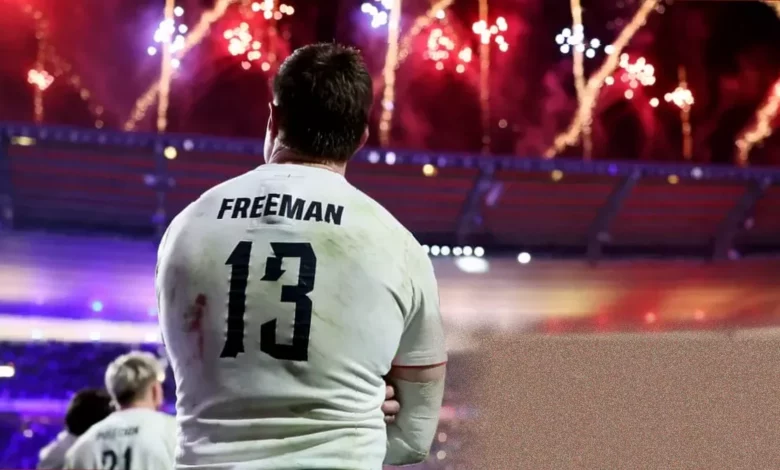
The Rugby Football Union has launched a forensic review into England’s worst Six Nations championship in half a century, but head coach Steve Borthwick’s position is not under immediate threat. Well-placed sources indicate the process is designed to support Borthwick, with one insider stating unequivocally: “He’s absolutely going to be in post this summer, there’s no question about that.” The review aims to dissect a fifth-place finish and painful defeats to Scotland, Ireland, and Italy, with feedback being sought from across the squad.
Coaching Conundrum and Tactical Disconnect
While Borthwick is expected to lead the team on their summer tour to face South Africa in Johannesburg, the composition of his coaching team is under scrutiny. Alex Sanderson, Sale Sharks’ director of rugby, noted the potential for too many voices, describing a “wide coaching team there, a lot of cooks.” Some have suggested appointing a senior figure to assist Borthwick with areas such as media, player management, and selection.
A clear tactical rift has also been identified. Observers noted a shift after the Ireland match towards a conservative, “pragmatic kick-compete style” against Italy, which Sanderson said “negates your own ambition to attack.” This contrasted sharply with the more competitive performance when “the shackles came off” against France. As Exeter’s Rob Baxter emphasised, the issues are systemic, telling reporters: “Finishing fifth is down to a collection of things that have slowly added up and then multiplied.”
Injury Woes and Selection Debates Complicate Summer Plans
England’s slide to sixth in the world rankings adds urgency to the need for improvement, with a senior RFU official acknowledging “the clock is ticking” ahead of the 2027 World Cup. The selection picture for the summer, however, is clouded by injury. Centre Seb Atkinson, hailed by former England international Simon Halliday as “the right type of guy,” has been ruled out for at least two months with knee damage. Meanwhile, Sale’s Tom Curry is facing three months out with a calf tear, leading his director of rugby, Alex Sanderson, to suggest the flanker might benefit from missing the tour to ensure longevity.
This injects further debate into key positions. Sanderson remains an advocate for fly-half George Ford, stressing “consistency of selection,” while Halliday argues for retaining the midfield trio from the France game, singling out Tommy Freeman’s “frightening” performance at outside centre. Ford himself has no plans to retire from Test rugby and has taken on a mentoring role within the squad.
Mixed Signals from the Talent Pipeline
The future talent pool presents a paradox. Recent results at age-grade level have been sobering; England Under-18s were thrashed 63-33 by France, and the Under-20s finished a distant sixth at last year’s Junior World Cup. France also won the 2024 Under-20 Six Nations, with England third.
Yet there are bright sparks. England won the Under-20 Six Nations crown this year for the first time since 2016, with Henry Pollock and Asher Opoku-Fordjour already promoted to the senior squad. “The talent pool is good,” insists Rob Baxter, citing the rapid rise of players like Manny Feyi-Waboso. At Bath, director of rugby Johann van Graan points to a promising crop including Kepu Tuipulotu and Tyler Offiah—son of rugby league legend Martin Offiah—who has progressed through England’s age groups.
The pathway for such talent, however, is under structural strain. The career trajectories of current England stars like Ollie Chessum and Joe Heyes, who climbed from the second-tier Championship via Nottingham, may become harder to replicate.
Championship’s Fight for a Future in a Changing Landscape
The RFU Council’s vote to abolish automatic promotion and relegation from the 2026-27 season, moving to a criteria-based “expansion” model, has placed the Championship in a precarious position. Despite securing its first title sponsor in over six years, a multi-year deal with Elior UK, the league faces a significant funding gap compared to the Premiership, partly due to what sources describe as “years of calculated RFU underfunding.”
Championship clubs warn the current terms risk bankruptcy and a divided game, having been given a deadline to accept new terms or face removal from the professional structure. Simon Gillham, chair of the Tier 2 Board, remains optimistic, convinced the “Elior Champ Rugby” will grow. “The alternative was to cut ourselves off and we would be dead. And the Prem would also be dead,” he said, emphasising collaboration. The league will expand to 14 teams next season, featuring the return of Worcester Warriors.
The financial context is outlined in the RFU’s own Annual Report, which shows total revenue of £228 million and an investment of £62.7 million into the professional game. How that investment is distributed, particularly beneath the Premiership, remains a critical question as the governing body seeks to rebuild the national team from the ground up.