In a bold move that could reshape the landscape of urban transport, Uber is set to invest up to $1.25 billion in electric vehicle maker Rivian to create a vast, exclusive fleet of self-driving taxis. The multi-year partnership, which begins with an initial $300 million injection pending regulatory approvals, is structured as a strategic bet on a future where autonomous vehicles dominate ride-hailing streets across multiple continents.
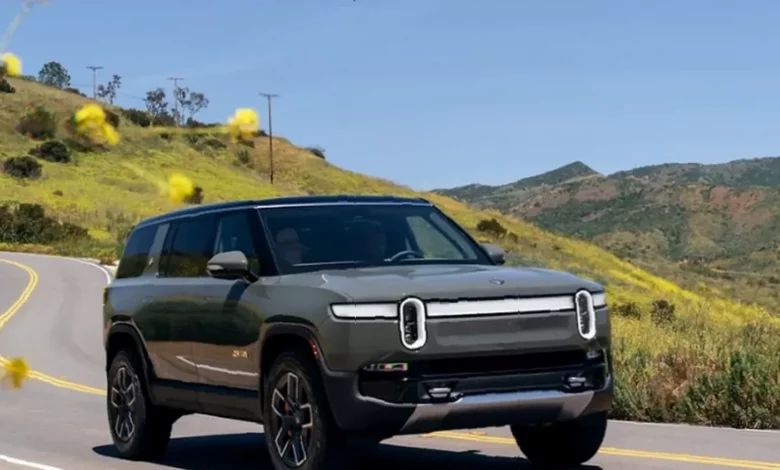
The core of the agreement grants Uber and its designated fleet partners the right to purchase 10,000 of Rivian’s forthcoming autonomous R2 vehicles. According to the companies, these robotaxis are scheduled to launch exclusively on the Uber app in two flagship US cities, San Francisco and Miami, in 2028. Should this initial deployment prove successful, the deal includes an option to negotiate for a further 40,000 vehicles from 2030 onwards.
A Structured Gamble on Autonomy
The financial commitment is tiered and contingent on Rivian’s technical progress. Uber’s initial investment could swell through 2031 if Rivian successfully reaches a series of undisclosed autonomy development targets. The long-term ambition, as stated by the companies, is to deploy thousands of unsupervised robotaxis across 25 cities in the United States, Canada, and Europe by the end of 2031.
For Uber, this represents a definitive doubling down on a partnership model it adopted after selling its own self-driving unit in 2020. The company now positions itself as the commercial and operational layer for autonomous transport, connecting vehicle makers with riders and handling charging and local fleet logistics. It has said it expects robotaxis from various partners to be available in 15 markets by the end of 2026, with larger deployments ramping up from 2027.
The Rivian deal also includes a significant financial experiment. By agreeing to purchase some vehicles directly, Uber is testing the underlying economics of robotaxi ownership. The company has indicated this will help it explore future financing models with banks and private equity firms to fund even larger fleets later.
Rivian’s Technological Roadmap
For Rivian, the partnership is a major validation of its autonomous driving strategy. Company executives have identified self-driving technology as one of their highest priorities. The R2 vehicle, slated to begin production in 2027, is central to this plan and will be equipped with what Rivian says is its own in-house autonomy chip, a new lidar sensor, 11 high-definition cameras, and five radar sensors.
The company’s ambitions extend beyond commercial fleets. Rivian has stated it is developing self-driving capabilities for personally owned vehicles, with a longer-term vision of cars autonomously handling tasks like airport pickups or school runs. It has also signalled openness to licensing its software to other manufacturers.
Rivian’s existing semi-automated driving subscription service, which offers features like hands-free supervised driving and commanded lane changes, is set to expand. The company has confirmed that auto-parking and ramp-to-ramp motorway functions are expected to follow.
A Crowded and Competitive Field
The agreement lands as the race to deploy autonomous ride-hailing services intensifies. Tesla already maintains a small robotaxi presence in Austin and conducts testing in San Francisco. Waymo and Amazon-owned Zoox are also advancing their own technologies and deployments. Meanwhile, Lucid Motors has outlined its own robotaxi ambitions and is, according to reports, in talks to deepen its existing relationship with Uber.
Investors reacted swiftly to the news. Rivian’s share price jumped in premarket trading following the announcement, while Uber’s stock was broadly flat. Shares in Tesla, a key rival in both electric vehicles and autonomy, slipped modestly.
The partnership represents a structured attempt to establish a new standard for how robotaxi fleets are financed, deployed, and brought to market. By combining Rivian’s integrated hardware and software with Uber’s vast network and commercial platform, the two companies are betting they can navigate a path to profitability in a market that remains fraught with both technical and regulatory challenges.