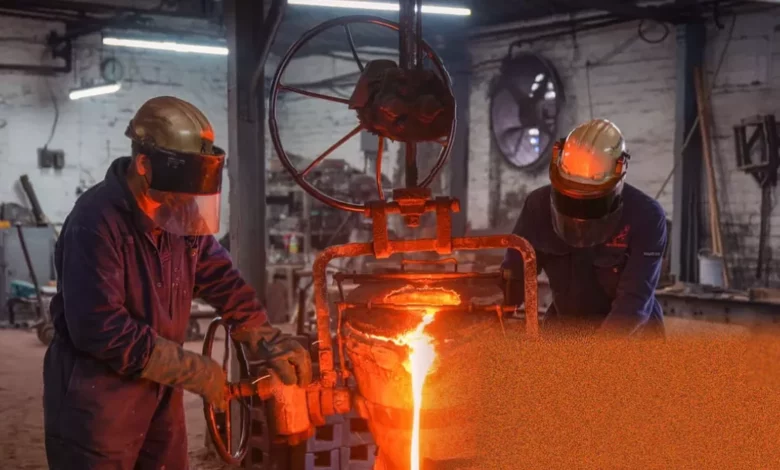
British manufacturers are grappling with the most severe monthly acceleration in their costs since the aftermath of Black Wednesday in 1992, as geopolitical conflict in the Middle East sends shockwaves through the UK economy.
Fresh survey evidence from S&P Global Market Intelligence reveals that input price inflation in the manufacturing sector surged in March, with the seasonally adjusted Input Prices Index rising by over 14 points since February. This marks the largest month-on-month acceleration since October 1992, a period of intense cost pressure that followed the sterling crisis. The current surge is overwhelmingly linked to soaring prices for fuel, transportation, and energy-intensive raw materials, pushing input costs to their highest level since October 2022.
Geopolitical Shock Drives Economic Slowdown
This cost crisis is directly tied to the conflict in the Middle East, which is simultaneously stalling growth. The composite Purchasing Managers’ Index (PMI), covering both services and manufacturing, fell sharply to 51.0 in March from 53.7 in February, indicating the economy is expanding at only a marginal pace. Chris Williamson, chief business economist at S&P Global Market Intelligence, stated: “The war in the Middle East has hit the UK economy in March, stalling growth while driving inflation sharply higher.”
Companies reported that lost business was a direct result of events in the region, citing heightened customer risk aversion, surging price pressures, higher interest rates, and travel and supply chain disruptions. New orders have declined, with export sales falling at the fastest rate since April last year, as anecdotal evidence pointed to postponed projects in the Middle East and reduced international travel.
The strain is also evident on the high street. The Confederation of British Industry’s retail survey recorded the fastest annual decline in sales volumes since April 2020, with the balance of retailers reporting rising sales plummeting to -52% in March. “Retailers report that weak economic conditions continue to weigh on household spending,” said Martin Sartorius, the CBI’s lead economist.
How Middle East Conflict Fuels the Price Surge
The specific mechanism driving this inflationary spike is a severe disruption to global energy markets centred on the Persian Gulf. The effective closure of the Strait of Hormuz to oil tanker traffic has thrown markets into acute turmoil, blocking a vital chokepoint for approximately 20 million barrels of oil per day and impacting liquefied natural gas exports from Qatar and the UAE.
This has triggered dramatic price surges: Brent crude oil temporarily peaked above $100 a barrel, while UK wholesale gas prices rose by roughly 75% between late February and late March. Beyond energy, the fracture has disrupted supply chains for a range of products, with around 25% of manufacturers reporting longer delivery times—the worst slowdown in vendor performance since July 2022. The impact extends to commodities like plastics and fertilizers, which rely on energy-intensive production or regional exports.
The situation echoes, in part, the cost pressures of Black Wednesday in September 1992, when sterling’s sharp devaluation led to a rapid increase in import prices. While the root cause differs, the effect on manufacturers’ cost bases is comparably severe.
A Fragile Outlook and Policy Dilemma
The outlook has darkened considerably. Business activity expectations for the year ahead have eased to their lowest since June 2025. Analysts at Morgan Stanley have warned the economy could be dragged into a “pronounced UK recession” by year-end due to the twin pressures of high energy prices and interest rate hikes.
Emily Sawicz, a director at RSM UK, noted: “Despite some resilience, geopolitical tensions remain a key concern for UK manufacturers – underscoring that conditions remain highly uncertain. Should these pressures intensify, the sector’s fragile recovery could even slip back into decline later in the year.”
The surge presents a acute dilemma for the Bank of England. Its Monetary Policy Committee voted to hold interest rates steady at 3.75% on 19 March, a decision influenced by the conflict. Previously anticipated rate cuts now seem unlikely, with further hikes a possibility as the MPC monitors for broader ‘second round’ effects from higher energy prices. As PwC senior economist Jake Finney observed, the key judgment will be the conflict’s duration and whether it triggers a broader resurgence in inflation.
In response, Chancellor Rachel Reeves is set to outline the government’s thinking on cushioning the blow for consumers if disruptions persist. While the government has stated it is prepared to offer support and has dismissed “scaremongering” about fuel availability, its long-term strategy focuses on electrification and decarbonisation for energy security. It has rebuked calls to rapidly increase domestic oil and gas production, arguing new licences will not provide near-term security or lower bills.