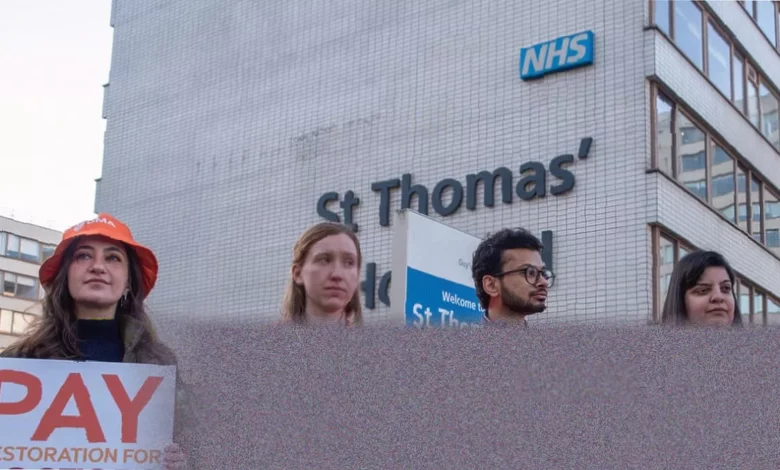
Resident doctors in England are on strike again, this time for six days, in a bitter dispute that has plunged the NHS back into a familiar state of costly paralysis and exposed a deep chasm between the government and the medical profession over pay and career prospects.
The Stubborn Impasse
This latest walkout follows the collapse of negotiations that, according to sources close to the talks, had appeared promising. The British Medical Association’s (BMA) Resident Doctors Committee claims the government’s final offer was watered down at the last minute, leading to its rejection. The union’s central demand remains a 26% pay rise to restore salaries to their 2008 purchasing power, a figure Health Secretary Wes Streeting has branded “impossible”. He argues resident doctors are “by a country mile the standout winners of the entire public sector workforce” on pay, citing a cumulative rise of approximately 28.9% between 2021 and 2024.
The BMA fundamentally disputes this characterisation. It points to analysis showing that, according to the Retail Price Index (RPI), real-terms pay has eroded by around 21% since 2008, and argues a 35% increase would be needed for full restoration. Although a deal worth an average of 22.3% over two years was accepted in September 2024, ending a prior dispute, the union states doctors remain 20.8% behind in real terms compared to 2008. The government’s latest offer for 2025-2026 was an average 5.4% rise, but the BMA committee rejected it, refusing to put it to members.
Parallel to pay is a critical crisis in training. When Labour took office, only one in four newly qualified doctors could secure a training post to progress towards specialisation. The government moved to prioritise UK graduates and offered a package including 1,000 additional specialty training places this April and a further 3,500 over subsequent years. However, following the BMA’s strike announcement, Wes Streeting withdrew the offer of the 1,000 immediate places, stating it was “not operationally or financially possible” amid the uncertainty. The BMA has expressed scepticism over whether the promised 4,500 posts were genuinely new or would simply replace other roles.
The Heavy Cost and the Uneasy Equilibrium
The financial toll of the strikes is staggering. Since industrial action began in March 2023, the cumulative cost to the NHS is estimated to have exceeded £3 billion—money that Streeting says could have built several new hospitals. Each strike day costs around £50 million, meaning the current six-day strike could cost over £250 million. This arises primarily from paying senior consultants premium rates to cover for strikers—sometimes up to £4,000 for a weekend—and from cancelled operations.
Paradoxically, this expenditure has created an uneasy equilibrium where the immediate crisis is managed, but at a vast opportunity cost. NHS England reported that nearly 95% of usual activity was maintained during strikes in December 2025, and some within the service, like the Royal College of Emergency Medicine, have reported that A&E departments sometimes run more smoothly when consultants cover. For many striking doctors, the financial pain is mitigated by the ability to recoup lost wages through overtime later. This dynamic, where strikers are not severely penalised and the system avoids immediate collapse, has contributed to a protracted stalemate.
Nevertheless, NHS leaders warn the strikes jeopardise hard-won progress. While a historic high of 18.4 million treatments was delivered in 2025 and waiting lists fell to 7.29 million, they remain a huge challenge at 7.2 million as of January 2026. The 18-week treatment target has not been met since 2016. In February 2026, 26% of A&E patients waited over four hours. NHS England chief executive Jim Mackey has warned that resources spent managing strikes should be invested in patient care and indicated the NHS would look to reduce its reliance on resident doctors in response.
Shifting Sentiments and Torn Loyalties
Public support for the action is waning. A recent poll indicates 53% opposition versus 38% in support, a significant shift from earlier, higher backing. The BMA’s own mandate shows signs of fatigue: in its latest ballot, only 53% of members voted, though of those, 93% backed striking. This compares to a 78% turnout in the first ballot of 2023.
The human tensions within hospitals are acute. One senior consultant at a top hospital spoke of his sympathy for his junior colleagues, shocked that only one in eight in his team got a training place this year and mindful of the £100,000 student debts new doctors carry. Yet, having had to cancel patients’ treatments, he opposes the strike. These torn sympathies reflect the complex reality on the ground.
The government’s response to the deadlock has been blunt. Streeting accused the BMA of “sapping the health service of vital funds.” By linking the withdrawal of training places directly to the strike decision, and with Mackey’s warning about reducing reliance on junior doctors, the rhetoric has hardened. With no clear “off-ramp” in sight, and with the financial shadow of the strikes deepening, the path to resolution appears blocked, leaving the NHS to bear the cost while both sides dig in.