Stroke survivors across the UK are being failed daily due to critical and systemic gaps in rehabilitation services, with severe staff shortages limiting their chance to recover independence, leading professional bodies have warned.
The stark picture emerges from the 2025 Stroke Physiotherapy Workforce Survey, conducted by the Chartered Society of Physiotherapy (CSP) and the Association of Chartered Physiotherapists in Neurology (ACPIN). The survey of 159 NHS services reveals deep workforce deficits that are undermining national care standards at every stage of recovery.
The Scale of the Shortfall
The survey quantified the staffing crisis with alarming precision. Community stroke services, which support patients after they leave hospital, are operating with 26% fewer physiotherapists than national guidance recommends. Meanwhile, acute stroke teams in hospitals are running with a 15% shortfall in physiotherapists. The most severe gap is among community rehabilitation support workers, whose numbers are a staggering 36% below recommended levels.
Ash James, director of practice and development at the CSP, said this data shows services are “chronically understaffed” despite record numbers of registered physiotherapists nationally. “Something is going seriously wrong in our health system if the NHS is failing to turn workforce growth into the posts required to meet even the minimum standards for stroke rehabilitation,” he stated.
The Impact on Rehabilitation
These shortages directly translate into less therapy for patients. National guidelines, including those updated by NICE in October 2023, recommend at least three hours of multidisciplinary therapy per day, five days a week, for stroke rehabilitation. This marks a significant increase from historical recommendations of 45 minutes daily.
Yet the reality falls far short. Current data indicates stroke patients typically receive rehabilitation for only three to four days a week while in hospital. Once discharged home to community support, that figure plummets to just one or two days.
Adine Adonis, chairwoman of ACPIN, emphasised that “survival must be matched with the chance to recover well.” She warned, “This is not good enough. It is failing people every day and limiting their potential for recovery.”
The consequences are profound for a condition that is the UK’s leading cause of complex adult disability. Around 60% of stroke survivors are left with a disability, with many facing mobility challenges, struggles with daily activities, and anxiety or depression.
A Survivor’s Story: “They gave me hope”
The human cost of these gaps is illustrated by the experience of 73-year-old David Stadelman from Bournemouth. After a stroke, heart failure, and major surgery, he was left unable to sit up, walk, or perform basic tasks. “I was completely dependent on others,” he said.
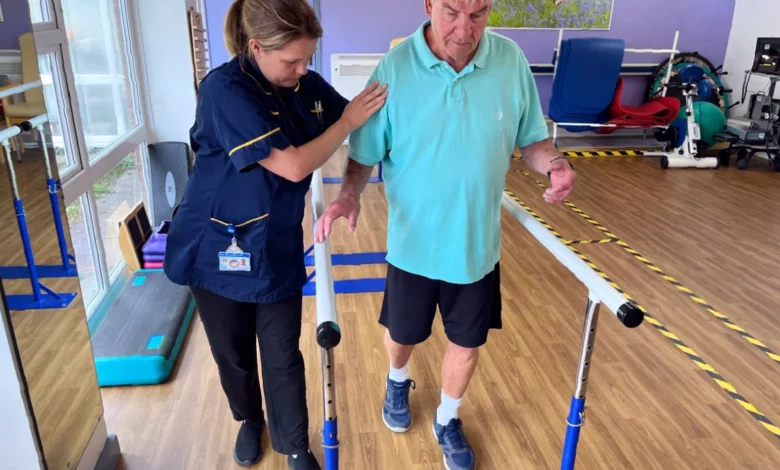
Following four months in hospital, he was discharged to a care home where he began intensive physiotherapy four times a week. “The physiotherapists were absolutely brilliant… They didn’t just treat me, they gave me hope,” he said. To continue his progress upon returning home, he turned to a local charity-run rehabilitation group, which he credits with helping him regain the ability to walk miles and drive again.
Mr Stadelman added a pointed critique of the system: “But that shouldn’t depend on whether you can find or afford something outside the NHS. It is very concerning to hear that stroke teams are not adequately staffed to be able to support people in their recovery.”
Calls for Action and Government Response
Juliet Bouverie, chief executive of the Stroke Association, noted that around 240 people in the UK have their lives “potentially destroyed” by stroke daily. She stressed that “early and bespoke rehabilitation, coupled with ongoing support, can vastly improve the physical effects of stroke,” but lamented that “progress to improve the availability and intensity of rehabilitation is far too slow.”
The CSP points to wider NHS workforce issues, with 65% of surveyed services experiencing a recruitment freeze and eight in 10 NHS physiotherapists reporting insufficient staff to meet demand. The society is advocating for urgent investment, proposing annual increases of 5% in physiotherapy staff and 8% in rehab support workers to build community services.
The Department of Health and Social Care has acknowledged that too many people are not receiving the support they need for stroke recovery and states they are “working to fix that.” Initiatives include rolling out specialist stroke rehabilitation in people’s homes and setting clear care standards, with a commitment to cutting stroke deaths by a quarter over the next decade. NHS England’s Long Term Plan also identifies stroke as a clinical priority, aiming to improve care through Integrated Stroke Delivery Networks.
However, for experts and survivors, the pace of change cannot match the urgency of the daily need. With workforce gaps measured in double-digit percentages and therapy time halved for those at home, the call is for immediate action to translate policy promises into the therapists and support workers on the ground.