An antiquities dealer who exposed the theft of hundreds of artefacts from the British Museum has died aged 61.
Dr Ittai Gradel, a Danish academic and collector, died of renal cancer in a Danish hospice days after receiving a rarely presented medal from the museum in recognition of his “very significant contribution”, according to the museum’s director, Nicholas Cullinan. Gradel’s cancer was first diagnosed in 2010 and returned in 2022. He had told the BBC he knew he “had to get this finished before I was on my deathbed”.
A police investigation by the Metropolitan Police remains ongoing, more than three years after the museum reported the thefts to Scotland Yard under pressure from Gradel – who would have been a key witness in any trial. Before his death, he told the BBC it was “a bit annoying” he would not live to see the resolution of the case.
The Whistleblower’s Discovery
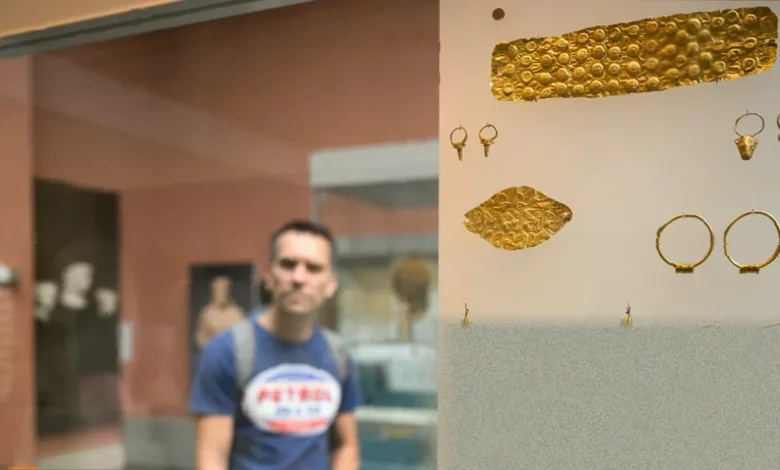
Gradel first raised the alarm in 2021 after noticing items from the British Museum’s collection appearing for sale on eBay at prices as low as a few pounds apiece. The objects were mainly classical gems and gold jewellery from the ancient Mediterranean area, many of them stored in a basement room in the museum’s Department of Greece and Rome. Using his photographic memory, Gradel cross‑referenced the online listings against obscure academic catalogues to confirm their provenance.
He reported that he and other antiquities dealers had unintentionally bought items online that originated from the museum. Gradel provided evidence that he suspected a senior curator was responsible, including a PayPal receipt that named the curator he believed was selling them: Peter Higgs, an expert in Greek antiquities who had worked at the British Museum for 30 years before being sacked. The eBay seller used by Higgs reportedly went by the username “sultan1966” and sometimes used the names “Paul Higgins” or “Paul”. Higgs denies any wrongdoing. A civil lawsuit was filed against him in March 2024, with the museum alleging he used his access to alter records and sell items on eBay and PayPal using false names.
The Museum’s Dismissal and Fallout
Gradel accused the British Museum’s then‑management of stonewalling him and “sweeping it all under the carpet”. On one occasion, he persuaded another dealer to return an olive‑green gemstone the dealer had bought on eBay. Five months later, the museum’s then deputy director, Jonathan Williams, wrote to Gradel to say all the objects were accounted for and his claims were unfounded. It later transpired that the thief had allegedly faked a handwritten note claiming that particular gemstone had been stolen in 1963.
Two years after Gradel’s initial warnings, the museum conducted its own investigation and announced that approximately 2,000 items from its collection were stolen, missing or damaged. The revelations made headlines worldwide and led to the resignation of the museum’s then director, Hartwig Fischer, who admitted it was “evident that the British Museum did not respond as comprehensively as it should have” to Gradel’s warnings. Deputy director Jonathan Williams also stepped back from his duties and has since confirmed he will be leaving the museum.
The thefts exposed a systemic vulnerability: nearly 2.4 million items in the British Museum’s eight‑million‑piece collection were uncatalogued or partially recorded, a weakness the alleged thief exploited. An independent review subsequently recommended significant reforms to the museum’s governance and security policies. The museum has stated that security has been improved and it is confident a theft of this kind cannot happen again.
Legacy and Recognition
In total, Gradel signed more than 360 items he had purchased online back to the British Museum. Those included 290 Greek and Roman gems he had acquired between 2010 and 2013 from a single source, unaware they were stolen at the time, and a further 61 gems bought on eBay between 2014 and 2018. Hundreds of additional stolen items have been recovered by the museum in cooperation with law enforcement, including the FBI, which has investigated the potential sale of stolen items to US buyers and helped recover 268 items sold to a collector in Washington D.C. As of May 2024, more than 800 items remained unaccounted for.
Days before his death, Gradel received the British Museum medal from director Nicholas Cullinan, who wrote to him saying it was “a sign of our esteem … in recognition of your expertise and of your passionate determination that wrongs should be righted”.
Gradel was born in 1965 in Haifa, Israel, to a British father and a Danish mother, and moved to Denmark at age two. He moved to the UK at 18 and quickly fell in love with the British Museum. Reflecting on his role, he said: “I didn’t do the museum a favour by revealing these thefts, because it did damage to the institution. But I had no choice. However, I did the museum a huge favour in assisting it in getting a new and better management.”
In the wake of the scandal, the British Museum announced a five‑year plan to digitise its entire collection, a project estimated to cost $12 million, aimed at increasing transparency and enabling faster detection of future discrepancies.