Public opening of a Napoleonic-era semaphore tower
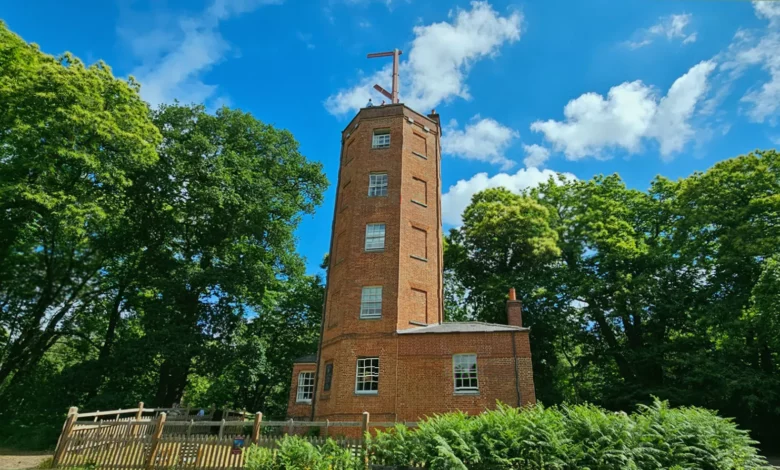
A historic defence tower that once relayed semaphore signals between London and the coast to guard against Napoleonic invasion is opening to the public next June. Chatley Heath Semaphore Tower, a rare surviving five-storey octagonal structure, will welcome visitors on Saturday 6 June and Sunday 7 June 2026 from 10am to 4pm each day.
Admission is free, and while pre-booking is not essential, the Landmark Trust — the building conservation charity that restored and now manages the tower — recommends reserving tickets in advance via Eventbrite for priority access and updates. The tower is small and its staircase narrow and steep, so visitor numbers inside are limited at any one time; those arriving may be asked to wait during busy periods. Toilet facilities are available on site, and dogs on leads are welcome at the open day.
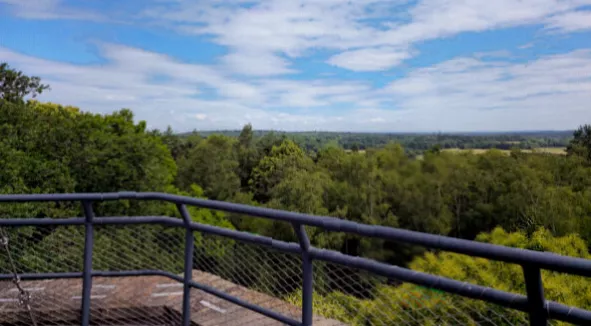
The Landmark Trust opens the tower to the public once or twice a year. For the rest of the time it operates as a unique holiday let, accommodating up to four people, having been meticulously restored between 2018 and 2022. Inside, visitors can see the refurbished semaphore machinery, a cosy sitting room with a wood-burning stove, a top-floor kitchen with panoramic views, and a roof terrace offering 360-degree vistas across the Home Counties and towards London. The interior has been painted in historically evocative colours supplied by Craig & Rose, and includes light-hearted military touches such as a telescope and semaphore flags.
How the semaphore chain worked and why it mattered
The tower was constructed in 1822 as part of the Admiralty’s semaphore chain linking Admiralty House in London with Portsmouth Docks. The network was built in the aftermath of the Battle of Waterloo, at a time when the fear of a Napoleonic invasion remained very real. The semaphore system itself was invented by Rear Admiral Sir Home Riggs Popham and represented a cutting-edge communication technology for its era: on a clear day it could transmit a message over 75 miles in as little as 15 minutes.

Chatley Heath stands as the only surviving five-storey semaphore tower in Britain and the only one on the London-to-Portsmouth line. Its octagonal design and considerable height were essential for visibility because the tower had to be seen from its neighbouring stations, each spaced roughly seven miles apart. The line operated from 1822 until 1847, when it was made redundant by the arrival of railways and the electric telegraph — a strikingly short lifespan for such a significant defence asset.
After the semaphore equipment was removed, the tower was lived in until 1963. It then spent decades in decay, suffering from vandalism and fire damage. An initial restoration was carried out by Surrey County Council and the Surrey Historic Buildings Trust to mark the council’s centenary, but the most recent and comprehensive work was undertaken by the Landmark Trust between 2018 and 2022, transforming the structure into a holiday home while preserving its historic character.
Getting there and exploring the surrounding area
The tower is located just off Pointers Road, near the junction of the M25 and A3, peeking above the trees on the edge of southwest London. There is no parking at the tower itself. Visitors arriving by car are advised to use the Pond car park (postcode KT11 1ND) or Bolder Mere car park on Old Lane, Ockham (KT11 1NR). Both are approximately a 10-to-15-minute walk from the tower, with clearly marked paths using red and blue “Chatley Heath” markers. Travelers should be aware of ongoing major roadworks at the Wisley Interchange (M25 junction 10), which may affect access and parking. In winter, the alternative route via a minor road to Cobham can flood.
Public transport is possible but requires a modest hike. The nearest railway station is Effingham Junction, about 2.5 miles (4 km) from the tower. The walk takes 30 to 40 minutes along roads without pavements. From the station, head to Martyr’s Green; at the Black Swan pub — the filming location for An American Werewolf in London — turn onto Ockham Lane, then left at the first junction. Past a couple of posh houses, the wood and footpaths lead to the tower. There is also the hourly 715 bus from Cobham and Kingston upon Thames, but that involves a lengthy walk along the busy A3 road to reach the woods; the service operates on weekdays only, with the Cobham departure running once a day at 20:10.
Chatley Heath itself is part of a 336-hectare nature reserve that includes Wisley Common and Ockham, comprising 800 acres of woodland and heathland with numerous footpaths and cycle paths. The site is nationally important for dragonflies and damselflies, with twenty species recorded, and attracts many rare birds. Cyclists can store bikes in the tower’s basement, making it a good base for local routes including the Ockham and Wisley commons and the National Trust Wey Navigation towpath.
Nearby attractions include the world-renowned RHS Wisley gardens, the restored Cobham Mill, and the Samuelson Mausoleum — built in 1919 for Sir Bernhard Samuelson and his family — which is a short detour through the woods. Further afield, Reigate Hill and Gatton Park (designed by Lancelot “Capability” Brown) and the Surrey Hills are both about a 30-minute drive away. The paths to the tower are on an incline, uneven, and may have steps, which may make them unsuitable for visitors with limited mobility. Inside, the steep and narrow stairs require care. The Landmark Trust’s booking office can be contacted on 01628 825925 for further access information.