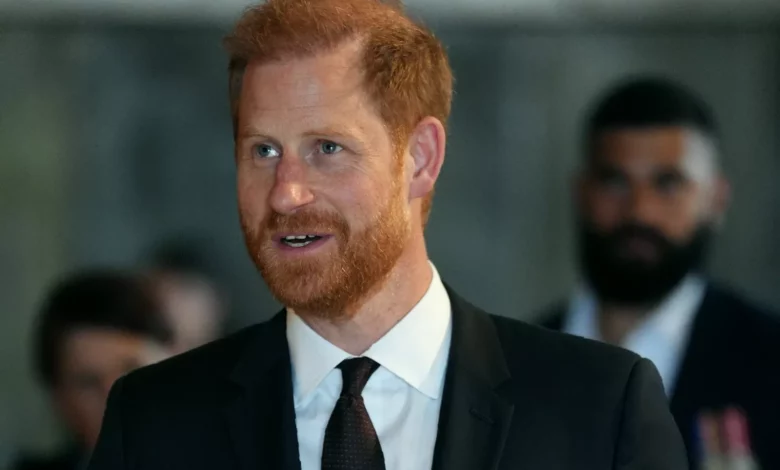
The Duke of Sussex has described Sir David Attenborough as a “secular saint” as the broadcaster celebrates his 100th birthday, penning a tribute in Time magazine that casts the naturalist as an “institutional pillar as essential to the national fabric as a cup of tea.”
Writing on the eve of Attenborough’s milestone birthday on Friday, Prince Harry hailed him as “more than a broadcaster” and “the Voice of Nature”, arguing that he has earned the trust of people around the world “by simply showing us that our environment is worth appreciating”. The duke said the broadcaster’s “measured demeanor and lack of any conceivable agenda” mean the warnings he issues carry greater urgency. “When a man who has quite literally seen it all begins to describe the loss of the planet’s stability, he isn’t being provocative,” Harry wrote. “He is reporting from the front lines of a planet he has known longer, and more intimately, than almost anyone alive.”
Attenborough, who was born on May 8, 1926, in Isleworth, London, and grew up in Leicester, has spent more than seven decades documenting the natural world. Educated at Wyggeston Grammar School and Clare College, Cambridge, where he studied natural sciences, he joined the BBC as a trainee producer in 1952 and presented his first major series, Zoo Quest, two years later. He later served as Controller of BBC Two and Director of Television Programming before leaving management to focus on his landmark “Life” series, including Life on Earth, The Blue Planet and Planet Earth, which have reached an estimated billion viewers worldwide.
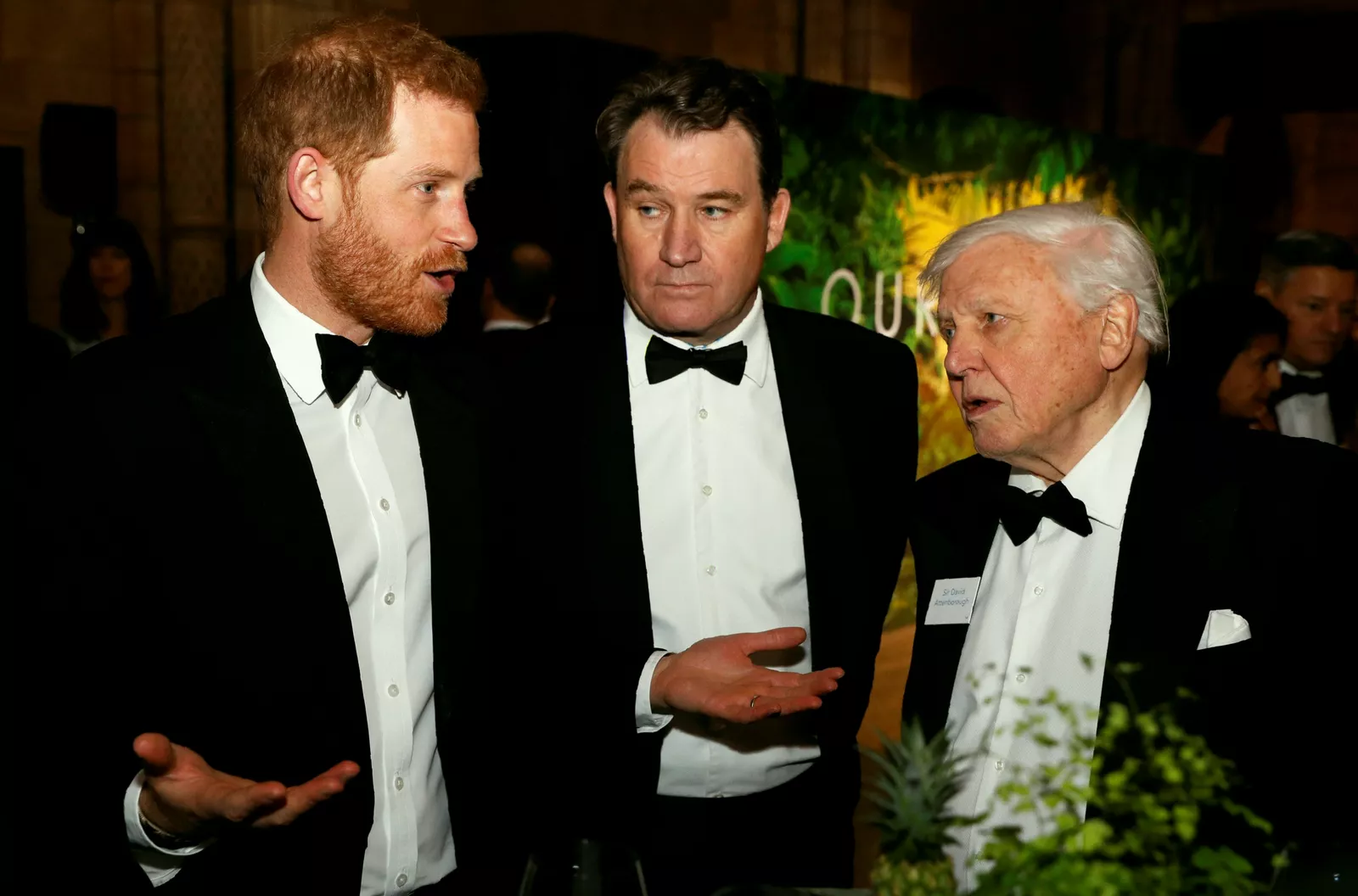
Prince Harry singled out what he called Attenborough’s “most significant contribution”: dismantling the notion that climate issues are happening “somewhere else”. “For most people, the natural world is often a destination visited through a screen, safely removed from the pressures of daily life, offering a rare sense of calm, perspective, and escape,” the duke wrote. “Attenborough has made that distance impossible to maintain, and his work has helped us to connect the dots, showing that distant glaciers, forests, and rivers are far more than beautiful landscapes – they are part of the delicate systems upon which our own communities depend.” Harry elaborated that the broadcaster’s documentaries have helped audiences understand “how forms of modern consumption that appear far removed from nature can nevertheless place enormous strain on the ecosystems sustaining it”.
This ability to bridge vast ecological crises and local realities has been a hallmark of Attenborough’s later career. While his early work showcased the wonders of wildlife, documentaries such as Climate Change – The Facts (2019) and David Attenborough: A Life on Our Planet (2020) carried a far graver tone, serving as direct calls to action. He has addressed world leaders at COP26 and the World Economic Forum, and his partnership with the World Wide Fund for Nature stretches back to its founding in 1961. The shift in tone has been accompanied by a remarkable reach: an estimated 88 per cent of viewers changed their lifestyle after watching The Blue Planet, and research suggests his Our Planet series has had a greater influence on teenagers’ environmental values than Greta Thunberg. A significant proportion of young people now say they prioritise the environment when choosing products and are willing to pay more for eco-friendly options.
‘Credible authenticity’ for a generation
Prince Harry devoted particular attention to Attenborough’s skill in engaging younger audiences, noting that he has “bypassed the generational gap by embracing the platforms where young people live, reaching millions through social media and streaming”. “He doesn’t preach or lecture but shares a perspective that spans a century,” the duke wrote. “To a generation overwhelmed by noise and uncertainty, Attenborough represents credible authenticity.” This appeal has been evident in recent projects: Attenborough has continued to narrate major series, including Planet Earth III (2023), Wild Isles (2023), Our Planet II (2023) and Ocean with David Attenborough (2025), maintaining a presence across both traditional television and streaming platforms.
In his tribute, Harry concluded that Attenborough has “spent a lifetime delivering us the facts with patience, honesty, and wonder”, showing the world “in all its brilliance and fragility, and in doing so has left humanity with both a gift and a responsibility”. The duke added: “The question now is whether those with the power to act will choose to lead before more of our world – our life support system – is lost.”
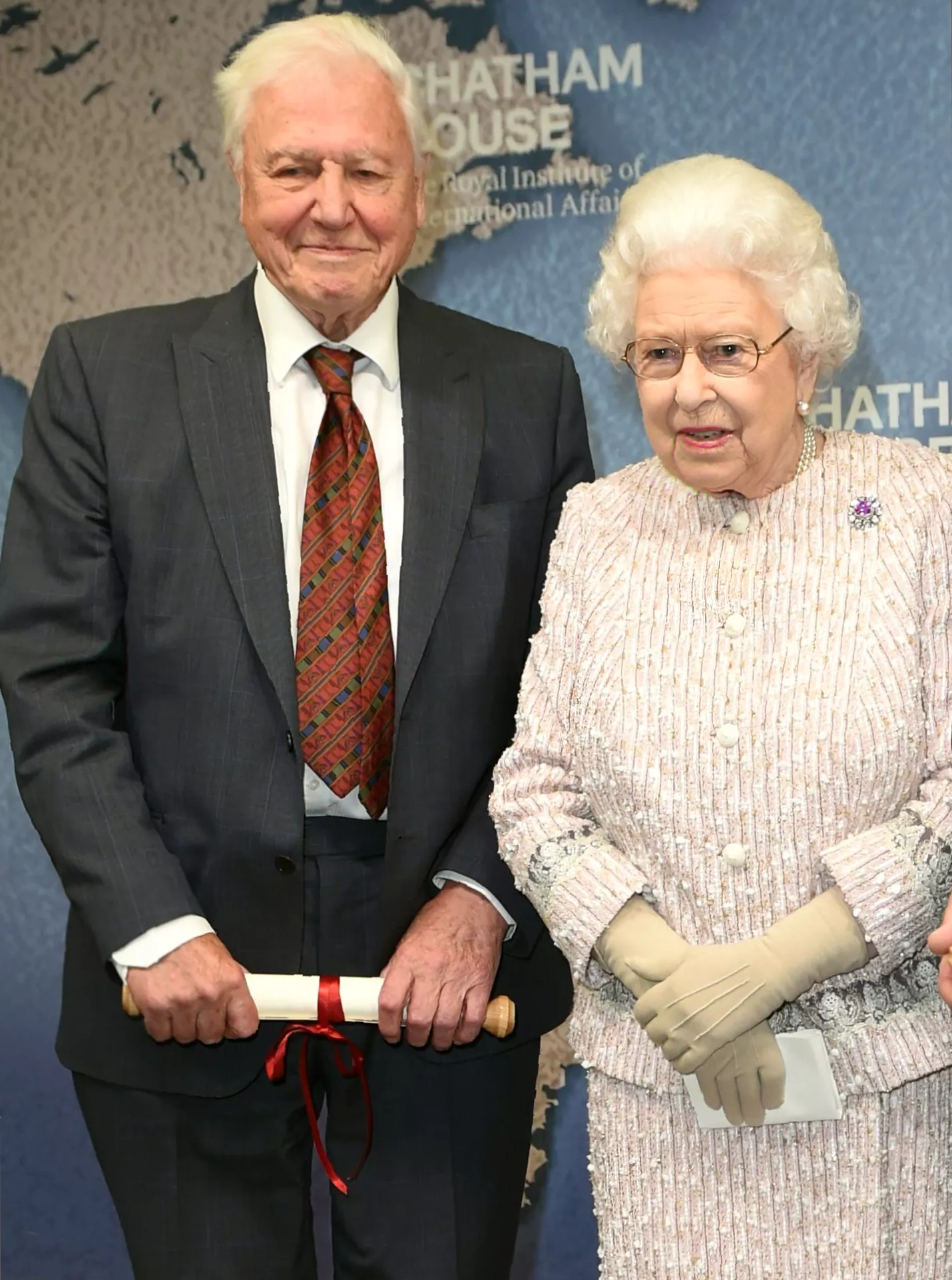
Attenborough, who has received eight BAFTAs, a Peabody Award and multiple Primetime Emmys, was knighted in 1985 and received a second knighthood (Knight Grand Cross of the Order of St Michael and St George) in 2022. The research vessel RRS Sir David Attenborough bears his name. He and his late wife, Jane, whom he married in 1950 and who died in 1997, had two children, Robert and Susan. His elder brother was the actor and director Richard Attenborough.
Other public figures have also marked the centenary. The BBC is hosting a special celebration at the Royal Albert Hall, featuring music from Attenborough’s programmes and reflections from leading figures. Prince William sent a birthday message via video. Attenborough himself has said he was “completely overwhelmed by birthday greetings” and had intended to mark the occasion quietly.