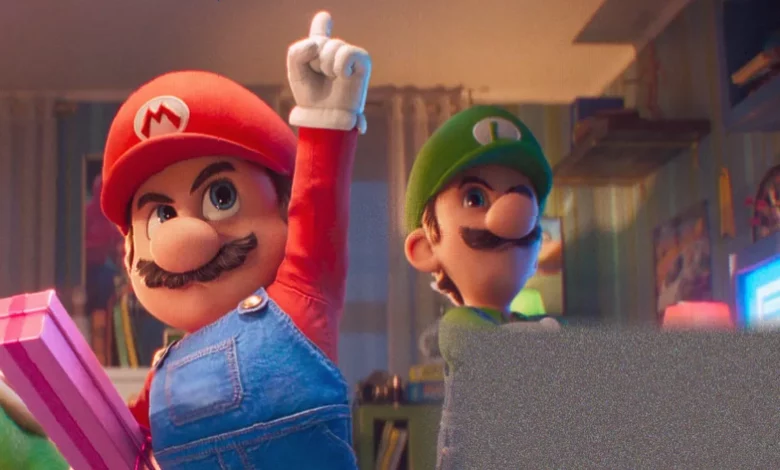
In what may stand as one of the video game industry’s most extraordinary coincidences, Nintendo may have unwittingly named Super Mario’s brother Luigi not just for a popular Italian name, but after the father of the very man who inspired Mario himself.
The Genealogical Discovery
The connection was uncovered by Elisabeth Zetland, a senior researcher with the genealogy service MyHeritage, who explored the family history of Mario Arnold Segale—the Washington state businessman confirmed as the namesake for Nintendo’s iconic plumber. Her research, prompted by the release of a new Super Mario film, revealed that Segale’s father was named Luigi Maria Segale. Zetland, who consulted birth, marriage, census, and immigration records, believes the link to the video game character is likely a remarkable accident.
For decades, the origin of Luigi’s name has been subject to speculation. Super Mario creator Shigeru Miyamoto has previously stated that the name was chosen because it rhymed with the Japanese word for “similar,” fitting for a character originally designed as a visual copy of Mario for two-player action. Another theory pointed to a local pizza parlour near Nintendo’s old office called Mario & Luigi’s. The company did not respond to requests for comment on whether it was aware of the elder Segale’s name.
The Life of Luigi Maria Segale
The real Luigi’s story is a classic narrative of 20th-century immigration. He was born in 1886 in Favale di Malvaro, near Genoa, Italy, into a family led by a bricklayer patriarch. Facing the economic hardship and political upheaval that drove millions of Italians abroad, Luigi and his brother Giuseppe embarked on a new life in 1909. They sailed from Europe to Ellis Island, New York, aboard the German steamship Prinzess Irene—a vessel that would later be seized by the United States during the First World War and renamed Pocahontas.
The brothers eventually made their way to the Pacific Northwest, settling around Tukwila, Washington, south of Seattle. Luigi, who anglicised his first name to Louis, began the process of building an American life. U.S. military records show he served in the armed forces from 1918 during the First World War, receiving an honourable discharge a year later. He then established himself as an independent farmer, a common path for immigrants of his generation.
By 1940, census records show Louis and his wife, Rina, had achieved financial stability. Their farm produced tomatoes, lettuce, and onions, which they trucked to sell in Seattle’s urban markets. They had a six-year-old son, Mario, their only child. The family’s prosperity was cemented post-war when they bought a home in Seattle at the start of the housing boom, a symbol of their realised immigrant ambition.
Historical glimpses into Mario Segale’s upbringing, found by Zetland in a 13-page report, show a family deeply connected to its roots. For Mario’s 12th birthday in 1946, his parents hosted a celebration with Ligurian-style food and cake, reported in the local La Gazzetta Italiana social column. An accordionist played as guests sang together. Later, Louis and Rina were recognised by the Catholic Northwest Progress newspaper for their support of children in the Seattle archdiocese’s foster program. “It’s really a legacy of Italian dreams and American opportunity,” Zetland said.
From Tenant to Namesake: The Mario Connection
Their son, Mario Arnold Segale, would build significantly on that foundation. He founded the construction company M.A. Segale, Inc. in 1953 with a single dump truck, growing it into a major Northwest heavy construction and contracting business. A prominent real estate developer, he established the Segale Business Park in Tukwila in the early 1970s. In 1981, Nintendo of America began renting a warehouse from him there for its US headquarters.
It was this landlord-tenant relationship that cemented the Segale name in pop culture. As recounted by author David Sheff in *Game Over: How Nintendo Conquered the World*, the inspiration struck when Segale marched into Nintendo’s offices to confront then-president Minoru Arakawa over overdue rent. The development team, struggling to name a character originally known as Jumpman from *Donkey Kong*, decided on the spot to call him Mario. Shigeru Miyamoto definitively confirmed this origin story in 2015.
Mario Segale, however, was famously press-shy and never embraced the notoriety. In a rare 1993 comment to The Seattle Times after Sheff’s book was published, he quipped, “You might say I’m still waiting for my royalty checks.” His 2018 obituary noted he “always ducked the notoriety” and wished to be known for his life’s work. He died in October 2018 at age 84, survived by his wife, four children, and nine grandchildren.
His father, Luigi (Louis) Segale, had died much earlier, in 1981. That was five years before the Nintendo Entertainment System title *Super Mario Bros.* properly introduced Luigi the character to the world, meaning he never knew of the fictional namesake. In the 2023 animated film, Mario’s father was voiced by former game voice actor Charles Martinet and referred to as “Giuseppe”—a nod perhaps to Luigi Segale’s brother and travel companion, but not to the immigrant farmer from Favale di Malvaro whose own name now echoes through gaming history.