Southwark’s ‘Owl and the Pussy-Cat’ house may undergo refurbishment for public visits

A towering new student accommodation block and the restoration of two whimsical historic townhouses are at the heart of redevelopment plans for a key Southwark site, promising to reshape the local skyline while preserving a quirky piece of community heritage.
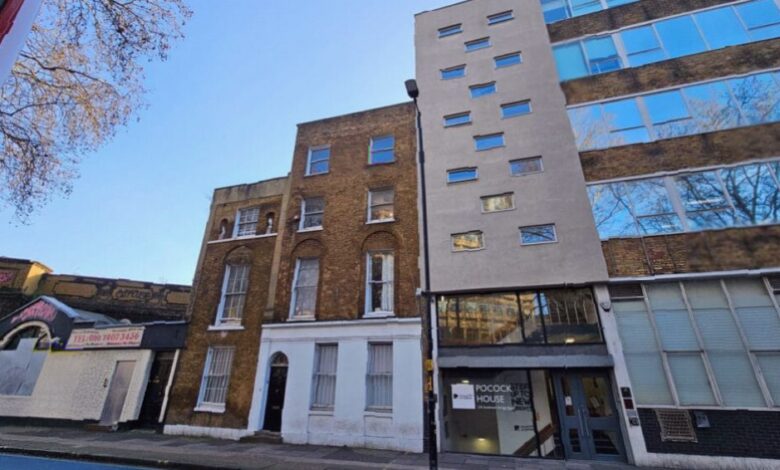
The developer, student housing group Scape, intends to replace the modern Pocock House building at 235 Southwark Bridge Road with a 45-storey tower housing approximately 800 student bedrooms. Integral to the scheme is the revival of the adjacent, locally famous 19th-century properties at numbers 231 and 233, known for the small statues of an owl and a cat adorning their upper-floor niches.
The Mystery of the Owl and the Cat
Perched next to the railway line between Blackfriars and Elephant and Castle, the sculptures were added around the turn of the millennium by a previous owner, their exact origin still unknown. They have, however, delighted passers-by for decades and spurred local speculation. One theory links them to Edward Lear’s beloved nonsense poem “The Owl and the Pussy-Cat”, a connection grounded in the fact that Lear’s father, Jeremiah, was imprisoned for debt in the King’s Bench Prison, located just minutes from the site. Edward Lear, the renowned 19th-century artist and poet, began his career as an ornithological draughtsman and contended with epilepsy and depression throughout his life.
Architecture and Local Significance
The townhouses themselves are examples of ‘third-rate’ Georgian terraced housing, built around 1830 and typifying the speculative development that swept London after the Napoleonic Wars, according to Scape. The road they stand on, Southwark Bridge Road, was created in 1819 to provide access to the new Southwark Bridge. While the buildings are not nationally protected, they are locally listed by Southwark Council. The council has stated that the structures possess “no architectural value and very limited historical value”, with their distinctive local character deriving almost entirely from the later addition of the sculptures. Local listing offers some measure of protection, though demolition can be permitted if justified by a development’s benefits.
Historically, the Pocock House site was occupied by Pocock Brothers, a large boot manufacturer that suffered a significant fire in 1959. The current modern building is described as having a “large, inward-looking frontage with limited engagement at ground level”.
Scope of the Proposed Scheme
Scape’s proposals involve the full restoration and enhancement of the two locally listed townhouses for public use, potentially as a cafe or workspace, complete with a small outdoor seating area and a roof terrace that could become a public space. The broader project includes the creation of a pocket park and a £30 million contribution to Southwark Council to fund affordable housing in the borough.
If planning permission is secured, construction of the student accommodation tower is anticipated to begin in mid-2027, with completion expected by the end of 2030. The student housing group, which has a portfolio of over 7,500 beds in operation and development across the UK, is currently undertaking pre-planning consultations and seeking local feedback on its plans.
Amid the technical details of the application, a simple community hope persists: that any future cafe or workspace occupying the restored buildings would be named The Owl and the Pussycat, in fitting tribute to the icons that define them. The properties stand at 233 Southwark Bridge Road, just south of Borough Road, a familiar landmark in an area continually balancing preservation with change.