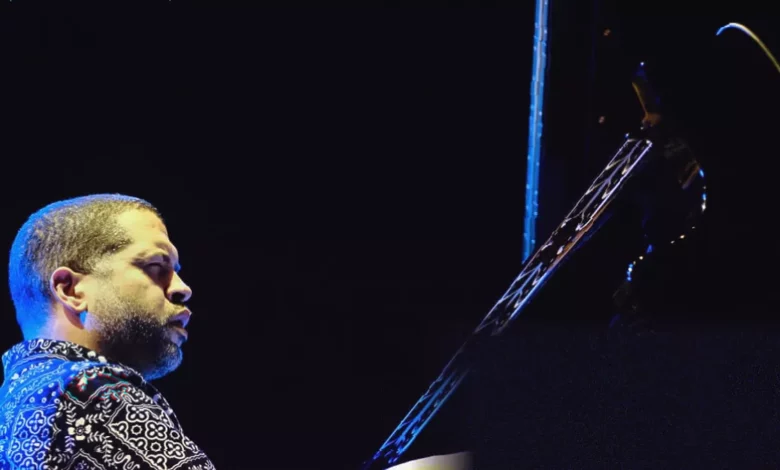
Jazz composer and pianist Jason Moran, an artist whose work is defined by intricate improvisation and acoustic tradition, recently found himself the face of an entirely different genre: moody, synthetic indie pop. An EP titled ‘For You’, featuring anime-style artwork and not a single piano note, appeared on his Spotify profile. The problem was, Moran had never made it. The recording, he believes, was entirely generated by artificial intelligence.
A Surreal Discovery and a Growing Chorus
Moran, who does not use Spotify and prefers the platform Bandcamp, was alerted to the fake release by a friend. Upon investigation, he found the AI-generated tracks sitting alongside his legitimate back catalogue. “It wasn’t even remotely close to anything I would make,” he said. His experience is far from unique. A litany of artists have reported similar impersonations, including jazz musicians Benny Green, Antonio Hart, and Dee Dee Bridgewater, indie acts like Luke Temple and Uncle Tupelo, and even deceased artists such as Sophie and Blaze Foley.
The issue gained widespread attention with the viral AI track ‘Heart on My Sleeve’, which used cloned vocals of Drake and The Weeknd. It was removed from Spotify after a copyright infringement request from Universal Music Group. Drake himself has publicly condemned AI impersonation. In another bizarre case, when the band King Gizzard and the Lizard Wizard temporarily removed their music from Spotify, an AI impersonator called King Lizard Wizard filled the void with similarly-titled tracks.
For Moran, the feeling is surreal, akin to a dystopian narrative. “She doesn’t even have to be there in this episode, like they’re just using a version of her,” he said, referencing a Black Mirror plot. The fundamental challenge for artists is the burden of vigilance. “They allow it to just kind of sit there unless the artist finds it and checks it,” Moran noted. “The demand that it puts on us is unfair in a lot of ways.”
The Billion-Dollar Scale of Streaming Fraud
This impersonation is part of a vast ecosystem of streaming fraud supercharged by generative AI. Morgan Hayduk, co-CEO of the fraud detection firm Beatdapp, estimates that 5% to 10% of all music streams are fraudulent, costing the industry between $1bn and $2bn annually. “It’s material to the industry, and it’s material downstream to every artist,” he said. Other platforms feel the strain; Deezer reported receiving over 60,000 fully AI-generated tracks per day.
Generative AI acts as an accelerant, enabling bad actors to produce a firehose of content. A stark example is the case of Michael Smith, who pleaded guilty to defrauding streaming platforms. Federal prosecutors stated that over seven years, Smith flooded services with hundreds of thousands of AI-generated songs, used bots to inflate streams into the billions, and fraudulently obtained over $8m in royalties. He faces up to five years in prison and has agreed to forfeit the stolen funds.
The financial model of streaming – where pennies per play add up – incentivises this fraud. AI allows fraudulent tracks to be created and replaced faster than ever when taken down. “AI has become an accelerant,” Hayduk said.
Platform Responses and the Limits of Enforcement
Spotify has publicly acknowledged the problem. Last September, the company said it had removed more than 75 million “spammy tracks” in the previous 12 months. Its stated solution is a new ‘Artist Profile Protection’ tool, which allows artists to review and approve releases before they appear on their profile. A Spotify spokesperson said the company employs safeguards including detection systems and human review, and that it is the only streamer offering such a pre-release tool.
For deceased artists, Spotify states that estate or rights holders can opt into this tool if they have an account. For those without accounts, the platform relies on its internal systems. This raises concerns for artists like Moran, who worries about legends who cannot object. “How does John Coltrane verify or Billie Holiday verify that this new record is not some fake?” he asked.
Other platforms have different approaches. YouTube’s policy welcomes AI-generated content provided it is disclosed and does not involve impersonation, though fully AI audio may be flagged as ‘inauthentic’. Bandcamp, favoured by Moran, offers a different model based on artist control and direct-to-fan sales, though it does not explicitly ban AI music.
Legally, the onus often falls to artists. Adam Berkowitz, a scholar studying AI and copyright, notes it is complicated for private platforms to act as legal enforcers. “It is the courts that enforce law,” he said, suggesting artists will likely have to keep policing their own profiles.
Legal Uncertainty and Industry Opposition
The situation is further complicated by evolving copyright law, particularly in the UK. Under current UK law, purely AI-generated works with no meaningful human authorship are not protected by copyright. Works where AI is an assistive tool may be registered, but any AI-generated component must be declared.
The UK government has proposed changes to make it easier for AI companies to use copyrighted material for training, suggesting a ‘rights reservation mechanism’ (an opt-out system). The music industry, including bodies like UK Music and artists such as Sir Elton John, vehemently opposes this, viewing it as “legalised music theft”. They argue AI developers should need express permission from rights holders.
For now, artists like Jason Moran are left navigating this uncertain landscape. After a 72-hour process involving a chatbot and a human agent, Spotify removed ‘For You’ from his profile. Yet, weeks later, the same EP resurfaced on YouTube. The episode has reinforced his preference for platforms that centre artist control. “One thing that [people] can never get charged for is the power of the songs,” he said, highlighting the human element at the heart of the dispute.