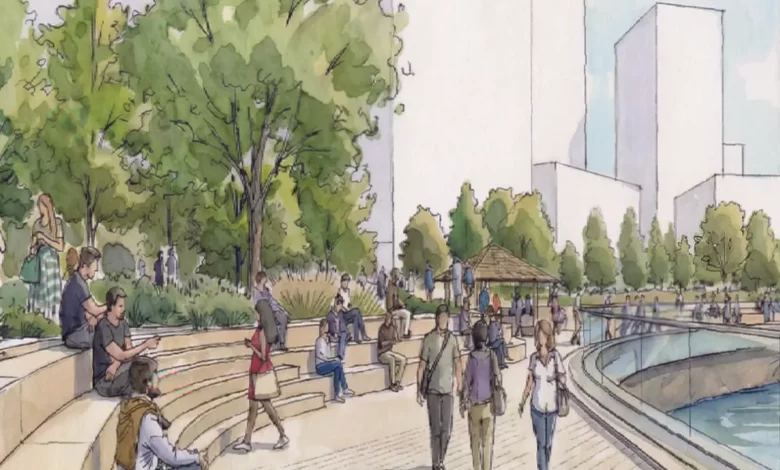
Manchester City Council has unveiled an ambitious blueprint to transform one of the city centre’s last remaining industrial pockets into a thriving, green neighbourhood, marking the next significant phase in the urban regeneration of central Manchester.
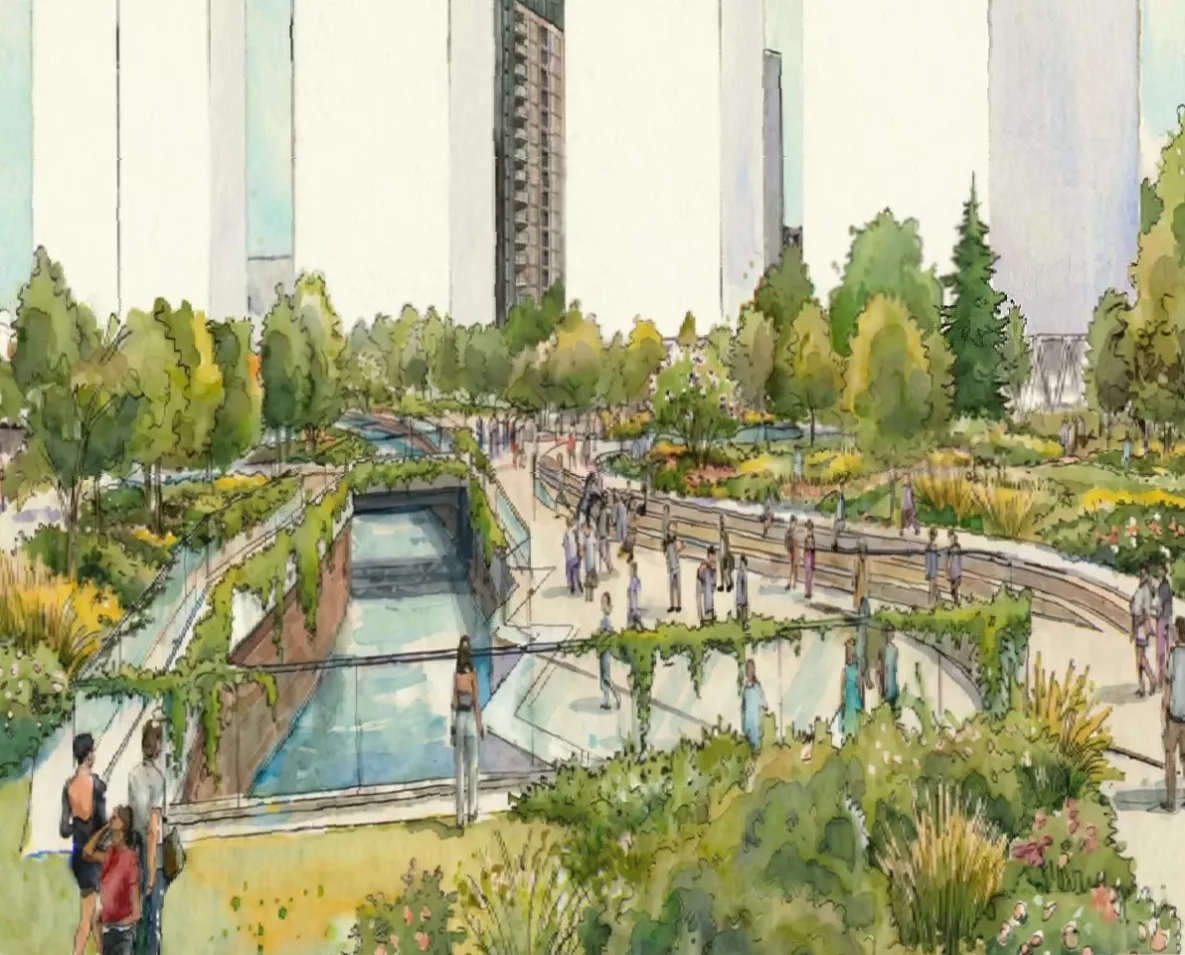
The vision for the Water Street area, a site currently dominated by warehouses and derelict compounds between Castlefield and Trinity Way, includes the creation of a landmark new park and four residential skyscrapers containing “thousands” of apartments. Council Leader Bev Craig said the area currently feels “fragmented and disconnected,” but presents a “real opportunity to create a thriving new neighbourhood.”
An Evolving Vision for a ‘Forgotten Corner’
The proposal is not a final design for planning permission, but an update to the area’s Strategic Regeneration Framework (SRF), which was last revised in 2017. This updated blueprint, now out for public consultation, reflects increased ambitions for a taller, denser, and more comprehensive “residential and landscape-led” scheme. The council aims to finalise this SRF before marketing the land to engage development partners, meaning construction is likely years away.
The plan deliberately draws comparison to the highly successful regeneration of Mayfield, which delivered the city’s first new public park in over a century. The proposed Water Street park would be roughly equivalent in size to the 6.5-acre Mayfield Park, designed as a flexible, climate-resilient green space along the River Medlock.
Connecting to Manchester’s New Cultural and Residential Hub
The Water Street site’s potential is significantly amplified by its location, sitting directly adjacent to two major regeneration projects. To its east is the historic Castlefield conservation area, which has itself been transformed from industrial decline. To its west is the emerging £1 billion St. John’s neighbourhood, rising on the old Granada TV Studios site.
St. John’s, a partnership between the council and developer Allied London, is focused on enterprise, culture, and living. Its centrepiece is the £110 million Aviva Studios (Factory International) arts venue, which opened in 2023 and is projected to add £1.1 billion to the local economy over a decade. The council’s vision is to physically and socially connect Water Street into this “vibrant new St Johns area” and the historic Castlefield basin.
This connectivity push includes new pedestrian routes and the redevelopment of existing railway arches for retail and hospitality, aiming to better integrate what has been a disconnected island of light industry. The plans also consider an elevated green route to the Deansgate-Castlefield tram stop via the Bridgewater Viaduct.
A Pivotal Test for Affordable City-Centre Living
A central pillar of the council’s vision is a commitment to deliver “more genuinely affordable” homes within the development. While specific numbers in the draft SRF are yet to be finalised, one report suggests a target of at least 20% affordable housing within the scheme.
This pledge comes against a backdrop of criticism the council has faced for not securing enough on-site affordable housing in some recent high-rise developments. However, the authority is now emphasising a stronger stance through its own housing delivery company, “This City,” and initiatives like the Brewery Gardens scheme, which will deliver 60% affordable homes. The council’s wider target is to deliver 10,000 affordable homes across Manchester by 2032, with an upcoming Social and Affordable Homes Programme aiming for 60% of new homes to be social rent.
Councillor Craig pointed to recent progress, stating, “in the last year work has started on the first social housing in the city centre for 40 years – with some schemes delivering a majority of affordable homes.”
Balancing Height with Heritage
The proposal for four skyscrapers will need to carefully navigate the sensitivities of the adjacent Castlefield conservation area. The site itself holds historical significance, containing the Water Street Railway Bridge, part of George Stephenson’s pioneering Liverpool and Manchester Railway. A non-designated heritage asset, the Bonded Warehouse built around 1867, is also slated for retention within the new neighbourhood.
The development is aligned with Manchester’s overarching Local Plan, which guides land use for the next 15 years and includes goals for new homes, green space, and a target for the city to become net-zero carbon by 2038. The Local Plan is also currently under consultation.
The project has received early backing from local Deansgate councillors. Councillor Joan Davies said she was “ecstatic about the prospect of yet another new city centre park,” adding that city centre residents’ calls for more green space had been heard. Fellow Deansgate councillor Marcus Johns has been a noted advocate for both green spaces and affordable housing in the city core.
If realised, the Water Street scheme would complete the transformation of a central corridor, following the major residential developments along Trinity Way—including the 55-storey Vista River Gardens and Renaker’s ongoing tower projects—and cement Manchester’s continued evolution from its industrial past into a densely populated, park-anchored modern city.