Judges rule teenager’s 20-year detention under open-ended sentence should have lasted just 18 months

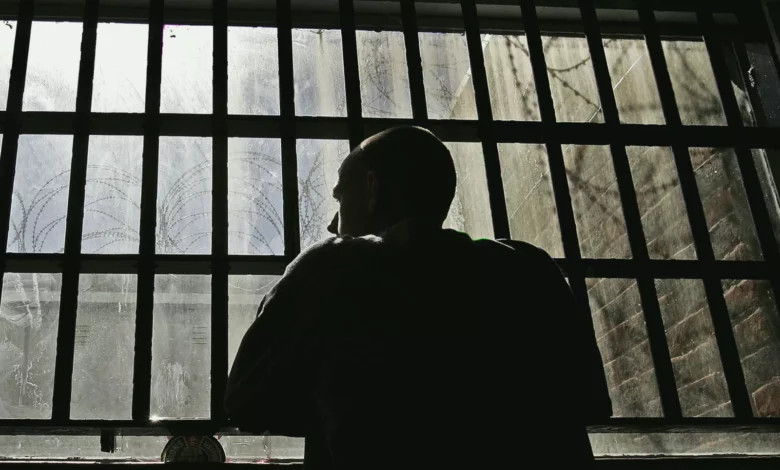
Judges ruled a teenager should have served 18 months, not nearly 20 years, after quashing an indefinite jail term imposed for a firearm offence in 2006. Jay Davis was 19 when he received an imprisonment for public protection (IPP) sentence with a minimum tariff of just nine months, yet he spent almost two decades in custody before the Court of Appeal last week replaced it with a fixed 18-month term – meaning he would have been freed 18 years ago.
Davis, who was convicted of possessing a firearm with intent to cause fear or violence, is among six prisoners whose indeterminate sentences – including both IPP and its under-18 equivalent, detention for public protection (DPP) – were overturned by the same appeal bench. The rulings mark a significant victory for campaigners who have long argued that the sentences were disproportionate and legally flawed, particularly when imposed on young offenders.
What are IPP sentences?
IPP sentences were introduced in England and Wales under the Criminal Justice Act 2003, intended for serious offenders deemed “dangerous” to the public but whose crimes did not warrant a life sentence. DPP sentences served the same purpose for those under 18. Both were abolished in 2012 by the Legal Aid, Sentencing and Punishment of Offenders Act – but the abolition was not retrospective, leaving thousands trapped indefinitely until the Parole Board deemed them safe to release.
Prisoners served a minimum “tariff” period, after which they could be detained indefinitely if the board remained unconvinced. Upon release, they faced licence conditions lasting at least 10 years and could be recalled for even minor breaches, such as missing an appointment. The result, the United Nations has said, amounts to “psychological torture”. Almost 100 people have taken their own lives in prison after losing hope of release.
As of late 2024 and early 2025, government figures show that over 2,700 individuals remained subject to IPP sentences. Official data from the Ministry of Justice indicates that on 30 September 2024, there were 1,095 offenders still serving an IPP who had never been released. By 31 March 2024, 1,180 unreleased IPP prisoners were in custody; that number fell to 946 by 30 September 2025. Meanwhile, around 60% of those in prison on IPP sentences at the end of 2024 – 1,569 out of 2,614 – had been released but later recalled. On 31 March 2024 there were 1,616 recalled prisoners; by 30 September 2025 that number was 1,476.
The overwhelming majority of those still incarcerated have far exceeded their tariffs. Over 1,045 people on IPP sentences had not been released by the end of 2024, all but 10 of whom had served longer than their minimum term. Around two-thirds of unreleased IPP prisoners have been held for at least 10 years beyond their tariff, and some have been detained for up to 22 times their original minimum period. In 2020, former Supreme Court justice Lord Brown called IPP sentences “the greatest single stain on our criminal justice system”.
Young offenders disproportionately affected
The recent Court of Appeal rulings focused on cases where sentencing judges failed to take proper account of the offender’s age and immaturity. The Criminal Cases Review Commission (CCRC), the miscarriages of justice watchdog, flagged the cases of Davis, Benjamin Hibbert and Stuart O’Neill as part of a major review of IPP and DPP sentences handed to young people. The CCRC’s chair, Dame Vera Baird, said investigators are now examining more than 150 other cases.
Hibbert was given a DPP sentence with a two-year minimum tariff in 2009 for three counts of sexual assault committed when he was 15 or 16. His sentence was quashed, although his case was adjourned pending reports to decide a substitute penalty. O’Neill, aged 20 when he was sentenced for rape in October 2009, received an IPP with a minimum term of three and a half years. The Court of Appeal replaced it with an extended sentence of eight years in prison and eight years on licence.
Three other men – Jerry Tolbert, Jordan Webster and Dawayne McLaren – also had their sentences quashed. Tolbert received a fixed five-year term; Webster an extended sentence with a custodial element of five years and eight years on licence; and McLaren an extended sentence with seven years in custody and five years on licence.
“All the men were very young at the time they were sentenced and have spent many years beyond their original tariffs in custody,” Dame Vera said. “The court’s judgments reflect the importance of properly considering age and maturity when imposing sentences of this nature. We will continue to examine other IPP and DPP cases, and I encourage anyone who believes their sentence may have been affected – and who has exhausted their appeal rights – to apply to the commission. I hope today’s decision gives hope to the many families with loved ones who remain in prison way beyond their original tariff.”
A precedent that could free hundreds more
The CCRC has also referred the case of Liam Bennett, who was handed an IPP for starting a fire in the attic of an empty building when he was 17, to appeal judges for review. Bennett has spent more than half his life in prison. The CCRC launched its review in January after a string of indefinite sentences were overturned, with eight of 12 previous appeals resulting in sentences being quashed, reduced or substituted.
Among those is the case of Leighton Williams, a father of three who was given an IPP with a 30-month tariff for a drunken fight aged 19. He served almost 16 years – mostly in custody – before the sentence was quashed two years ago and replaced with a five-year determinate term. If he had served half that time, he would have been released by the age of 22. Three appeal judges finally freed him on 9 May 2024, aged 36, after finding the original sentencing judge had wrongly counted a previous offence committed when he was 17. After release he said: “I have missed out on growing up with my friends. Going out. Getting a trade, being able to work. Just living a normal life. I deserved to go to jail – I understand that. There is no doubt about that. But for the length of time – I don’t think you can justify that.”
In a similar ruling in October, Darren Hilling’s IPP sentence was quashed because the sentencing judge failed to attach sufficient importance to his age and maturity when he committed his crime aged 21. These rulings have set a precedent that could affect other IPP and DPP prisoners sentenced as teenagers or young adults.
A spokesperson for United Group for Reform of IPP (UNGRIPP) welcomed the latest decisions. “While we celebrate the freedom of these individuals – some of whom were sentenced as young adults and have spent decades in limbo – this ruling highlights the systemic failure of a sentence that remains a stain on the British justice system,” they said. “These cases prove that many original IPP sentences were not only disproportionate but legally flawed. Despite being abolished in 2012, over 2,700 people remain subject to IPP sentences. This recent success in the Court of Appeal must act as a catalyst for the government to take decisive action. We call for an immediate review of all IPP cases involving those sentenced as young adults and a commitment to ending the trauma of indeterminate detention for good.”
A Ministry of Justice spokesperson said: “It is right that IPP sentences were abolished. The decision to quash individual sentences is a matter for the courts. While public protection is our number one priority, we are working with organisations and campaign groups to support those still serving these sentences, including through access to mental health support and rehabilitation programmes.” The government has introduced reforms to licence termination through the Victims and Prisoners Act 2024, which aims to allow earlier licence termination for rehabilitated individuals, and has published a revised IPP Action Plan for 2025/26 with measurable targets. However, projections still show hundreds of prisoners may remain incarcerated under IPP sentences in 2030.