“`html
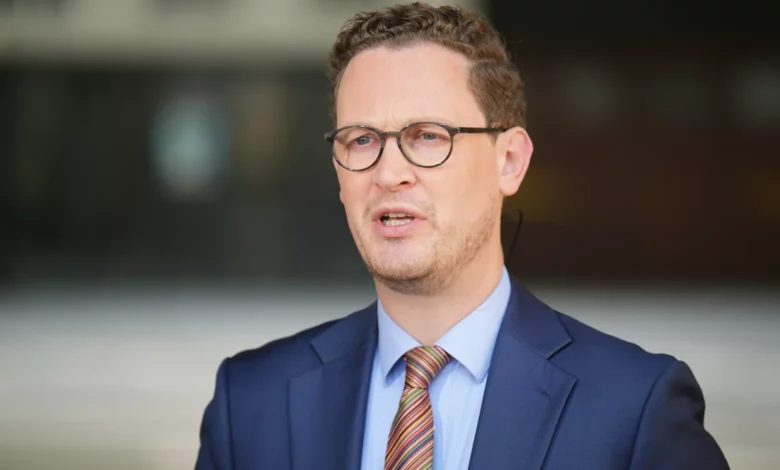
A Cabinet minister became visibly emotional on Sunday as he insisted that the young victims of two teenage rapists who were spared custody “deserve justice”, as the Government’s top law officer faces mounting pressure to refer the sentences to the Court of Appeal.
Darren Jones, the Chief Secretary to the Prime Minister, appeared to struggle to compose himself after watching an interview on the BBC’s Sunday With Laura Kuenssberg programme in which one of the victims described the judge’s decision not to jail her attackers as like a “rock straight in my face”.
“Those girls deserve justice, as do their families, both for them, but also for other girls that are put in that position,” Mr Jones said. “And quite frankly, other boys need to know that they can’t behave in that way and get away with it.”
The two girls were raped in separate incidents in Fordingbridge, Hampshire, by three teenage boys who were handed non-custodial sentences at Southampton Crown Court on 21 May. The first attack took place on 26 November 2024; the second on 17 January 2025. The assaults were filmed by the perpetrators, who later shared the videos and, according to the prosecution, boasted about the attacks.
The 16-year-old girl who spoke to the BBC — she was 15 at the time of the first attack — said she had visited one of the defendants in November after meeting him on Snapchat. Jodie Mittel KC, prosecuting, told the trial that after performing sex acts on the boy, then 14, the girl became “scared and anxious” when a second defendant arrived, and the pair raped her while the incident was filmed. Afterwards, the court heard, videos were sent around and the girl received messages calling her a “slag”. She told the BBC she “wanted to die”.

A second complainant, aged 14 at the time, was raped in a field near Fordingbridge recreation ground in January while the incident was also filmed. She told the BBC she felt “emotionally numb and detached” and was “grieving the person I used to be”.
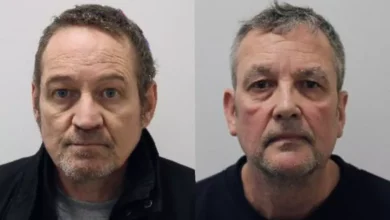
Judge Nicholas Rowland gave the two 15-year-old offenders three-year Youth Rehabilitation Orders (YROs) with 180 days of Intensive Supervision and Surveillance (ISS) — a rigorous non-custodial intervention involving tagging, curfews and intensive support. One of the 15-year-olds received the YRO for the rape of each girl and two indecent images charges; the other for three rape charges against both victims and four counts of taking indecent images. A third boy, aged 14, was given an 18-month YRO for two rape charges relating to the January incident — for encouraging the second defendant — and an indecent images offence. All three were also handed a three-month curfew and a 10-year restraining order preventing contact with the victims.
In his sentencing remarks, Judge Rowland said he wanted to “avoid criminalising these children unnecessarily” and to “understand the effects of their behaviour and support their reintegration into society”. He noted that “peer pressure played a large part in what went on” and added: “I have to remember that you are not small adults. I have to think how likely you are to do serious things again and I need to make sure you do not do serious things again in the future.” He also praised the defendants’ “good conduct from the charge up to the point of their sentence”.
The court was told of the defendants’ conditions: the first 15-year-old had been diagnosed with ADHD and “long-standing anxiety”; the second had an IQ in the “bottom 1% of his contemporaries” and also had ADHD; the 14-year-old was described as having “mild cognitive impairment”.

Public and political outcry
The sentences have provoked widespread anger, including from the victims’ families. The mother of the 16-year-old victim appealed directly to Prime Minister Sir Keir Starmer in the BBC interview: “If it was your daughter, your niece, your son, your nephew, your family member, would you be happy? Because we’re not happy and I don’t think any other member of the public will be happy too. So you’re in a position of power to help, so please help.”
Hampshire police and crime commissioner Donna Jones called the sentences “far too lenient” and criticised the judge’s remarks about the boys’ good conduct, noting that none of the defendants had entered guilty pleas and that the victims had been forced to relive the ordeal in a trial. “That has really added to the burden for those two survivors,” she told BBC Breakfast. She also offered support to the families if they wished to appeal.
Robert Jenrick, Reform UK’s Treasury spokesman, told the BBC: “It can never be right that a young person kills someone or rapes someone and they do not go to jail. I just think that is fundamentally wrong, and no one in this country surely would support that.”
Jess Phillips, the former Home Office minister for safeguarding, described the sentences as “unduly lenient” and a “bad message”, saying the boys were “essentially raping for content in order to put it on social media and share it to their friends, gloating about raping these poor young women”. Conservative leader Kemi Badenoch reportedly called the sentences “a disgrace”, while shadow Justice Minister Dr Kieran Mullan said: “It cannot be right that teenage boys can commit brutal crimes of rape like this and avoid prison entirely.”
The Unduly Lenient Sentence Scheme and the Attorney General’s review
Under the Unduly Lenient Sentence (ULS) Scheme, the Attorney General can refer a Crown Court sentence to the Court of Appeal if it is judged to be “unduly lenient” — meaning it falls outside the range a judge could reasonably have imposed, applying the law and sentencing guidelines. The Court of Appeal will intervene only if there is a clear error in principle or a manifestly inadequate sentence.
Anyone — victims, families or members of the public — can ask the Attorney General to consider a sentence for review. The Attorney General’s Office then prepares a report for the Law Officers (the Attorney General or Solicitor General) to decide whether to refer the case.
Lord Richard Hermer KC, the Attorney General, has committed to an urgent review of the sentences. The statutory time limit for a referral is 28 days from the date of the sentencing hearing — in this case, until 18 June. But Mr Jones indicated a decision would be made sooner. “We all want to look at this urgently, and the Attorney General’s made that commitment,” he said. Lord Hermer, appointed in July 2024, is the first Attorney General in more than a century not to have served in Parliament before his appointment; he has a background as a barrister with significant experience in human rights cases and public law litigation.
A Government spokesman confirmed that the Attorney General’s office has received “multiple” requests for review under the scheme. “We share the public’s shock at the details of this horrific case, and our thoughts are with the young victims during this distressing time,” the spokesman said. “The law officers are urgently reviewing the case with the utmost care and attention.”