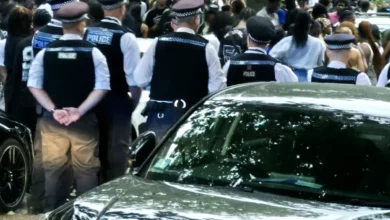
Police urge public vigilance as the UK’s national threat level is raised to “severe,” meaning a terrorist attack is now considered highly likely. In a statement, the force called on every member of the public to play their part in keeping communities safe, emphasising that information about suspicious behaviour could help save lives.
The threat level was elevated not solely in response to any single incident but reflects a broader assessment of rising dangers from both Islamist and Extreme Right Wing terrorism. The government has also declared antisemitism an emergency, underlining the seriousness of the current climate. The Metropolitan Police have described the heightened threat as part of a complex picture that includes a series of recent attacks targeting Jewish communities in North West London.
Recent attacks and the investigation
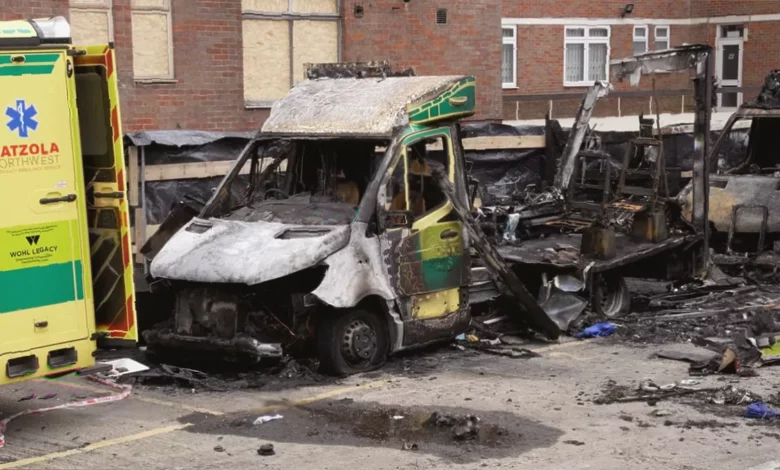
Counter Terrorism Policing (CTP) is leading an investigation into a string of incidents in the Golders Green area. On March 23, four ambulances belonging to the Jewish volunteer organisation Hatzola were destroyed by arson in the car park of the Machzike Hadath synagogue. Accelerants were used, and explosions from oxygen cylinders caused damage to the synagogue and nearby properties. That attack was treated as an antisemitic hate crime, and CTP took charge.
On April 27, a separate arson attack occurred next to a memorial wall on Limes Avenue in Golders Green. The wall displays images of protesters allegedly killed by the Iranian state in January, as well as victims of the October 7 attacks. Around 00:15, a nearby cabinet was set alight, though the wall itself escaped damage. Two individuals — a 46-year-old man and a 38-year-old woman — were arrested on suspicion of arson in Romford, East London, where searches were also conducted. Both have been released on bail pending further inquiries.
Two days after that arson, on April 29, two Jewish men were stabbed in Golders Green. The suspect, 45-year-old Somali-born British national Essa Suleiman, was arrested and has since been charged with two counts of attempted murder and one count of possession of a bladed article. He also faces a charge of attempted murder for a separate incident in Southwark on the same day. The attack was declared a terrorist incident. The Iran-linked group Harakat Ashab al-Yamin al-Islamia has claimed responsibility, though the link has not been confirmed.
The overall CTP investigation has led to a significant number of arrests. Since the Hatzola ambulances arson, a total of 30 people have been arrested, nine have been charged, and one has been convicted. In connection with the ambulance arson specifically, the tally has reached nine arrests. The most recent was on May 7, when a 48-year-old man was arrested in Leytonstone on suspicion of conspiracy to commit arson.
The public’s role in preventing attacks
With the threat level now at severe, the police have stressed that the public’s vigilance is a crucial line of defence. “If you have concerns about someone behaving suspiciously, please report it to us,” the Metropolitan Police said. “Your information could help us save lives.” This call to action is not a vague appeal; it is grounded in the understanding that many plots are uncovered not by intelligence alone but by observant members of the public who notice something out of the ordinary and act on it.
Reporting suspicious behaviour can take many forms — from noticing an individual taking an unusual interest in a synagogue or community centre, to spotting someone with no obvious reason to be in a particular location, or observing behaviour that seems out of place, such as attempting to access restricted areas or testing security systems. The police have urged people to trust their instincts and to pass on concerns, however small they may seem. Each piece of information, they say, contributes to a larger picture that can enable authorities to intervene before an attack can be carried out.
The importance of this approach has been underscored by the repeated targeting of the Jewish community in Golders Green, an area with deep historical roots as a home for Jewish refugees and immigrants. While the neighbourhood has long been a comfortable place for many, it has also experienced antisemitism ranging from casual prejudice to organised forms. Recent events have heightened fears, and community members have called for increased security and reassurance.
In response, the Metropolitan Police have established a new dedicated Community Protection Team of 100 officers. The unit is designed to provide a more visible and coordinated presence, integrating neighbourhood policing, specialist protection, and counter-terrorism capabilities — all focused on protecting Jewish communities across London.
Anyone who witnesses suspicious behaviour is encouraged to contact police or the independent charity Crimestoppers. The message from the authorities remains consistent: reporting it could be the difference between an attack foiled and lives lost.