Polanski divides readers over trivial opportunist or smear target claims as Greens make gains

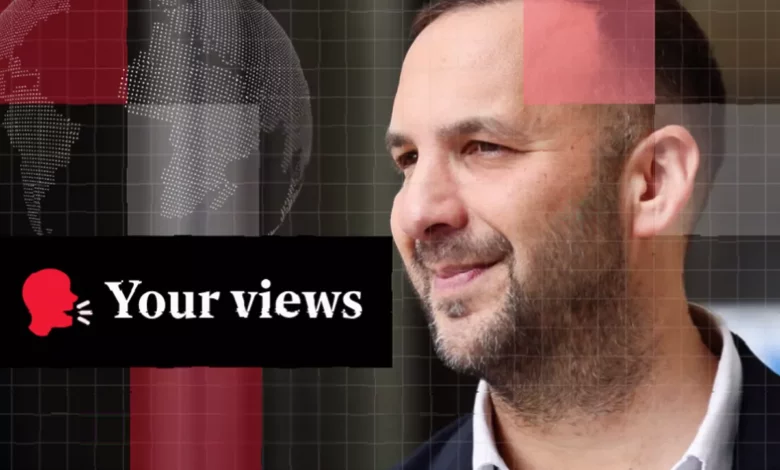
Green Party candidates swept to their best-ever local election performance on Thursday, winning the Hackney mayoralty and gaining councillors across England, but the celebrations have been overshadowed by a sharp decline in the personal approval ratings of the party’s leader, Zack Polanski, following a series of controversies that have raised questions about his judgment and political style.
Zoë Garbett became the first directly elected Green mayor in the UK by taking Hackney, a Labour stronghold since the office was created, while the party recorded its strongest nationwide result in local elections. The gains were widely attributed to growing frustration among younger and left-leaning voters with Sir Keir Starmer’s Labour government, which suffered heavy losses. Reform UK also surged, leading Polanski to declare that “two-party politics is dead and buried” and that the “new politics is the Green party versus Reform.”
Yet the electoral momentum has been accompanied by a dramatic slump in Polanski’s standing with the public. A survey by the polling organisation More in Common recorded a 14-point drop in his approval ratings in the week leading up to the vote. The decline followed a public rebuke from Metropolitan Police Commissioner Sir Mark Rowley, who accused Polanski of sharing “inaccurate and misinformed” comments about the arrest of a suspect in Golders Green and warned that such behaviour risked inflaming tensions and having a “chilling effect” on policing.
Controversies that have tested Polanski’s leadership
The Golders Green incident has become the defining moment of Polanski’s early leadership. He reshared a social media post critical of police actions during the arrest, prompting Sir Mark to issue an unusually direct public statement. Polanski initially apologised for sharing the post “in haste” but maintained his concern about the footage. Within days, however, he effectively retracted that apology in what several readers described as a “whiny” manner, despite advice from his own team to “stay down, son” and let the matter rest.
The episode has intensified scrutiny of Polanski’s judgement and his self-styled “eco-populist” approach. He has previously argued that the Green Party should “learn” from Nigel Farage’s communication skills, and his own style has been labelled “gonzo” by some observers. Polanski, who was born David Paulden and studied drama before working in community theatre and hypnotherapy, joined the Liberal Democrats in 2015 and switched to the Greens in 2017. He became deputy leader in 2022 and was elected party leader in September 2025 with 84.1 per cent of the vote, succeeding Carla Denyer and Adrian Ramsay.
Under his leadership, party membership has more than tripled, reaching over 220,000 by April 2026. But the same period has seen accusations of antisemitism within the party mount. Polanski, who is Jewish and describes himself as “certainly not a Zionist,” has pledged to root out antisemitism and introduce compulsory training for candidates, while arguing that some allegations “conflate genuine antisemitism with legitimate criticism of an Israeli government which is committing war crimes.” His pro-Palestinian stance has been central to the party’s platform, and numerous Green candidates have reportedly been suspended or investigated over alleged antisemitic content.
The Green Party’s constitution limits leaders to fixed two-year terms, and some commentators have noted that Polanski’s tenure may be short by design. The comparison with Caroline Lucas, the party’s first MP and a former leader widely respected for her authenticity and clear policy focus, has become a recurring theme in the public debate.
What readers made of the Greens’ rise and Polanski’s struggles
Independent readers were deeply divided in their assessment of the party’s direction. Many argued that Labour’s rightward shift under Starmer had left progressive voters “politically homeless,” helping to drive the Green surge. “Labour veer so far into right-wing territory, they practically abandon a good portion of their voters,” wrote a reader who posts as LimSitu. “Now they’re trying to do the almighty of smear campaigns. It’s just disgusting, and they deserve to lose more seats.”
Others, however, saw the controversies as revealing serious weaknesses in Polanski’s leadership. “Polanski is a self-declared populist who is as bad as Farage for sowing division and for lacking viable policies,” said a comment from Tanaquil2, who also warned of “entryism from Momentum and the Corbynite left.” A reader using the name SinkingFeeling described Polanski as “a lightweight political opportunist” whose “gonzo communication style needs to be treated with caution,” urging efforts to deem him “unfit for public office.”
The view that Polanski had mishandled the Rowley confrontation was shared by OpBarras, who said his advisers had explicitly told him to apologise and back away. “He did, at least partially,” the reader wrote, “but he just couldn’t leave it alone. He went on to destroy any apology he’d made, effectively retracting it in the whiniest way possible. A statesman he ain’t.”
Some readers saw the attacks as a smear campaign, with The Notebook commenting: “The Corbynisation of Polanski is well underway. It is simply not acceptable to have someone from the Left being popular, let alone gain some power, so the smears start.” Another reader, Maryam, said she would “vote for the Greens, despite their shortcomings, just to send a message to Labour,” adding that the party needed to “stay clean for the sake of the country.”
HappilyRetiredWoman contrasted Polanski’s leadership unfavourably with Lucas’s. “When Caroline Lucas was leader, there was a strong sense of what they were committed to and a lot of respect for her authenticity. Now, under Polanski, the party seems to have become more of a platform for him, raising his profile without a clear agenda.” Simplesimon said Polanski “looked lightweight” in handling the controversy and warned that if the Greens performed poorly, they would lose the reputation built under his leadership. A reader named Michael said he was “still not sure whether to vote Green just to kick out Labour” in his area, but acknowledged the party had a good chance. Oneof1 dismissed the criticism as mud-slinging, noting that “neither Labour, Conservative nor Lib Dem leaders or candidates have ever made stupid or thoughtless comments.”
Musil summed up the doubts shared by many: “Zack Polanski does not demonstrate the level of experience or judgement I would expect from a party leader. Leadership requires careful communication and sound judgement, and recent controversies have raised questions about his suitability for such responsibility. I do not think he currently inspires sufficient confidence for a senior leadership role.”