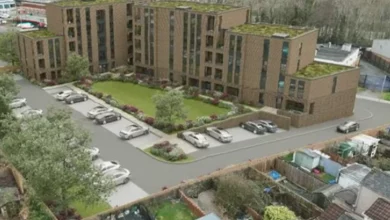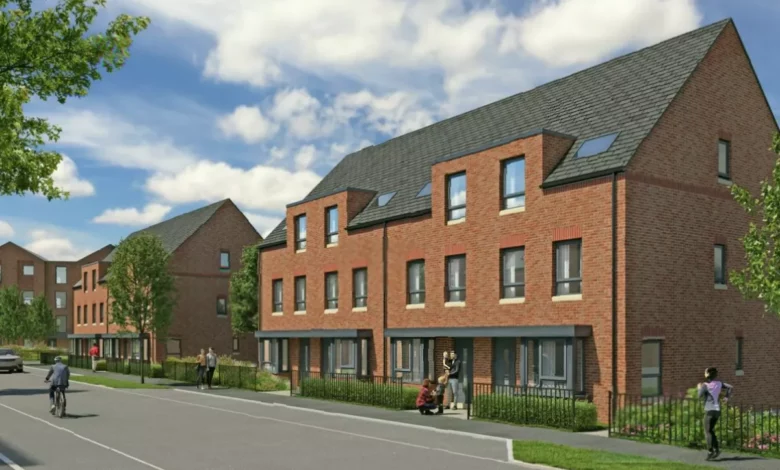
Ninety-four affordable homes are planned for a vacant Stretford site that once housed an RAC call centre and has stood empty since the building was demolished last year.
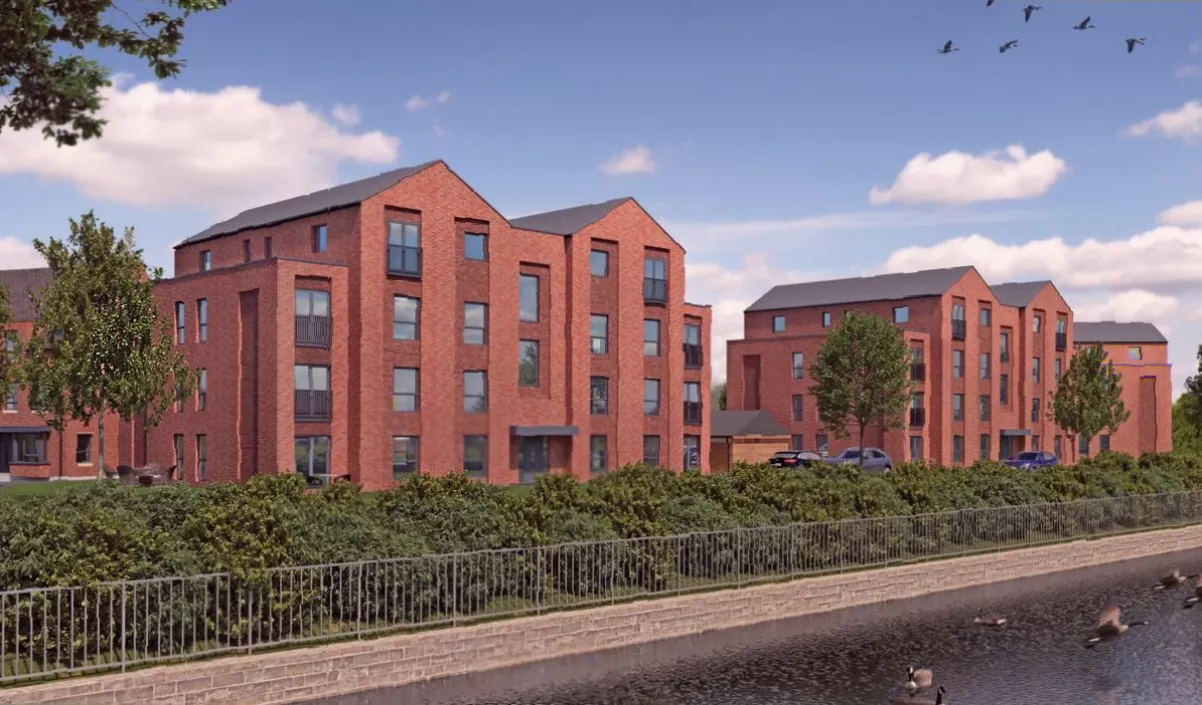
The proposals, submitted by developers MCI Developments and JS Hennessey (1999) RBS, cover a 1.03-hectare plot off Thomas Street. The scheme would deliver 46 houses and 48 apartments, ranging from one‑ and two‑bedroom flats to three‑ and four‑bedroom townhouses, with the apartment blocks rising to four storeys. All 94 homes would be classed as affordable. MCI Developments specialises in affordable housing and has been active for over a decade, supported by its parent company Keepmoat Homes.
The development includes 94 parking spaces for residents and an additional 25 for visitors. Three communal green spaces are planned: a landscaped open area on the edge of the Bridgewater Canal, and a central space featuring “rain gardens” and “ornamental tree planting”.
From gasworks to call centre to vacant lot
The land originally formed part of the Stretford Gasworks, which was established around 1852 and closed in the 1960s. It was then redeveloped into the Longford Trading Estate. In 2000, planning permission was granted for an RAC call centre on the site. The company later vacated the premises, telling planning officials that difficulties attracting and retaining staff at the Stretford location were a key reason for its relocation to Salford Quays. The building, RAC House, was demolished in 2024.
Adjacent to the plot lies a former National Grid gas holder and depot site spanning approximately 3.45 acres (1.4 hectares). Gas holders were built there in 1902, 1931 and 1942; they were dismantled by April 2019, though the underground holding voids have not been infilled. Both the former RAC site and the National Grid land have frontage onto the Bridgewater Canal.
Why the original, larger scheme was scaled back
Pre‑application discussions with Trafford Council initially considered a far larger development. That proposal would have seen 192 homes built across 3.4 hectares, incorporating the former National Grid land. Council officials raised concerns over the loss of so much employment land, and the scheme was scaled back to its current footprint.
The developers said reducing the size would allow more employment space to be retained, enabling the site to “continue to make an economic contribution”. They also pointed to the “cost of remediation” for the western parcel – the former gas holder site – which they said would have made it unviable for residential use. Brownfield sites such as former gasworks often require costly cleanup due to contamination; in the UK, Land Remediation Relief offers enhanced tax deductions for such work.
The developers argue that the delivery of 94 affordable homes is sufficient to “outweigh” any “adverse impacts” from the loss of the remaining employment space on the site.
Context: Stretford’s wider regeneration
The proposal aligns with Trafford Council’s regeneration ambitions. The Stretford Town Centre Masterplan, approved in April 2023, aims to transform the area into a thriving, sustainable and inclusive town centre through new homes, improved public realm and better connectivity. The council’s Housing Strategy 2025‑2030 identifies a need for 1,222 new dwellings each year, of which 858 should be affordable – a target that underlines the borough’s strong demand for cheaper housing.
Other developments in the pipeline include the redevelopment of Stretford Mall, where Bruntwood and the council are planning 248 homes and a public park as part of the Greater Manchester Mayor’s £1bn Good Growth Fund. Planning consent has also been granted for 53 homes at Lacy Street, 25 per cent of which would be affordable, and a canal‑side development of affordable homes on Edge Lane by CERT Property and Heatley Developments.
The application is before Trafford Council under reference 118719/FUL/26.