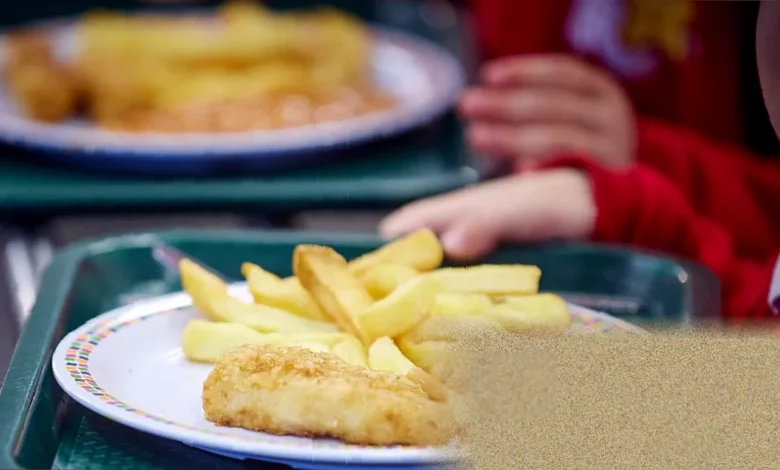
The familiar sight of battered fish, crispy chips, and jam-filled doughnuts is to be banished from school canteens in England under the most significant update to school food rules in over a decade, the government has announced.
In a bid to tackle childhood obesity, the Department for Education is overhauling the standards that govern every breakfast and lunch served in maintained schools. From this September, deep-fried items including fish and chips and chicken nuggets will be prohibited outright, while desserts will be restricted to once a week and must contain at least 50% fruit, putting traditional steamed sponges firmly off the menu.
The scale of the challenge
The drive for healthier meals is set against stark statistics. NHS data for 2024 shows 26% of children aged 2 to 15 are overweight or living with obesity, with the issue becoming more pronounced with age. By the time they reach Year 6 (ages 10-11), 22.1% are living with obesity, a figure that remains higher than before the pandemic.
The figures reveal a profound deprivation gap. In the most deprived areas, 29.2% of Year 6 children are living with obesity, compared to just 13% in the least deprived areas. The NHS spends approximately £6.5 billion a year in England treating obesity-related ill health across all ages, underlining the long-term cost of poor diet.
A generational reset for school food
Education Secretary Bridget Phillipson described the changes as “the most ambitious overhaul of school food in a generation.” She stated the aim was to provide meals that give children “the energy to concentrate, learn and thrive” and to ensure “good standards on paper become good food on the plate.”
The new rules represent a sharp tightening of current permissions, which allow two portions of deep-fried food per week and desserts with less than 50% fruit on three days. High-sugar items like ice cream and waffles will also be restricted, and schools will be prevented from offering unhealthy ‘grab and go’ options like sausage rolls and pizza daily. Full enforcement is targeted for September 2027, with secondary schools given an extra year to comply.
Henry Dimbleby, co-author of the landmark 2013 School Food Plan which informed the current standards, called the overhaul “a rare chance to reset school food.” He said it would only work with proper commitment, but done right, it would “boost children’s health, their academic outcomes and their chances of success in later life.”
Learning from history
The move is the latest chapter in a long and sometimes turbulent history of school food. Provision for “destitute and badly nourished children” began in Manchester in 1879, with the first national nutritional standards introduced in 1941. However, deregulation in 1980 led to a period without mandatory rules.
Statutory guidelines returned in 2001, but the modern era was arguably shaped by chef Jamie Oliver’s 2005 television campaign, which led to the banning of processed items like “Turkey Twizzlers” and the formation of the School Meals Review Panel. The 2013 School Food Plan led to the current standards, introduced in 2015, but a 2019 report found over 60% of schools were not meeting them, citing rising costs, inadequate funding, and a lack of enforcement.
Jamie Oliver, who has campaigned on the issue for more than two decades, welcomed the government’s action. “Twenty years ago, dog food had higher standards than school dinners,” he said, describing school food as the “most important restaurant chain” in the country. He noted that during term-time, schools provide two-thirds of a child’s daily diet, calling it a “massive opportunity to improve health at scale.”
Practical support and future enforcement
Acknowledging past failures in compliance, the government is mandating new transparency measures. Schools will be asked to appoint a lead governor responsible for food and to publish their food policy and menus online.
To help schools adapt, five leading organisations—Bite Back, Chefs in Schools, Jamie Oliver Group, School Food Matters and The Food Foundation—have formed the School Food Project. The initiative has raised £2.3m and aims to launch in September 2026 to provide practical support to schools in producing healthier meals.
D’Arcy Williams, CEO of the youth-led campaign group Bite Back, praised the announcement as a “long-overdue step” but cautioned that “the scale of the challenge cannot be ignored.” He pointed to a system where standards have not been consistently enforced, allowing a “grab-and-go culture” to take hold where “speed and convenience often come at the expense of nutrition.”
The reforms are part of a wider government push on child health and poverty, including the expansion of free school meals to all families receiving Universal Credit by September 2026—a move expected to benefit over 500,000 more children—and the rollout of universal free breakfast clubs.