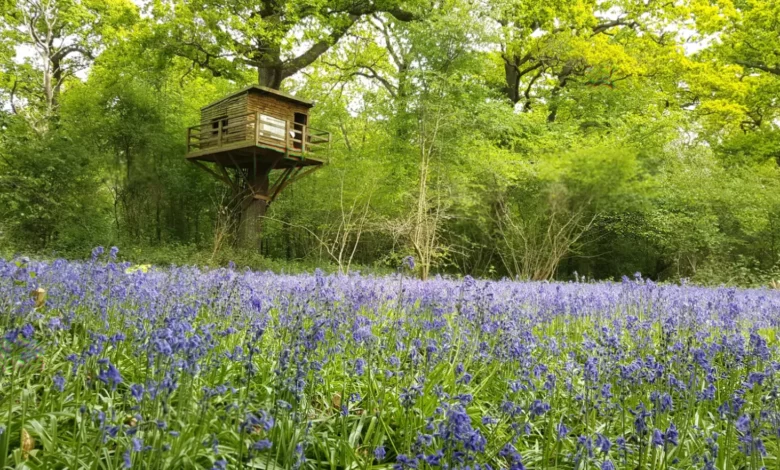
For just two days each spring, a hidden ecological treasure in the heart of west London opens its gates, offering a rare glimpse of one of the capital’s most spectacular natural displays. Perivale Wood, a 27-acre ancient woodland in Ealing, will welcome the public on Saturday 18th and Saturday 25th April 2026, when its famed carpet of bluebells is expected to be at its peak.
The open days represent a brief window into one of Britain’s oldest dedicated nature reserves, a sanctuary whose history stretches back to at least 1227. Originally known as Broadhedge and managed for centuries by Westminster Abbey, the wood was purchased in 1922 by the Selborne Society, an organisation founded in 1885 to honour the 18th-century naturalist Gilbert White. The society has managed the site since 1902, initially establishing it as a bird sanctuary—a prescient move to preserve woodland for wildlife amid the era’s expanding urban sprawl.
A Sanctuary of Exceptional Biodiversity
While the violet-blue haze of an estimated 3.9 million bluebells is the star attraction, Perivale Wood’s ecological value runs far deeper. Designated a Local Nature Reserve (LNR) in 1974 and a Site of Metropolitan Importance for Nature Conservation, it is a mosaic of ancient oak woodland, coppiced hazel, wildflower meadows, and ponds.
According to the Selborne Society, which manages the reserve, this habitat supports an extraordinary range of species: over 600 types of fungi, 568 recorded moth species, and 115 bird species, 40 of which breed there regularly. Its flora includes notable plants like the wild service-tree, goldilocks buttercup, and adder’s-tongue fern. Seventeen mammal species are recorded, a number bolstered by a significant recent conservation achievement.
Rewilding and Recent Conservation Success
In a landmark effort to restore native fauna, over 150 harvest mice were reintroduced to the wood in April 2024, marking their return after a 45-year absence. This project, supported by the Mayor of London’s Rewild London Fund, aims to bolster ecosystem resilience against climate change. The society has complemented this by creating wildlife corridors and digging new ponds to monitor water quality and support biodiversity, illustrating the active, volunteer-led management that maintains the reserve.
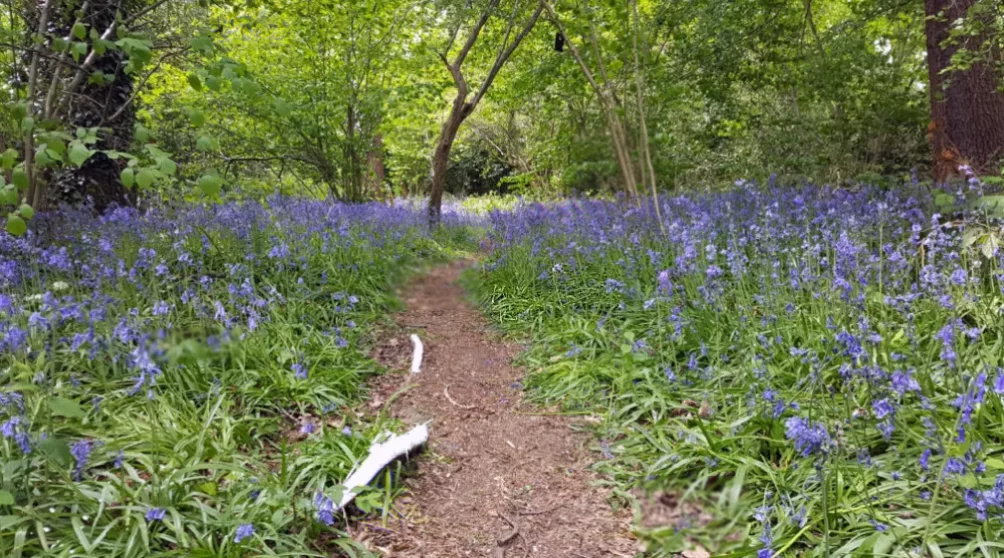
The bluebells themselves are a key indicator of the wood’s ancient status. These legally protected wildflowers typically bloom from late March to early May, with their peak—carefully timed for the open days—dependent on spring weather conditions.
Practicalities for Visitors
Access to the normally closed reserve is via timed tickets, priced at £5.50 for adults and £2 for children, with all proceeds directly funding its upkeep. On the specified Saturdays, entry slots run from 10am to 1pm and 1pm to 4pm.
The wood is about a ten-minute walk from Perivale station on the Central Line, with several local bus routes also serving the area. Visitors should follow signage from the station along Selborne and Salvia Gardens. While most paths are suitable for wheelchairs and prams, the society notes they are natural surfaces and can become muddy.
During the open days, the Bluebell Centre will offer toilet facilities and refreshments such as tea, coffee, and cakes for sale. The Selborne Society emphasises that to protect the fragile bluebell bulbs and surrounding ecosystem, visitors must keep to marked paths. Dogs are not permitted, except for registered assistance dogs.