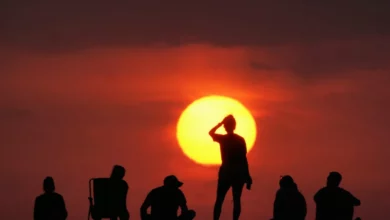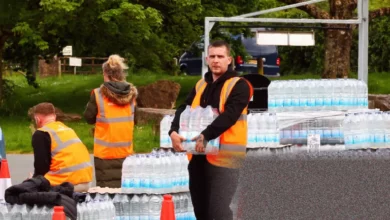
Scorching heat has arrived early, shattering May temperature records across the UK and Ireland as a heat dome swept over western Europe before spring had even ended. Although the dome has now largely cleared, the continent is already bracing for another punishing summer. On Tuesday, the World Meteorological Organisation (WMO) warned everyone to prepare for the imminent return of the warming weather pattern El Niño, which typically drives more extreme heat. The UN Secretary-General, António Guterres, said El Niño conditions would “pour fuel on the fire of a warming world,” with impacts expected to be more severe and widespread.
Early deaths and a slow political response
Scientists have not yet calculated the full death toll from this latest bout of heat, but early modelling by an environmental epidemiologist suggests 250 extra deaths in the UK alone on the weekend before temperatures peaked. Because the heat struck before people had adjusted their behaviour to stay safe, the final number is likely to be particularly high. This is a familiar pattern: heat kills more people in Europe than almost any other issue that tends to dominate public worry, from crime to terror attacks, with many tens of thousands of premature deaths each year. According to the World Health Organisation, heat stress is the leading cause of climate-related death in the European region, claiming an estimated 175,000 lives annually – 36% of the global total. In 2022, between 60,000 and 70,000 people died from heat in Europe; in 2023 the figure was just under 48,000. The 2026 edition of The Lancet Europe report found that nearly all monitored European regions (99.6%) have seen an increase in heat-attributable deaths over the past decade, reaching an estimated 62,000 in 2024.
The underlying driver is clear. Burning fossil fuels has already made heatwaves hotter, longer and more deadly. A study published in September 2025 estimated that climate change – primarily driven by fossil fuel emissions – contributed to 16,500 additional deaths across 854 European cities during the summer of 2025, representing roughly 68% of the 24,400 estimated heat-related deaths in that period. Another study in July 2025 found that human-caused climate change intensified a recent European heatwave and increased heat deaths by about 1,500 in 12 European cities, nearly tripling the death toll. Older adults are overwhelmingly the victims: people aged 65 and over made up 85% to 88% of the fatalities in these analyses. Yet simple, cost-effective steps that could save lives remain largely absent from national politics. A 2024 survey found that only 21 of 38 European countries had heat-health action plans in place, with four more developing them. The European Environment Agency (EEA) has recommended further development and revision of these plans, with a specific focus on vulnerable populations. In the UK, the government’s official climate advisers – the Climate Change Committee (CCC) – recently recommended installing air conditioning in all care homes and hospitals within the next 10 years, and in all schools within 25 years. Some climate campaigners have echoed those calls.
Climate shelters: a growing but imperfect response
There are exceptions to the collective denial, notably the rise of climate shelters – public spaces where people can take refuge, cool down and drink a glass of water. European cities tend to lack the huge sports facilities used as cooling centres in the United States and Australia, but they do have air-conditioned public buildings such as schools, museums and libraries that are well-known and easy to reach. The idea “clicked” in Barcelona, according to Ana Terra Amorim‑Maia, a researcher at the Basque Centre for Climate Change, when local authorities realised that minor investments could open these spaces to citizens in need. “You need to maybe change the opening hours, put more staff in, train them more, [add] some signs and communication material. But these are minimal adaptations and they can, hopefully, save a life,” she said.
Barcelona launched its Climate Shelter Network in 2020 with 70 facilities. By 2023 the number had grown to 232, and by 2024 it exceeded 300 shelters – the city now counts 354, ensuring that 68% of the population lives within a five‑minute walk of one. The ambition is for every resident to be within a ten‑minute walk. The concept has spread across Spain: in December 2025 Prime Minister Pedro Sánchez announced a nationwide network of climate shelters in public buildings, to be operational before the summer of 2026, with funding prioritised for the areas most affected by soaring temperatures. Other European cities are adopting formal cooling zones too, from Paris to Vienna. Valencia launched its own climate shelter network in 2022, transforming libraries and social centres into safe, cool environments; by 2024 it had activated ten shelters, with plans to double that number by 2025. These spaces provide thermal comfort, drinking water and rest areas, are free and accessible for people with reduced mobility, and are primarily intended for vulnerable groups including the elderly, children, people with chronic illnesses and those who cannot cool their homes.
Yet the situation is far from perfect. Daytime shelters offer little relief from the rise in tropical nights that prevent exhausted bodies from recovering. Extreme heat this year began in May, but many climate shelters were only scheduled to open in June. And there are teething problems: Amorim‑Maia’s own friend went to a climate shelter in Bilbao in 30 °C heat last year and found it closed – its opening hours had actually been reduced over summer. Such gaps underline the limitations of relying solely on adapted public buildings.
Northern Europe faces the greatest relative challenge
While southern Europe is most exposed to punishing temperatures, the real test for adapting to a warmer world may lie further north. Streets and buildings in Mediterranean countries have long been designed with heat in mind – think shutters, awnings, shaded streets and public fountains – and there are signs that people are already reducing risk by adapting. A 2023 study found that northern European countries such as the UK, Switzerland and Norway will suffer the greatest relative rise in uncomfortable temperatures, precisely because they have historically experienced less extreme heat. Even moderate increases can have a significant impact on health. In the UK, poorly insulated homes expose people to dangerous temperatures in both winter and summer. About nine in ten UK homes are likely to overheat, and heatwaves are expected to exceed 40 °C in all parts of the country by 2050, potentially leading to an additional 10,000 heat‑related deaths a year. The CCC has warned that passive cooling solutions such as natural shading will not be enough to keep people safe in parts of the country, which is why it recommended air‑conditioning in care homes, hospitals and schools. Critics point out that air‑conditioning consumes large amounts of electricity, but pairing it with solar energy has been suggested as a possible solution.
What individuals can do
Amid these structural challenges, there is one piece of good news: heat – unlike, say, air pollution – is a killer over which you have surprising personal control. Drawing blinds, drinking water and staying indoors during the hottest parts of the day are simple actions that can make a real difference. The British Red Cross advises keeping informed, stocking up on water and food, checking appliances, and checking on friends, neighbours and relatives during heatwaves. One often overlooked recommendation is to check in on neighbours. Older people living alone are vastly overrepresented in mortality statistics; a simple intervention could alert authorities before tragedy strikes. The UK government’s own guidance highlights that older adults, babies, young children, pregnant people, individuals with underlying health conditions, those who are physically active outdoors, and people experiencing homelessness are most at risk. So the next time it gets too hot, consider calling your older relatives or introducing yourself to the retired neighbour next door with an ice‑cream or a cool drink – it might just mean the difference between life and death.