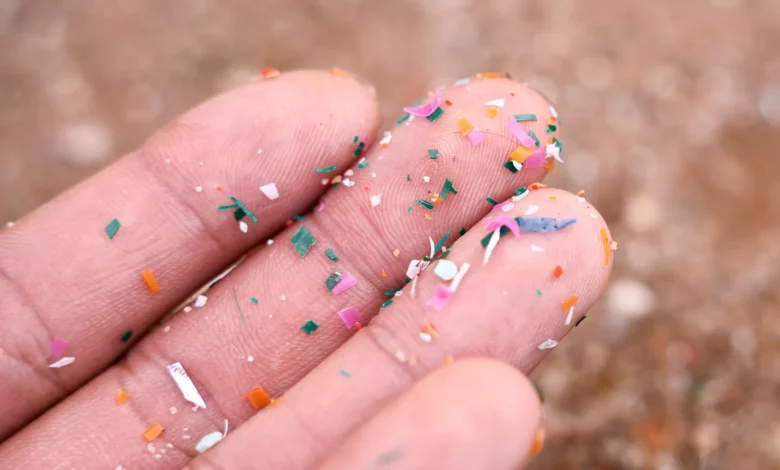
Alarming estimates of the microplastics choking our environment and infiltrating human organs may have been significantly skewed by a hidden contaminant: the very gloves worn by scientists to study them, new research suggests.
A study from the University of Michigan, published in the Royal Society of Chemistry journal RSC Analytical Methods, indicates that common nitrile and latex laboratory gloves shed microscopic residues that standard tests struggle to distinguish from plastic. This raises the prospect that the true scale of microplastic pollution in some samples has been overstated.
The pervasive contamination claim
Over the past decade, a steady drumbeat of scientific reports has documented microplastic particles—fragments smaller than five millimetres—in seemingly every corner of the planet and the human body. They have been found in rivers, soil, Antarctic ice, and within human blood, urine, and breast milk. One particularly stark report implied human brains could contain as much as a teaspoon of plastic.
However, researchers led by doctoral candidate Madeline Clough and Professor Anne McNeil at the University of Michigan have identified a potential flaw that could inflate these numbers. Their work reveals that stearate salts, compounds added to disposable gloves during manufacturing to aid their release from moulds, are the culprits.
How a glove leaves a plastic ‘fingerprint’
The core of the issue lies in the science of identification. To confirm a particle is microplastic, researchers typically use vibrational spectroscopy techniques like FTIR or Raman spectroscopy. These methods work by measuring how a particle interacts with light, producing a unique chemical signature or “fingerprint.”
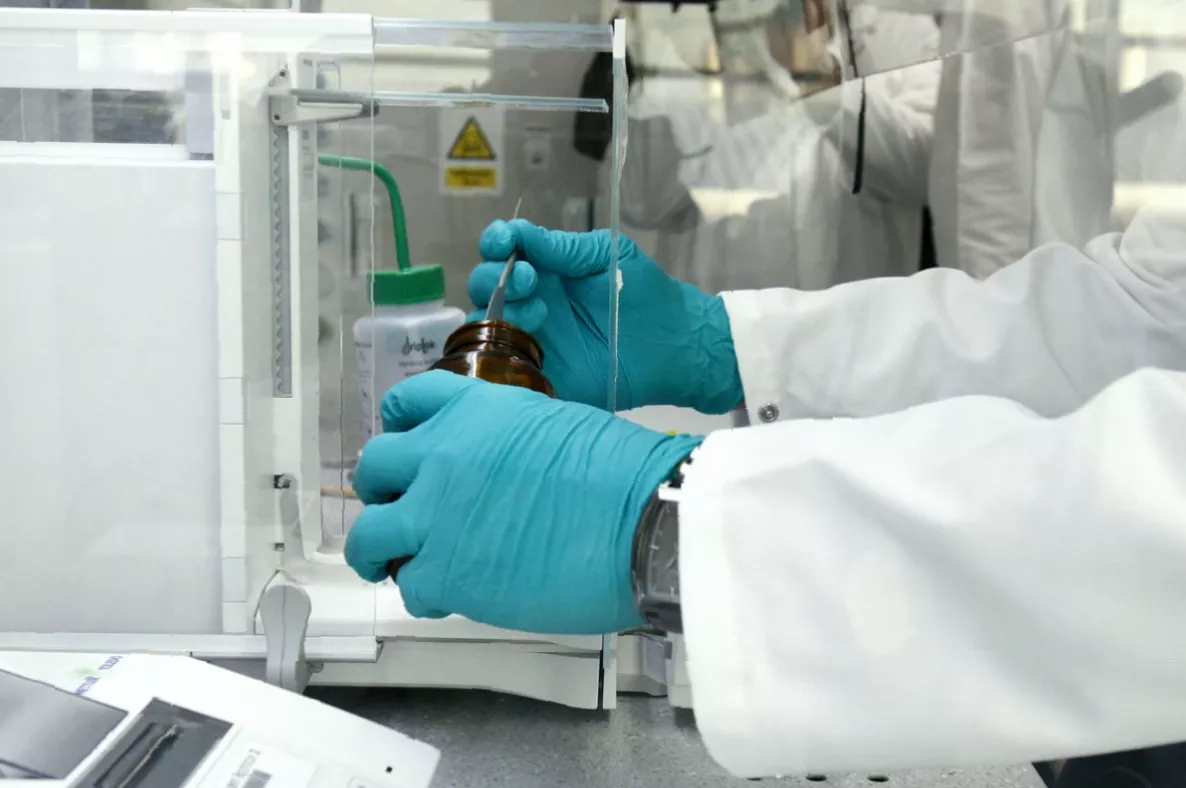
Stearate salts and polyethylene, a ubiquitous plastic, share a remarkably similar chemical backbone. Consequently, they interact with light in an almost identical way, producing near-indistinguishable spectral fingerprints. Professor McNeil, whose research interests include methods for capturing microplastics, explained that even established protocols can lead to contamination. The team found that simple contact with gloves could produce false positives at a staggering rate—approximately 2,000 particles per square millimetre. In some instances, gloves contributed over 7,000 misidentified particles per square millimetre, leading to counts thousands of times higher than expected. The contamination was so severe the researchers had to discard their own initial dataset.
“Our team found that, even when following established protocols, using certain methods to measure environmental microplastics can potentially contaminate the results,” Professor McNeil and Madeline Clough wrote. “As a result, much of this research may be overestimating the number of microplastics.”
Implications for research and regulation
This revelation echoes broader, long-standing concerns within the scientific community about the reliability of some high-profile microplastic studies, particularly those examining human tissues, where the risk of sample handling contamination is high. It underscores the critical need for chemical expertise in this field to navigate subtle material differences.
The researchers are clear that the problem is one of measurement, not existence. “We may be overestimating microplastics, but there should be none,” Professor McNeil stated. The study does not dispute that plastic pollution is widespread or that human exposure is inevitable.
Solutions are emerging. The Michigan team recommends scientists switch to “cleanroom gloves,” which are manufactured without stearate coatings and shed far fewer particles. In some cases, avoiding gloves altogether during non-hazardous sample preparation is advised. The researchers have also developed methods to differentiate true plastics from stearate contamination, which could allow for the re-evaluation of past data.
The call for more robust, standardised methods comes as regulatory frameworks begin to address microplastics. The European Union has implemented a restriction on intentionally added microplastics through Regulation (EU) 2023/2055, with phased bans across product categories, and has mandated advanced micro-pollutant removal in wastewater treatment. In contrast, the UK has banned microbeads in rinse-off cosmetics, but a policy brief from the University of Portsmouth’s Global Plastics Policy Centre recently urged the government to develop a comprehensive national strategy with measurable targets, noting it is lagging behind international efforts.
As laboratories grow more aware of the contamination risks and begin employing multiple analytical techniques to cross-check findings, the hope is for the development of universal standard operating procedures. This would ensure future estimates of the microplastic burden—on our planet and in our bodies—are not only alarming but unequivocally accurate.