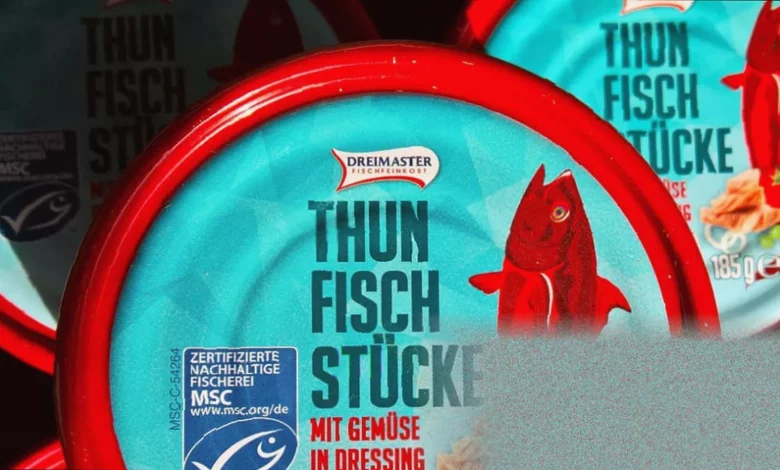
One in five fishing vessels where crews reported serious labour abuses to the International Transport Workers’ Federation over the last five years was certified to sell its catch under the Marine Stewardship Council’s “blue tick” sustainability label, a new study has revealed. The finding has ignited criticism that the world’s leading seafood ecolabel is fostering an “illusion” of ethical sourcing while failing to address human rights violations in its supply chains.
Widespread Abuses on Certified Vessels
The ITF-commissioned study, entitled ‘Slipping through the net: labour abuses in MSC-certified fisheries’, identified 80 individual cases of abuse on 72 different vessels operating across 25 MSC-certified fisheries globally. These ranged from North Sea haddock operations to tuna fisheries in the Pacific. Researchers cross-referenced a dataset of 462 abuse cases recorded by ITF inspectors on 354 vessels with the MSC’s own publicly available database of certified operations.
Ten of the cases involved allegations of serious crimes including forced labour, human trafficking, and forced criminalisation. The most common abuses reported were unpaid or delayed wages, but the list also detailed excessive working hours, physical violence, harassment, denial of medical care, and debt bondage. The ITF cautioned that its figures are likely a significant underestimate, as national unions and other maritime authorities also receive reports not captured in its data.
The report also highlighted repeat offenders. One North Sea vessel, for example, remained MSC-certified while accruing three separate alleged cases of withheld wages and one of debt bondage over a five-year period. Researchers pointed to vessels like the Win Far 636, Zhong Da 2, and Hangton 115, which have faced allegations of forced labour, untreated injuries, and death while holding or having held MSC certification.
The MSC’s Stance and a ‘Clear, Objective’ Bar
In response, the MSC reiterated its long-standing position that it is fundamentally an environmental organisation. A spokesperson stated it has “no social assurance mandate nor labour assessment capacity” and that its policies are “no substitute for businesses’ human rights due-diligence responsibilities”. The organisation argues that addressing forced and child labour is a sector-wide challenge requiring broader collaboration.
The MSC does have a pre-entry requirement prohibiting certification for any fishery that has been successfully prosecuted for forced or child labour. A spokesperson defended this, stating that “convictions provide a clear, objective and legally robust basis for confirming forced labour” for an entity without a social mandate. However, Dr Jessica Sparks, co-author of the report, identified this as a core weakness. She noted that prosecutions for human trafficking into forced labour at sea are extremely rare, meaning the bar is almost never triggered, and it overlooks a wide spectrum of other exploitative practices.
The organisation has taken some steps, having ended the use of third-party social audits after an expert panel found them ineffective on labour issues. It is now developing a third-party online information portal to support transparency, as the same panel recommended.
The Mechanics of an ‘Illusion’
Critics, however, argue these measures are insufficient and that the current structure actively creates a deceptive picture. Dr Sparks explained that the MSC’s combination of claiming no social role while maintaining a narrow pre-condition based on convictions results in an “illusion” of ethical sourcing. “The MSC says ‘we don’t certify for social’, yet they have these pre-eligible conditions for certification,” she said, arguing this setup provides no real mechanism to identify or remedy the vast majority of abuses.
Chris Williams, ITF fisheries coordinator, warned this “risks masking abuses and leading people to buy products that aren’t necessarily what they think they are.” Advocacy groups like Global Labor Justice and the Seafood Working Group have echoed these concerns, stating the MSC relies on unverified self-reports and fishery-level audits incapable of detecting labour violations. They note the organisation continues to certify fisheries facing serious allegations.
The scale of the problem in the industry is vast. The International Labour Organization estimated in 2022 that approximately 128,000 workers were trapped in forced labour on fishing vessels globally. Other research suggests between 14% and 26% of industrial fishing vessels may be high-risk for using forced labour, affecting tens of thousands of individuals. Fishers, particularly migrant workers, are highly vulnerable due to deceptive recruitment, debt bondage, and the isolated nature of their work.
Ultimately, the study posits that the prestigious blue tick, by marketing an unambiguous ethical choice to consumers, may inadvertently reduce scrutiny on working conditions and undermine enforcement efforts. This leaves a system where, as the report concludes, environmental sustainability can be branded and sold while human suffering aboard the same certified vessels slips through the net.