The prospect of the Chagos Islands returning to Mauritian sovereignty has collapsed after the UK government shelved its ratification bill, citing a decisive withdrawal of support from the United States that made the treaty politically untenable.
Foreign Office minister Stephen Doughty told the Commons that the agreement, signed in May 2025, had become “impossible to agree at political level”. He stated the legislation “cannot complete its passage this parliamentary session,” attributing the failure directly to a change in position from former US President Donald Trump. The US had initially been closely involved in negotiations, with Trump previously praising the deal as “very strong and powerful” and “robust”.
The linchpin: The 1966 UK-US defence agreement
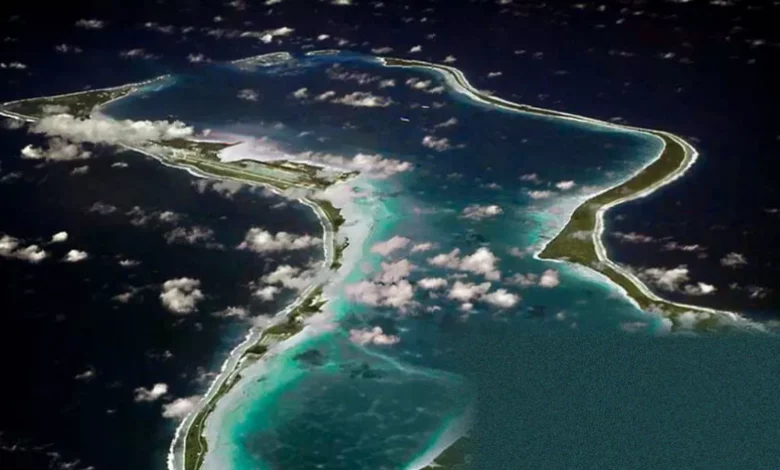
At the heart of the collapse is a decades-old pact known as the “exchange of notes”. Signed in 1966, this agreement between the UK and US governs the availability for defence purposes of the British Indian Ocean Territory (BIOT), which encompasses the Chagos Archipelago. It is the legal bedrock for the joint UK-US military base on Diego Garcia, the archipelago’s largest island.
Minister Doughty explained that ratifying the new sovereignty treaty with Mauritius required an update to this 1966 agreement. With the US, under Trump’s reported changed stance, withdrawing its support, that update became impossible to secure. “The document had been tested thoroughly at all levels of the United States system under two administrations and found to be robust,” Doughty noted, underscoring the sudden reversal.
Trump later publicly condemned the deal as an “act of great stupidity” in January 2026. This shift is widely believed to be linked to the UK’s refusal to permit the use of Diego Garcia for US strikes against Iran, and to potential US concerns over operational security under Mauritian sovereignty. The UK government has stated it will only proceed with the deal with US support.
Terms of the scuppered deal
The now-stalled treaty, announced by then-Foreign Secretary David Lammy and Mauritian Prime Minister Pravind Kumar Jugnauth, outlined a clear exchange. The UK would cede sovereignty of the entire Chagos Archipelago to Mauritius, honouring long-standing international rulings. In return, the UK would lease back Diego Garcia for at least 99 years to guarantee the uninterrupted operation of the strategic military base.
The base’s critical importance to both nations made US assent non-negotiable. The UK government remains confident that the treaty would be “the best means of protecting the full operation of the military base for future generations,” but cannot advance it unilaterally.
The setback is seen as a sign of worsening UK-US relations, exacerbated by Trump’s previous criticism of Prime Minister Keir Starmer’s stance on the Iran war. Domestically, the treaty had also faced opposition from the Conservative party and Reform UK, who criticised it as a potential breach of obligations and a waste of money.
Decades of dispute and displacement
The sovereignty question is fraught with historical injustice. The UK detached the Chagos Archipelago from Mauritius in 1965, before the latter’s independence, specifically to create the BIOT and facilitate the Diego Garcia base. Subsequently, between 1967 and 1973, the entire indigenous Chagossian population was forcibly removed from their homes.
Mauritius’s sovereignty claim has received significant international backing. In 2019, the International Court of Justice (ICJ) issued an advisory opinion stating the UK’s detachment of the islands was unlawful and that the UK must end its administration “as rapidly as possible.” The International Tribunal for the Law of the Sea (ITLOS) has also affirmed Mauritius’s claim, and the UN General Assembly has passed resolutions calling for the UK’s withdrawal.
Impact on the Chagossian people
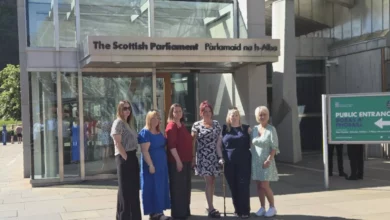
For the Chagossian community, the delay is a profound disappointment. Doughty acknowledged it would be “sad news to many Chagossians – although I accept not all – who rightly see it as the only viable means to a sustainable programme of resettlement.”
The treaty contained specific provisions for them, including a £40 million Trust Fund to be established by Mauritius and a route for resettlement on islands other than the militarily occupied Diego Garcia. It also allowed for Chagossians to hold both British and Mauritian citizenship. With the bill shelved, the promised path to return and compensation remains in limbo, extending a decades-long wait for justice and a right of return.